November 25, 2026 · Guides
Chit Fund Group Design: Choosing Value, Members and Tenure

Most chit groups are designed in a hurry: pick a round number, then try to fill it. A better design starts from your subscribers and from what the rules allow.
Rules on maximum chit value, commission and tenure come from the Chit Funds Act and state rules. Please verify them with your CA or lawyer.
Here is a simple design process.
In this guide
Start from the subscriber
Who will join.
- Monthly amount the target subscriber can pay.
- Time period that suits their cash flow.
- Trust level in your area.
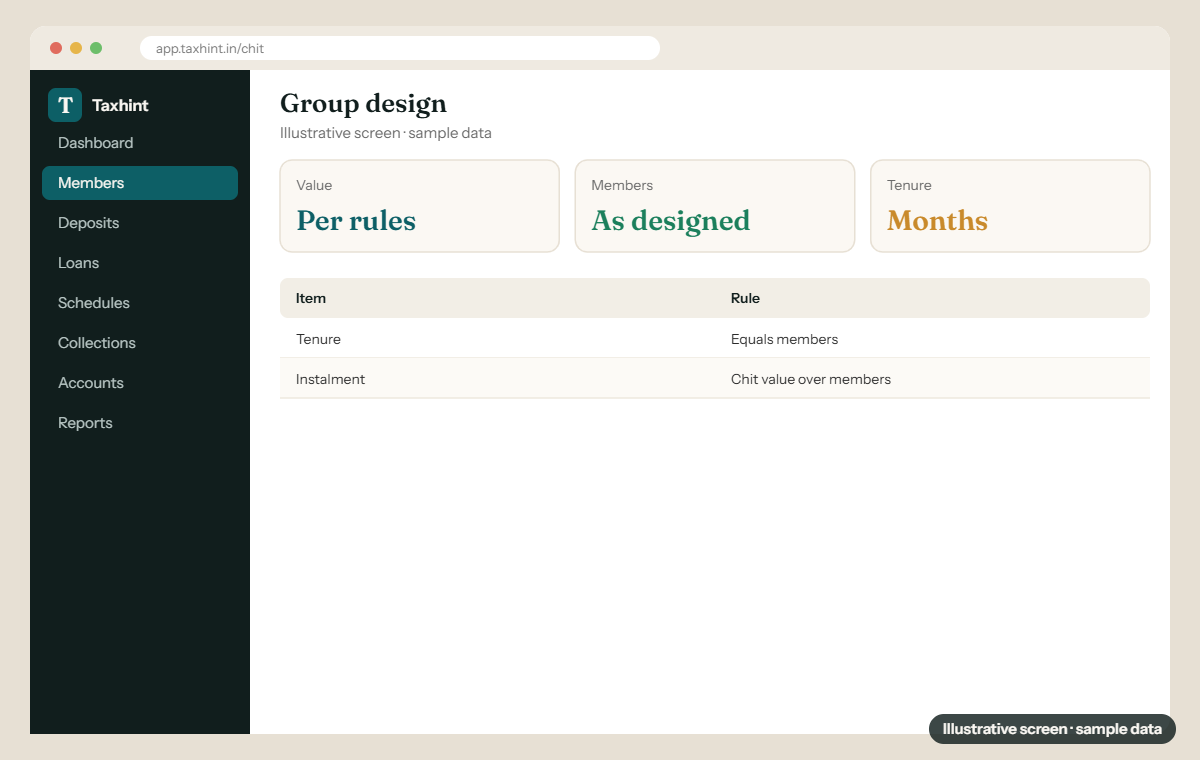
The relationship
Three numbers move together.
- In a typical chit, tenure in months equals the number of members.
- Chit value is the monthly instalment times the number of members.
- Longer tenure means smaller instalments but more time at risk.
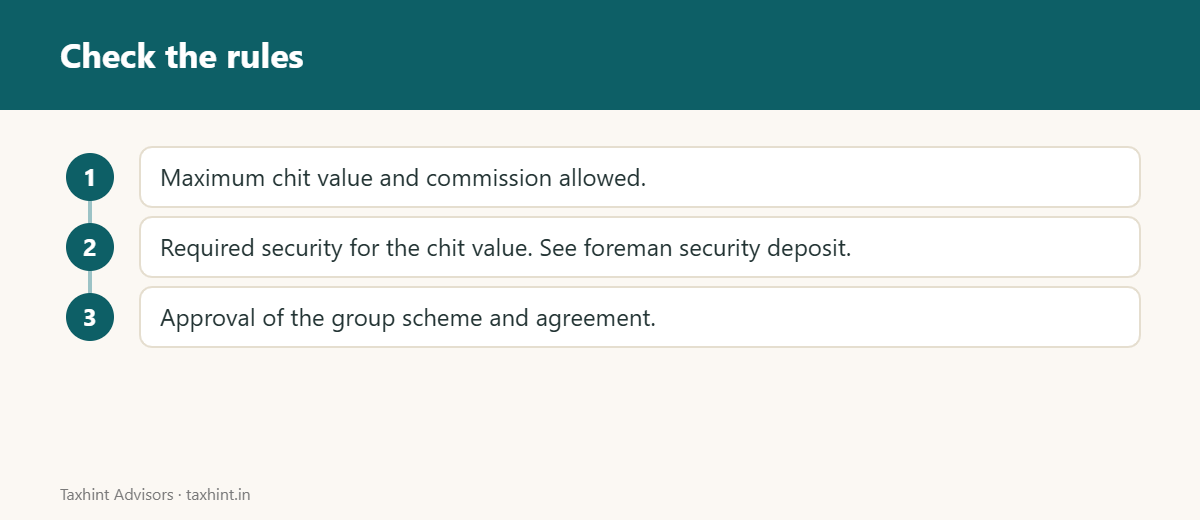
Check the rules
Stay within them.
- Maximum chit value and commission allowed.
- Required security for the chit value. See foreman security deposit.
- Approval of the group scheme and agreement.
Test before launch
Make it practical.
- Can you fill it in two or three months?
- Are default and surety plans ready? See surety.
- Try numbers in the chit fund calculator.
The Chit Funds Act and state rules apply to chit funds, and they differ by state, so please verify with your CA or lawyer.
| Item | Rule of thumb |
|---|---|
| Tenure | Equals members |
| Chit value | Instalment x members |
| Security | As per rules |
Designing a group that works
A chit group is defined by its value, number of members and tenure. A larger value or longer tenure raises risk and the need for control. A good design matches the group to the capacity of the members and the organiser.
Illustrative example: an organiser starts with a modest value, a manageable number of members and a tenure that matches the members income patterns before moving to larger groups.
Mistakes to avoid
- Starting with a value that members cannot sustain.
- Too many members for the staff to handle.
- Tenure that does not match income cycles.
- Copying a group design from another place without checking rules.
Design steps
- Study your state rules on group value and tenure.
- Know your target members and their capacity.
- Pick value, members and tenure to match.
- Write terms and the auction method.
- Review performance before launching larger groups.
Points to confirm
- Limits and conditions in your state; ask your lawyer.
- Please verify with your CA, CS or lawyer before you rely on it.
Testing the design
Run a small pilot group before launching many. Watch dues, auction discounts and complaints. Note the answers and review them with your CA or lawyer.
Adjust the design based on results.
- Pilot group
- Watch dues
- Adjust design
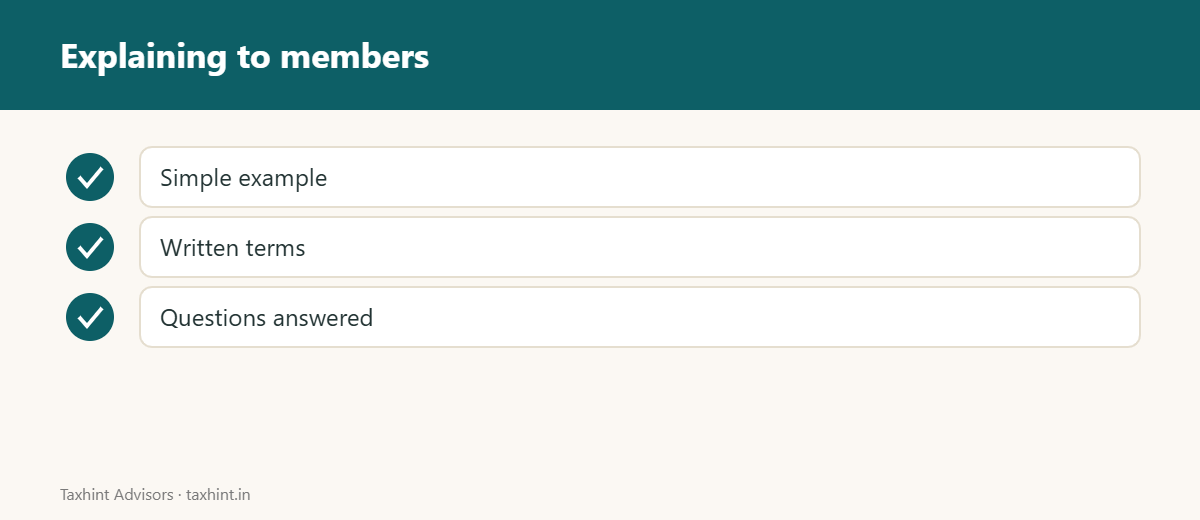
Explaining to members
Give members a simple example of how their instalments and prize work. Clear explanations prevent disputes. Note the answers and review them with your CA or lawyer.
Use written examples.
- Simple example
- Written terms
- Questions answered
Staff capacity
Check that your staff can handle the number of groups and members you plan. Add staff before adding groups. Note the answers and review them with your CA or lawyer.
Monitor workload monthly.
- Workload check
- Add staff first
- Monthly review
FAQs
What is a good chit size?
Depends on your area and subscribers, within the legal limit.
Why does tenure equal members?
Each month one member wins the pot.
Can I run several groups?
Yes, if security and compliance cover each group.
Where do I check maximum value?
In the Act and your state’s rules. Please verify.
Want to test group designs with real numbers? Use the Taxhint chit fund calculator or book a demo. Talk to Taxhint on +91 93117 95484 or [email protected], or visit taxhint.in.