November 27, 2026 · Guides
How Does a Nidhi Company Earn Profit?
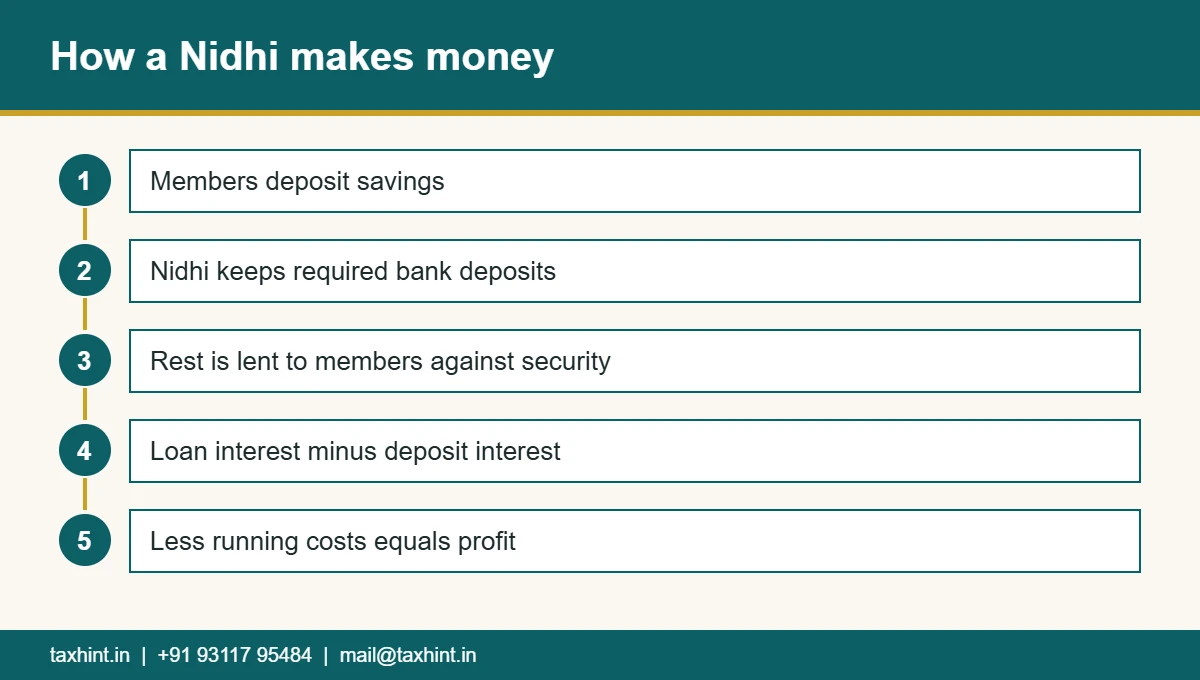
A Nidhi company earns the way a small lender does: it pays members interest on their deposits and charges members a higher interest on loans. The gap, less running costs, is its profit.
The Nidhi Rules shape every part of this, from who it can deal with to how much it can borrow against. Here is how the money flows.
In this guide
- Where the income comes from
- Where the money goes
- Rules that shape the margin
- A simple example
- How we help
- How a Nidhi grows its profit
- Mistakes that eat profit
- FAQs
Where the income comes from
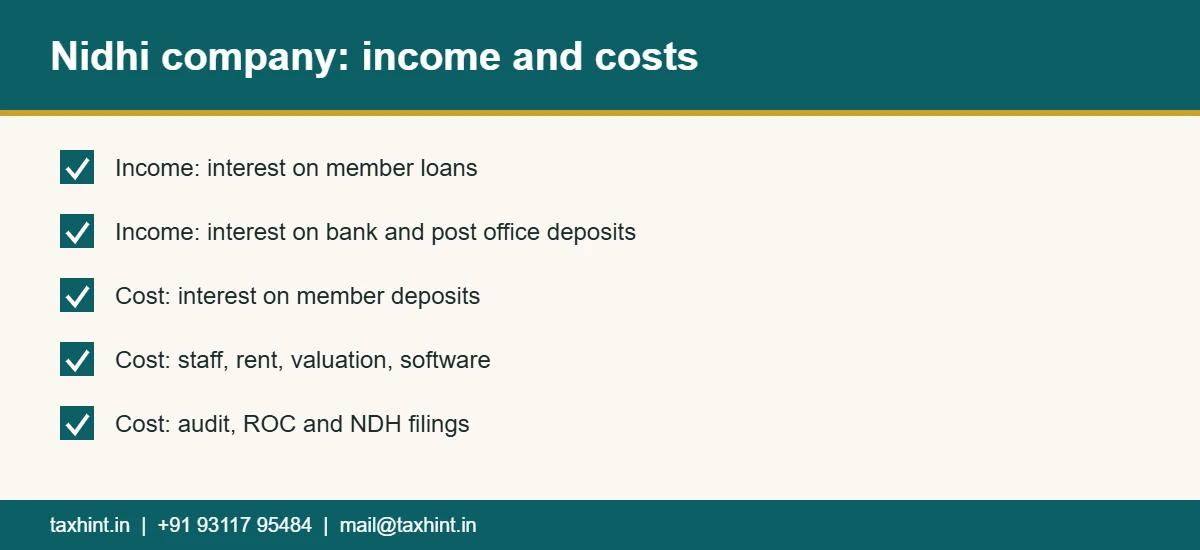
Interest on loans. The main income. Loans go only to members and only against gold, silver and jewellery, immovable property, or deposits and government securities, as rule 15 allows.
Interest on its own deposits. A Nidhi must keep part of its funds in unencumbered term deposits with banks or post offices, and those earn interest too.
Other member services that the rules allow, such as charges on loan processing where the policy provides for it.
Where the money goes
Interest paid to members on savings, fixed and recurring deposits is the biggest cost. Then staff, rent, gold valuation, software, audit and ROC filings.
A Nidhi cannot pay brokerage or incentives for deploying funds or granting loans, which keeps acquisition costs down but also means growth comes from member trust, not agents.
Rules that shape the margin
Deposits cannot exceed twenty times Net Owned Funds. Gold loans run for at most a year with LTV up to 80 per cent, and overdue gold loans stop earning income after three months. These limits keep risk low and also cap how fast the books can grow. See Nidhi gold loan rules.
A simple example
Take a Nidhi with member deposits of 2 crore that lends 1.6 crore to members. If it earns, say, 12 per cent on loans and pays 8 per cent on deposits, interest income is about 19.2 lakh and interest cost about 16 lakh. Add interest earned on the bank deposits it must keep, then subtract staff, rent and compliance costs. What is left is the profit. These rates are only for illustration; your rates come from your own policy and market.
How we help
We set up the Nidhi, its deposit and loan policies and its yearly compliance. See Nidhi company registration, compliance and Nidhi software. Comparing options? Read Nidhi vs credit society.
How a Nidhi grows its profit
Profit grows with member trust. A Nidhi that pays interest on time, gives quick gold loans and keeps clean passbooks gets more deposits and more borrowers. Because it cannot pay agents, word of mouth and branch service do the work.
Cost control matters as much. Software that handles interest, passbooks and NDH returns saves staff time. Keeping overdue gold loans low protects income, since overdue loans stop earning after three months.
Mistakes that eat profit
Paying deposit rates above the market to grow fast, which squeezes the spread.
Keeping too much idle cash beyond what the rules ask for.
Weak recovery on property loans, which tie up funds for years.
Late filings that bring penalties and hurt member confidence.
Frequently asked questions
What is the main income of a Nidhi company?
Interest on loans to members, less interest paid on member deposits.
Can a Nidhi pay agents to bring loans?
No. A Nidhi cannot pay brokerage or incentives for deploying funds or granting loans.
Is there a limit on how much a Nidhi can raise in deposits?
Yes. Deposits cannot exceed twenty times its Net Owned Funds.
Does a Nidhi company pay income tax?
Yes. A Nidhi is a company and pays tax on its profit like any other company. Plan tax along with your yearly filings.
Does a Nidhi earn from gold loans after default?
Not after three months from the due date, unless the loan is recovered or renewed.
Need help? Planning a Nidhi? Get Free Consultation or call +91 93117 95484.