November 26, 2026 · Guides
How to Start a Credit Co-operative Society
A credit co-operative society lets members save together and borrow from that pool at fair rates. It is one of the oldest ways small communities, employees and traders have handled credit in India, and it still works well when it is run properly.
This guide covers how to start one: the members, the bye-laws, registration and the first year of running deposits and loans. For our registration service, see credit co-operative society registration. The general steps for any co-op are in how to register a co-operative society.
In this guide
- What a credit society does
- Step 1: Define the common bond
- Step 2: Write bye-laws for thrift and loans
- Step 3: Register with the Registrar
- Step 4: Set up for the first deposits and loans
- Where credit societies go wrong
- Growing beyond one state
- FAQs
What a credit society does
Members buy shares, deposit savings and take loans from the society. Interest earned on loans pays for interest on deposits and running costs, and any surplus is shared or kept as reserve as the bye-laws and state Act allow. The society works only with its members, not the general public.
Step 1: Define the common bond
Most states expect members of a credit society to share something: an employer, an occupation, a locality or a community. This “common bond” goes into the bye-laws and decides who can join later. A staff society, a traders’ society and a village credit society are all common examples. Check how your state handles this, and the minimum members it needs; see minimum members for a co-operative society.
Step 2: Write bye-laws for thrift and loans
Credit society bye-laws need more detail than most. They should cover:
- Share value and how many shares each member must hold
- Types of deposits: compulsory thrift, savings, fixed and recurring deposits
- Loan types, limits, sureties and repayment rules
- Interest rates, or who fixes them
- Statutory reserve and use of surplus
- Board, meetings, elections and audit
Start from the state’s model bye-laws and adapt them. See our guide on bye-laws.
Step 3: Register with the Registrar
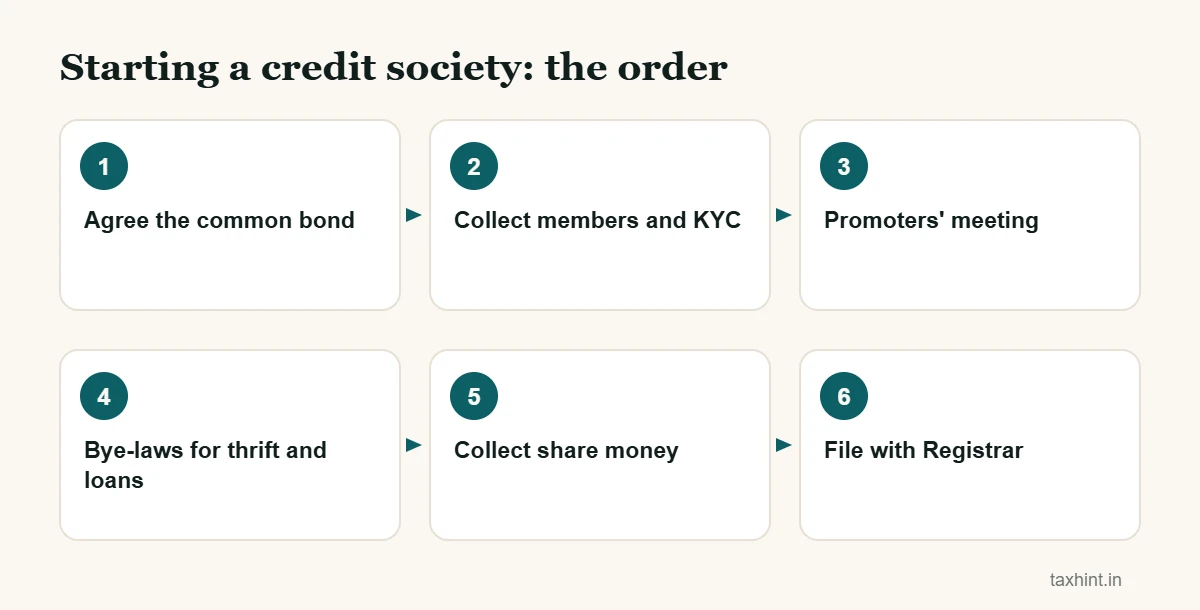
The registration itself follows the usual co-op route, done in this order.
Step 4: Set up for the first deposits and loans
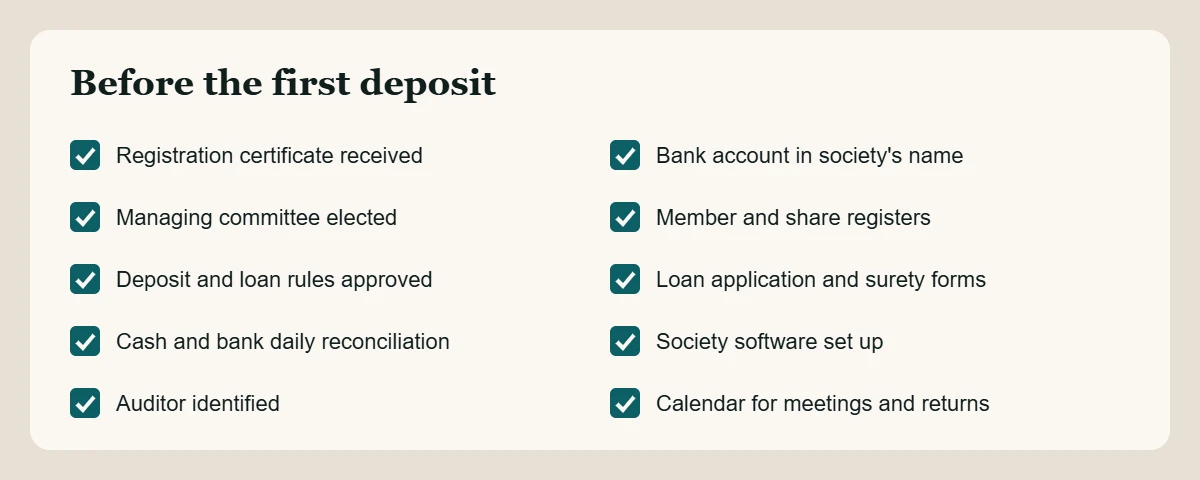
Before taking the first rupee of deposit, put these in place.
Where credit societies go wrong
Most problems come from three places: loans given without proper sureties, deposit records kept in registers that do not tally, and audit points left unanswered year after year. Each one is easier to prevent than to fix. Keep loan files complete, reconcile cash and bank every day, and act on every audit memo.
Growing beyond one state
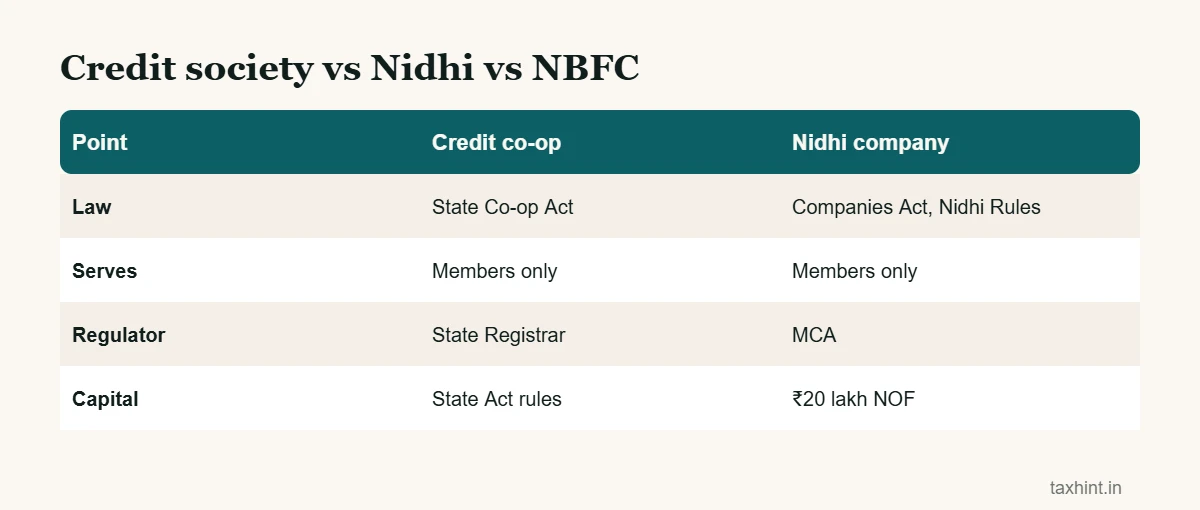
If members start coming from other states, the society can move to multi-state status under the MSCS Act, 2002. That brings a different Registrar and different rules; see multi-state co-operative society registration. Some groups compare a credit society with a Nidhi company at this stage; our guide on microfinance vs credit co-operative society also helps.
Frequently asked questions
Who can join a credit co-operative society?
People who share the common bond set in the bye-laws, such as an employer, occupation or locality, and meet the state Act’s conditions.
Can a credit society take deposits from the public?
No. A credit co-operative society works with its members.
Does a credit society need RBI registration?
A primary credit society working only with its members is registered under the state Co-operative Societies Act. Banking business is different and needs RBI approval.
What software does a credit society need?
Software that keeps member, share, deposit and loan records and produces audit reports. See our credit and thrift society software.
Is the first consultation free?
Yes. Tell us your state, common bond and member count.
Next step: Planning a credit society? Share your state and common bond, and we will map the steps. Call +91 93117 95484, email [email protected], or use the form on our credit co-operative society registration page.