November 24, 2026 · Guides
Property Valuation and LTV for Loan Against Property: How Lenders Decide
The loan amount in a loan against property is a share of the property’s value. That share is called loan to value, or LTV. A fair valuation and a sensible LTV protect you if the property has to be sold.
Limits for regulated lenders can be set by the regulator, and others set their own policy. Please verify what applies to you with your CA or compliance officer.
Here is how to approach valuation and LTV.
In this guide
Valuation
Get an independent view.
- Valuer from your approved list.
- Report with market value and distress value where policy needs.
- Site photographs and location details.
- Cross-check with local market information.
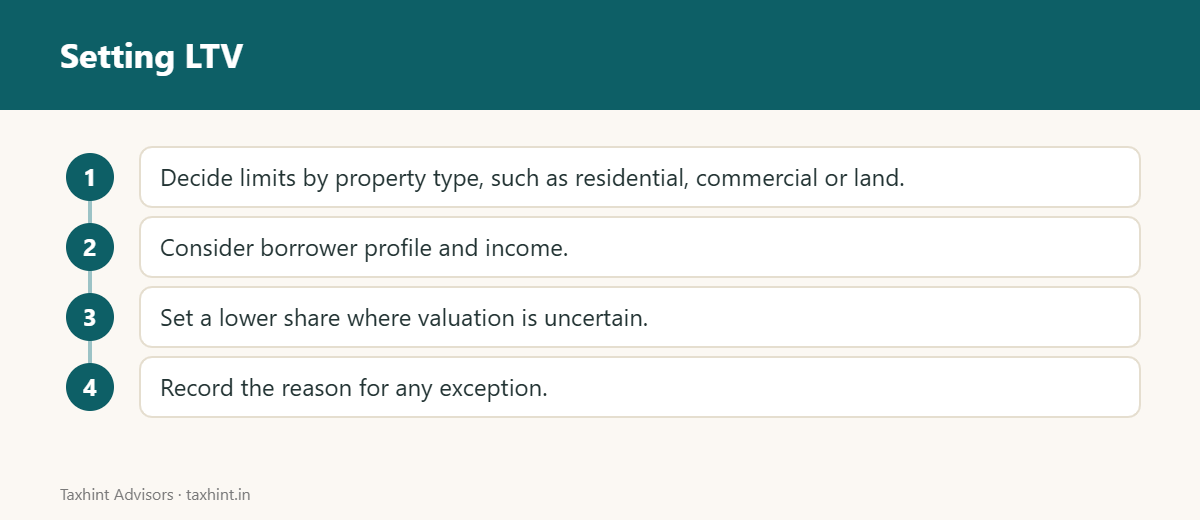
Setting LTV
Make it a policy decision.
- Decide limits by property type, such as residential, commercial or land.
- Consider borrower profile and income.
- Set a lower share where valuation is uncertain.
- Record the reason for any exception.
Monitoring
Values change.
- Periodic revaluation for large or risky loans.
- Alert when overdue and value both worsen.
- Review the portfolio by property type.
In software
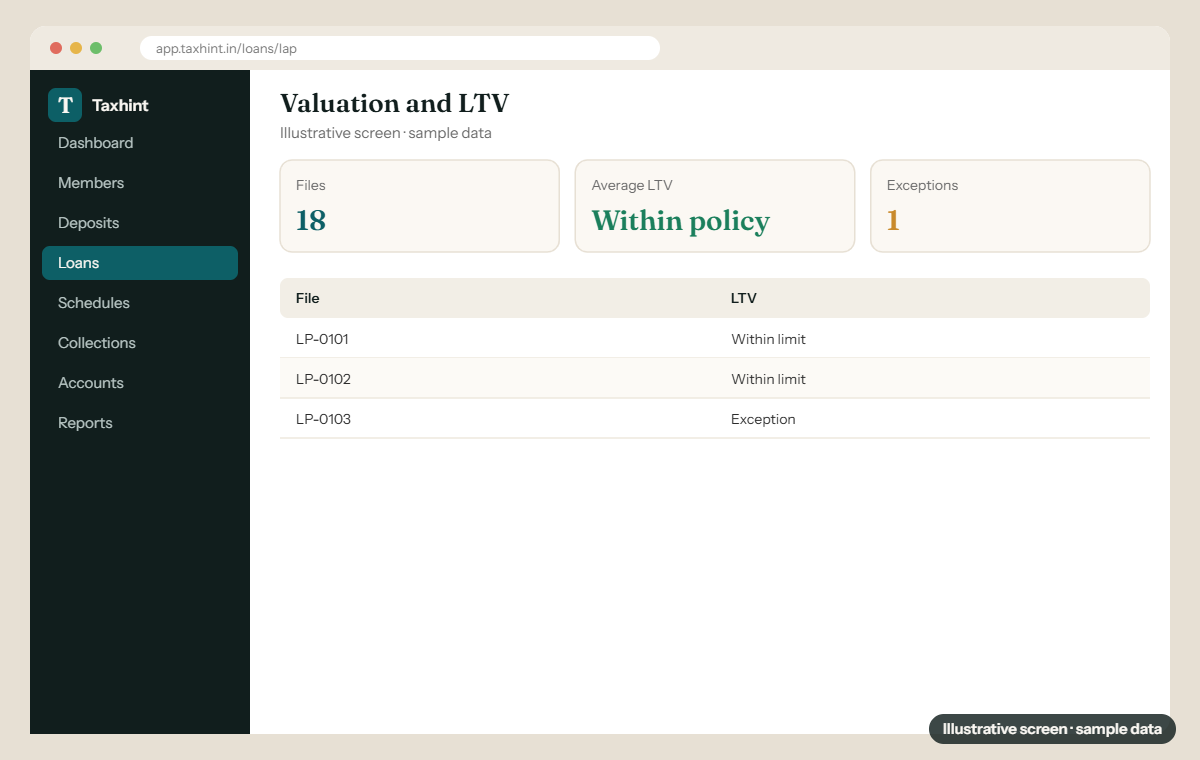
Make LTV visible.
- LTV calculated on each file.
- Warning above the policy limit.
- Exception report for management.
See loan management software. Practice and rules differ by lender, entity type and state, so please verify with your CA or CS before you finalise your policy.
| Item | Rule |
|---|---|
| Valuer | Approved list |
| LTV limit | By property type, in policy |
| Exceptions | Approval and reason |
Valuation and loan to value in practice
In a loan against property, the value of the property decides how much you can lend. Your policy sets the maximum share of value that can be lent, and the valuation must come from an authorised, independent valuer. Do not use the customer estimate.
Illustrative example: the valuer inspects the property, checks the title and gives a written value. The credit officer applies the policy share to this value to find the maximum loan and then compares it with repayment ability.
Mistakes to avoid
- Using one valuation for a long time without a refresh.
- Valuer chosen by the customer.
- Not checking the property for pending dues.
- Ignoring the type of property when setting the share.
Steps to follow
- Choose valuers from an approved panel.
- Inspect and photograph the property.
- Record the value and the valuer.
- Apply your policy share and check repayment ability.
- Review valuations and rates on a regular schedule.
Points to confirm
- Any limits that apply to your category of lender; check the current text.
- Please verify with your CA, CS or lawyer before you rely on it.
Reviewing the portfolio
Once a year, check a sample of valuations against market information and update your approach. Track loans where the property value may have fallen and discuss options with those customers early.
Keep the review notes with your credit policy.
- Annual sample check
- Watch list of weak cases
- Review notes filed
Training credit staff
Show credit staff examples of valuation reports, point out what a good report contains and discuss cases where a value looked too high. Review this with your team once a quarter and update your checklist, because real cases teach more than the first draft.
- Sample reports
- Red flags list
- Case discussion
FAQs
What is LTV?
Loan amount as a share of the property value.
Is there a fixed LTV for all lenders?
Limits depend on lender type and rules. Please verify.
Should one valuer be enough?
Depends on loan size and policy.
How often should I revalue?
As per policy, often when risk rises.
Want LTV checked and exceptions reported automatically? Book a demo of Taxhint loan software. Talk to Taxhint on +91 93117 95484 or [email protected], or visit taxhint.in.