November 24, 2026 · Guides
Used Car Finance: Valuation and Approval Process
Used car loans carry more risk than new car loans because the asset value is less certain and the history is unknown. A fixed valuation process protects the lender.
This is a simple checklist you can adapt to your policy.
In this guide
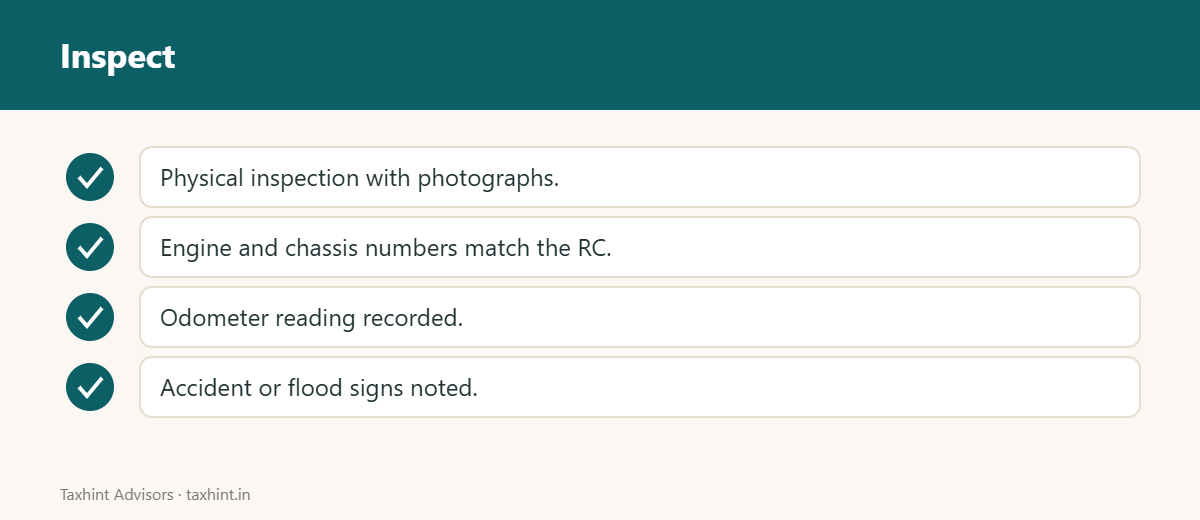
Inspect
Look at the car, not only papers.
- Physical inspection with photographs.
- Engine and chassis numbers match the RC.
- Odometer reading recorded.
- Accident or flood signs noted.
Value
Use more than one view.
- Check market listings for similar cars.
- Take a valuer’s report where policy needs it.
- Set a loan limit as a share of the value.
- Record the basis in the file.
Documents and security
Clear title first.
- RC, insurance and previous loan clearance if any.
- Seller and buyer details for transfer.
- Hypothecation entry with follow-up date.
Rules and practice differ by lender and state, so please verify with your CA before you finalise your policy.
| Step | Evidence |
|---|---|
| Inspection | Photos and notes |
| Valuation | Report or listing basis |
| Title | RC and clearance |
Valuation as a control, not a formality
In used car finance the value of the vehicle is the main protection. A proper valuation looks at make, model, year, condition, ownership papers and market price. It is done by a person who is independent of the sales target, and the report is kept in the loan file.
Illustrative example: a customer wants to buy a used car. The valuer inspects it, notes its condition, checks the papers and gives a written value. The officer compares the loan amount with that value as per your policy and records the decision.
Mistakes to avoid
- Using the seller price as the value.
- Valuer paid by the dealer with no check.
- Papers not verified against the vehicle.
- No photographs on file.
Valuation steps
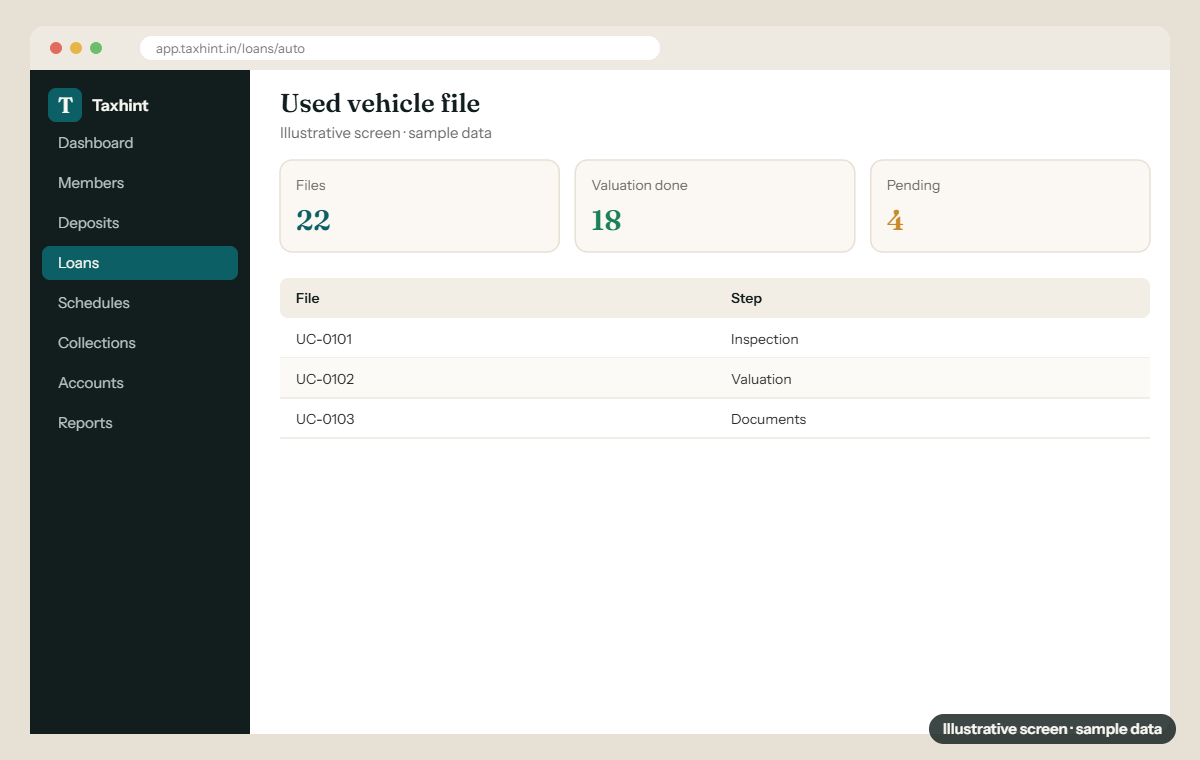
- Inspect the vehicle and take photographs.
- Check registration, ownership and any pending dues.
- Compare with market information.
- Record the valuation and the valuer name.
- Set the loan amount as per your policy limit.
Controls to add
- Panel of approved valuers with rotation.
- Random re-check of a sample of files.
- Report of loan to value by branch.
- Please verify with your CA, CS or lawyer before you rely on it.
Reviewing the valuation habit
Every quarter, compare the value you recorded with what vehicles actually fetched when sold or repossessed, where this has happened. If you find that valuations are consistently high, adjust the process or the limits.
Share the findings with valuers and with the credit team. Learning from real outcomes is the best way to improve.
- Quarterly comparison of value and outcome.
- Feedback to valuers.
- Adjust limits when needed.
Explaining the valuation to customers
Some customers feel that the valuation is too low. Explain that it is an independent check of the vehicle condition and market price, and show them the report if your policy allows. A calm explanation prevents arguments.
If the customer disagrees, the officer can offer a second inspection, but the process should be written so that nobody changes a value to close a deal.
Keep the final report in the loan file with photographs, because it may be needed for review later.
FAQs
Why is used car lending riskier?
Value and history are less certain.
Should I always take a valuer report?
Depends on policy and loan size.
What share of value can I lend?
Set it in your policy based on your risk.
How do I check for existing loans?
Check the RC for hypothecation and ask for clearance proof.
Want inspection and valuation notes stored in each loan file? Book a demo of Taxhint auto loan software. Talk to Taxhint on +91 93117 95484 or [email protected], or visit taxhint.in.