November 24, 2026 · Guides
Car Loan Software: 10 Features to Look For
A car loan is a loan with an asset attached, and that asset is what makes the software different. Generic loan software tracks the money. Car loan software also has to track the vehicle, its papers, its insurance and, when things go wrong, its recovery. Here are the features worth checking before you buy.
In this guide
- 1. Vehicle and registration records
- 2. Insurance tracking
- 3. EMI schedule and loan variations
- 4. Collections and receipts
- 5. Overdue follow-up and NPA
- 6. Repossession and sale records
- 7. Accounts, reports and control
- How to test it in a demo
- FAQs
1. Vehicle and registration records
Each loan should carry the vehicle details: make, model, chassis and engine number, registration number and valuation. These are what you rely on later, so they should sit on the loan record, not in a separate sheet.
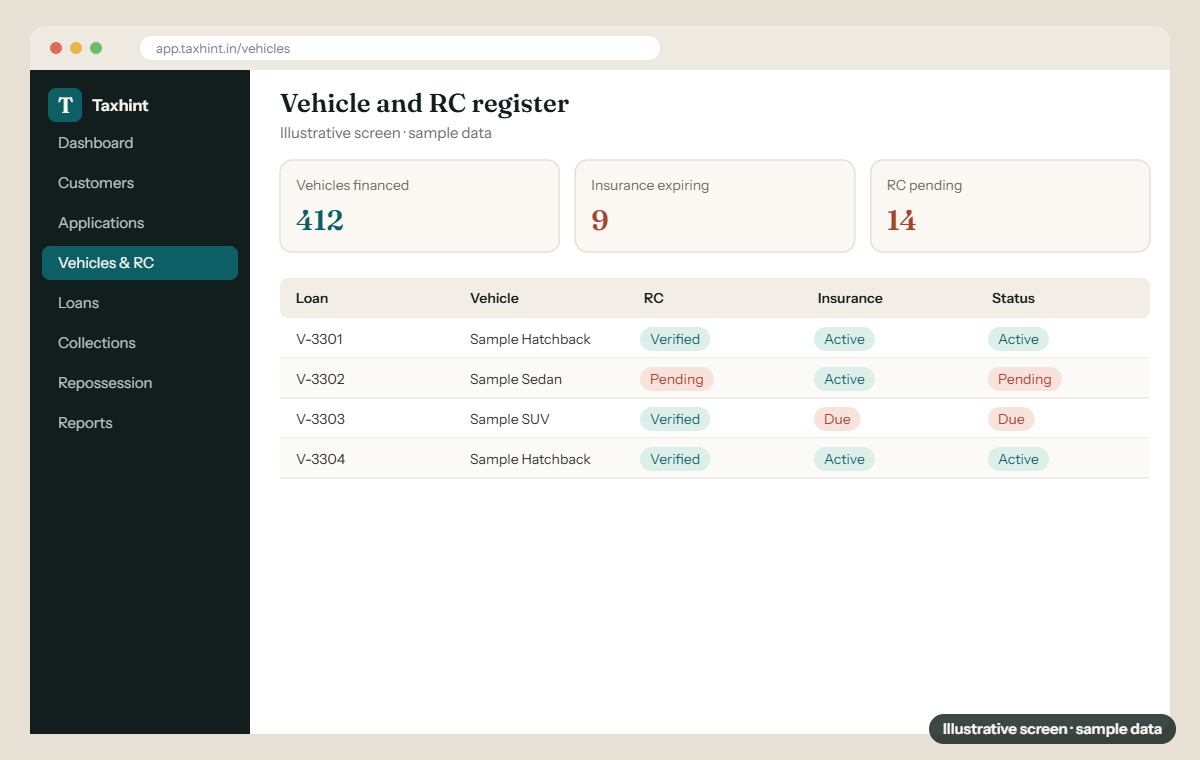
- Vehicle and invoice details stored against the loan
- RC copy and hypothecation entry with a pending and verified status
- Valuation and margin money recorded at sanction
- Dealer name and dealer-wise reports
2. Insurance tracking
An uninsured vehicle is a risk to your collateral. The software should know the policy number and expiry date and warn you before it lapses.
- Policy details and expiry date per vehicle
- Alert list for policies expiring this month
- Renewal follow-up notes on the account
3. EMI schedule and loan variations
Schedules should handle your actual products: flat or reducing balance, different tenures and part payments. Ask to see foreclosure and a missed EMI in the demo, because that is where weak schedules break.
- Flat and reducing balance schedules
- Part payment and foreclosure with correct recalculation
- Penal charges that apply on their own after the due date
- Processing fee and documentation charges set per product
4. Collections and receipts
Most car loan collection is repetitive and date-driven, so the due list should do the thinking. Field staff should be able to record a receipt on the spot, which is the idea behind a loan collection app.
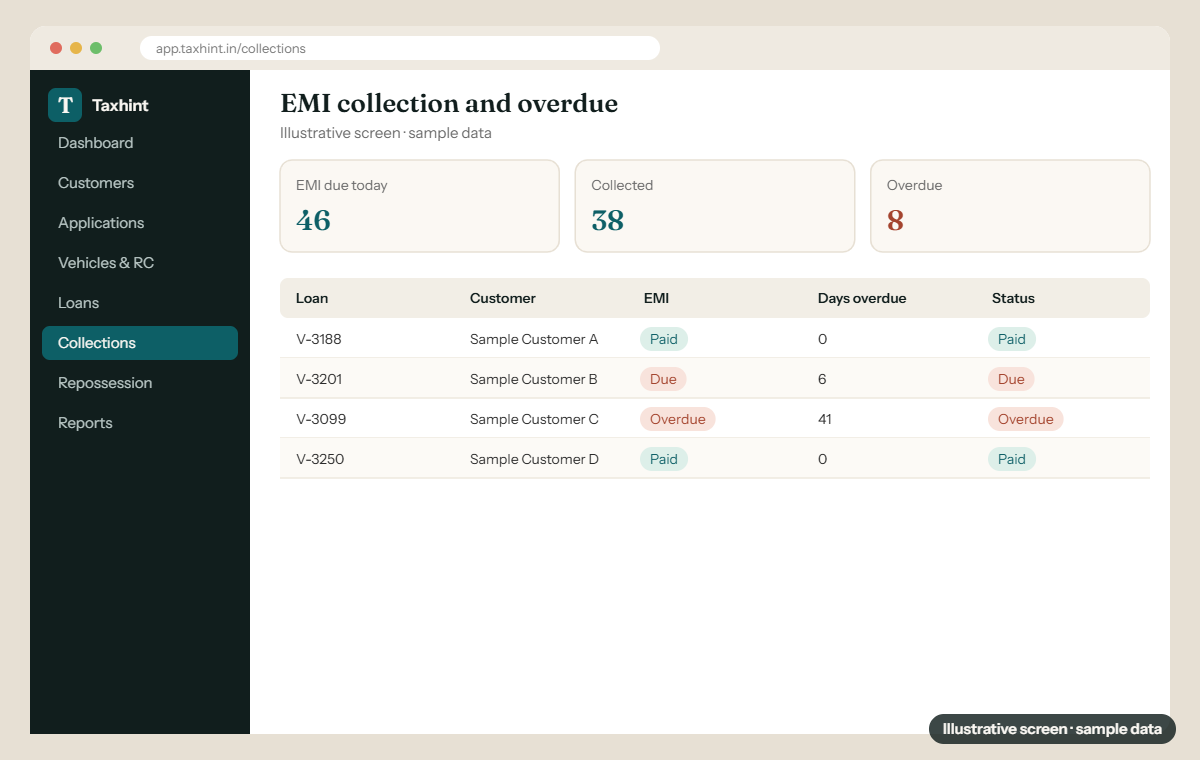
- Daily due list by branch and collection executive
- Receipts that post to the loan and the cash book together
- Cheque, NACH and cash modes with bounce handling
- Collection executive performance report
5. Overdue follow-up and NPA
Overdue should be a live report, not a monthly project. Look for buckets by days, follow-up notes with dates, and NPA classification you can explain to your auditor. NPA norms depend on your type of lender, so please verify the rules with your auditor and ask the vendor how they are configured.
6. Repossession and sale records
If a vehicle is repossessed, the system should record notice, repossession, yard details, valuation, sale and the final adjustment against the loan. A clear trail protects you if the case is questioned.
- Notice dates and repossession details on the account
- Yard and condition notes
- Sale proceeds adjusted against dues, with the balance shown
- Closure and release of hypothecation recorded
7. Accounts, reports and control
- Every receipt and disbursement posts to the ledger automatically
- Trial balance, day book and portfolio reports at any date
- Role-wise logins and a log of who changed what
- Backups and a full data export whenever you ask
See how these fit together on our auto loan software and vehicle loan software pages. If you run several products, the loan management software and NBFC software pages show the wider system, and our NBFC software checklist covers how to compare vendors. All products are listed on the fintech software page.
How to test it in a demo
- Create one car loan with vehicle, RC and insurance details.
- Run three EMIs, then miss one and see the penal charge.
- Foreclose a second loan and check the closing figure.
- Take a third loan to repossession and sale and look at the final adjustment.
- Ask for the overdue list, insurance expiry list and trial balance from the same data.
- Get the full cost in writing, including setup, training and support.
FAQs
Is car loan software different from loan management software?
Car loan software is loan management plus vehicle-specific features: registration and RC, insurance expiry, dealer records and repossession. If you only lend against vehicles, a vehicle-focused system saves manual work.
Can the same software handle two-wheeler and commercial vehicle loans?
Usually yes, as different products with their own rate, tenure and document rules. Ask to see both set up in the demo.
How does insurance tracking work in the software?
You record the policy and expiry date on the vehicle. The software lists policies expiring soon so your team can follow up before the cover lapses.
Can field staff collect EMIs from a mobile phone?
If the vendor offers a collection app, yes. Receipts recorded in the field should post to the loan account and cash book without re-entry.
What records matter most if a vehicle is repossessed?
Notice dates, repossession details, valuation, sale proceeds and the final adjustment against the loan. Please take legal advice on the process for your case.
Can we import our existing loan book?
Usually yes. Ask for a written import plan for customers, running loans, repayments and vehicle details, with the opening trial balance as the acceptance test.
Want to see this on your own car loan product? Talk to Taxhint on +91 93117 95484 or [email protected], or visit taxhint.in.