November 24, 2026 · Guides
Chit Fund Default Recovery: Steps Before Legal Action
A defaulting subscriber affects the whole group. Every missed instalment makes the foreman cover or the group suffer. Early and steady follow-up is the most effective recovery tool.
Legal remedies and dispute routes are set by the Chit Funds Act and state rules. Please verify them with your lawyer before you act.
Here is a graded approach.
In this guide
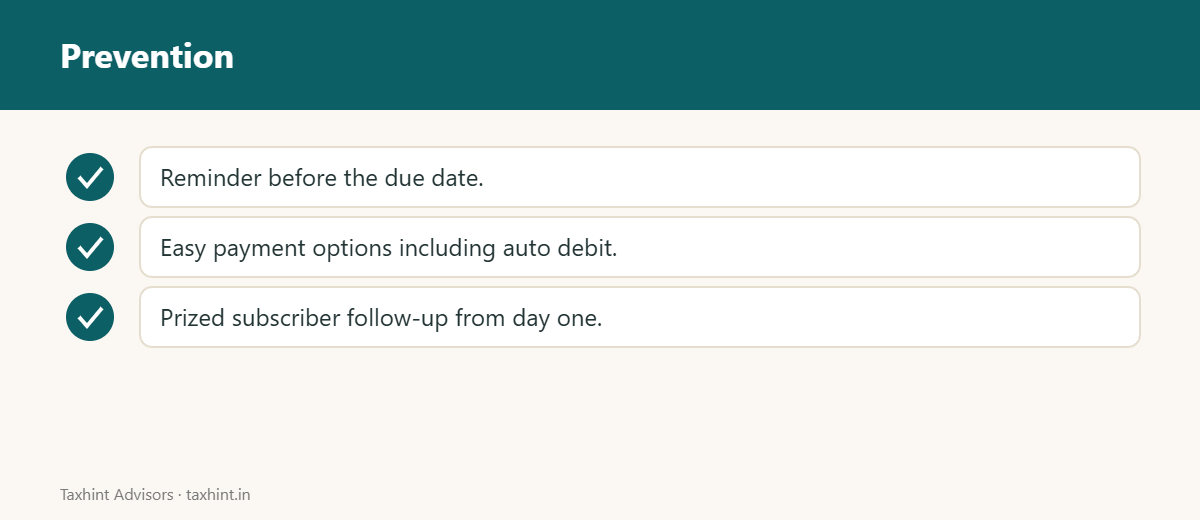
Prevention
Better than recovery.
- Reminder before the due date.
- Easy payment options including auto debit.
- Prized subscriber follow-up from day one.
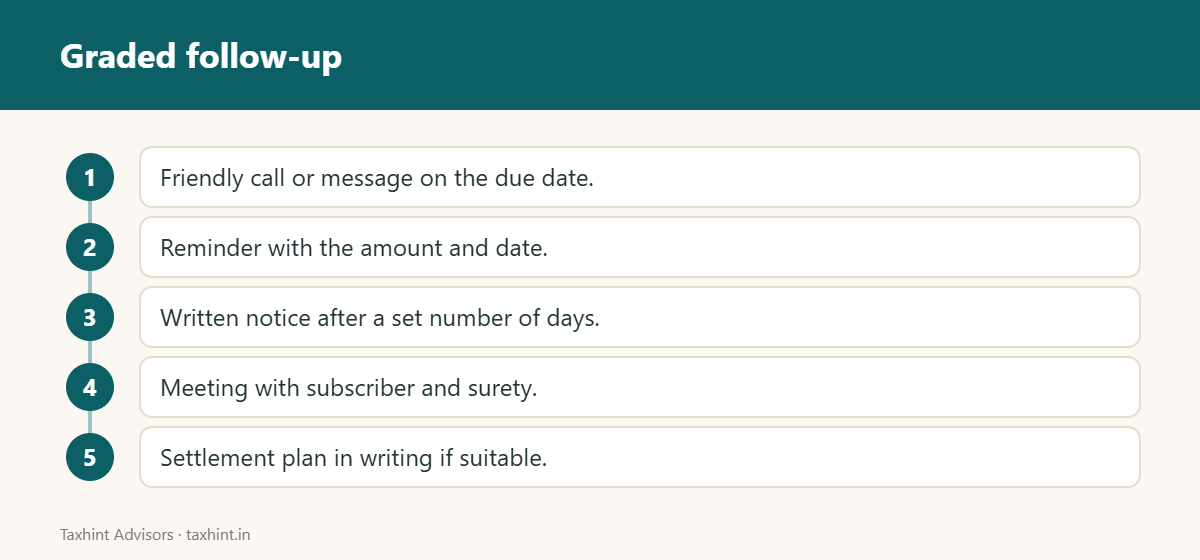
Graded follow-up
Increase pressure slowly.
- Friendly call or message on the due date.
- Reminder with the amount and date.
- Written notice after a set number of days.
- Meeting with subscriber and surety.
- Settlement plan in writing if suitable.
Prized subscribers
Higher stakes.
- Surety informed early.
- Security enforced as per the agreement.
- Legal route as per the Act. Please verify.
Conduct and records
Stay on the right side of the law.
- Follow the conduct rules. See recovery code of conduct.
- Log every contact and promise.
- Keep copies of notices and replies.
The Chit Funds Act and state rules apply to chit funds, and they differ by state, so please verify with your CA or lawyer.
| Stage | Action |
|---|---|
| Day of default | Call and message |
| After set days | Written notice |
| Prolonged | Legal route as per Act |
A step by step recovery routine
Defaults in a chit group affect everyone, because the group depends on each instalment. A written routine that starts early and stays polite works better than a rush of action after months of delay. Each step should be recorded.
Illustrative example: a subscriber misses the first instalment. The staff send a message and call. If the payment is still pending, a written notice follows, and the manager meets the subscriber. Legal steps come only after advice from your lawyer.
Mistakes to avoid
- Ignoring the first missed instalment.
- Threatening language in calls.
- No written record of conversations.
- Skipping the notices required by the agreement.
Recovery steps
- Reminder message and call.
- Written notice as per the agreement.
- Meeting with the manager.
- Payment plan where possible within the rules.
- Legal steps after advice from your lawyer.
Points to confirm
- State rules on recovery and notices.
- Please verify with your CA, CS or lawyer before you rely on it.
Preventing defaults
Good group design, careful KYC and clear communication prevent many defaults. Review the groups with the highest dues each month and talk to those subscribers early. Review this with your team once a quarter and update your checklist, because real cases teach more than the first draft.
Share lessons from each default with the team.
- Early contact
- Group wise dues review
- Lessons shared
Keeping records of recovery
For each defaulter, keep a single note showing every contact, notice and promise with dates. If the matter goes to a lawyer, this note becomes the base of the case. Review this with your team once a quarter and update your checklist, because real cases teach more than the first draft.
Keep proof of delivery for every notice.
- One note per defaulter
- Dates and promises
- Proof of delivery
FAQs
When should I issue a notice?
After the grace period in your agreement and policy.
Can I stop a non-prized subscriber from bidding?
As per the agreement and the Act.
What if a subscriber disappears?
Approach the surety and follow the legal route. Please verify.
Can software help?
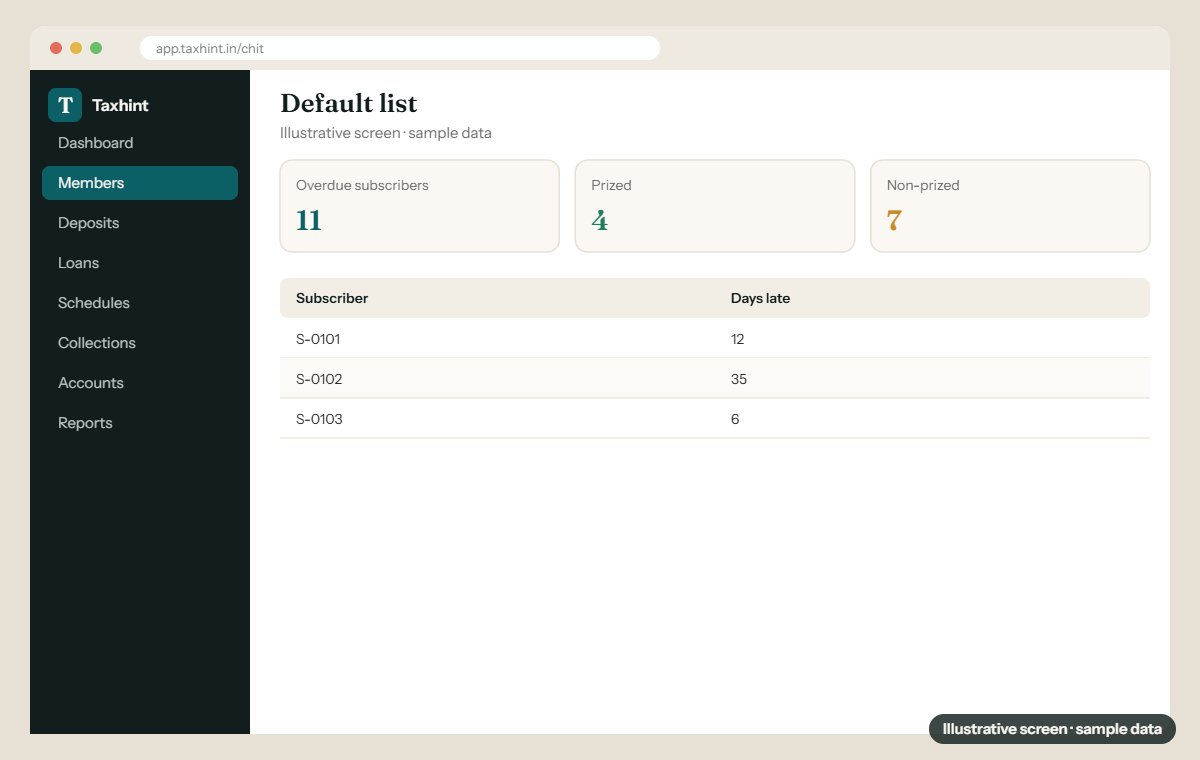
It can list overdue ticket holders and keep notice records.
Want default lists and notice records in one place? Book a demo of Taxhint chit fund software. Talk to Taxhint on +91 93117 95484 or [email protected], or visit taxhint.in.