November 24, 2026 · Guides
Code of Conduct for Loan Recovery Agents: A Simple Policy
Recovery is where lenders can lose their reputation. A single abusive call can become a complaint, a post online or an action by a regulator. A clear code, taught and signed, protects the borrower, the agent and you.
Regulated lenders are expected to follow directions on recovery conduct, so please verify the current rules with your CA or compliance officer.
In this guide
Core rules
Print and display.
- Contact only at reasonable hours.
- Be polite. No threats, abuse or pressure.
- Identify yourself and the lender.
- Speak only to the borrower or authorised persons about the dues.
- Never take cash without a receipt.
Rules in this area are specific and change, so please verify the current position with your CA or CS.
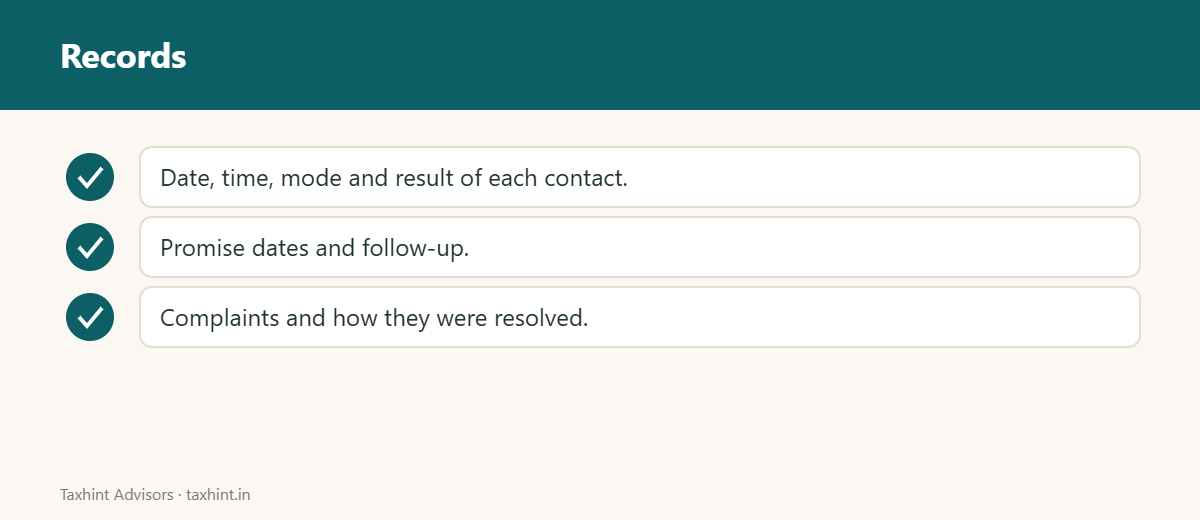
Records
Notes protect everyone.
- Date, time, mode and result of each contact.
- Promise dates and follow-up.
- Complaints and how they were resolved.
Training and checks
A code is only words until it is taught.
- Train every agent and take a signature. See collection agent agreement.
- Listen to a sample of calls where possible.
- Act on complaints quickly.
See overdue follow-up and loan collection app.
| Do | Do not |
|---|---|
| Be polite and clear | Threaten or abuse |
| Give receipts | Take cash without receipt |
| Record contacts | Call at odd hours |
Making a code of conduct real
A code of conduct for recovery staff is only useful when it is simple, written and signed. It should say how to contact customers, what times are allowed, how to behave and what must never be done. Staff and any outside agents should know that complaints are recorded and reviewed.
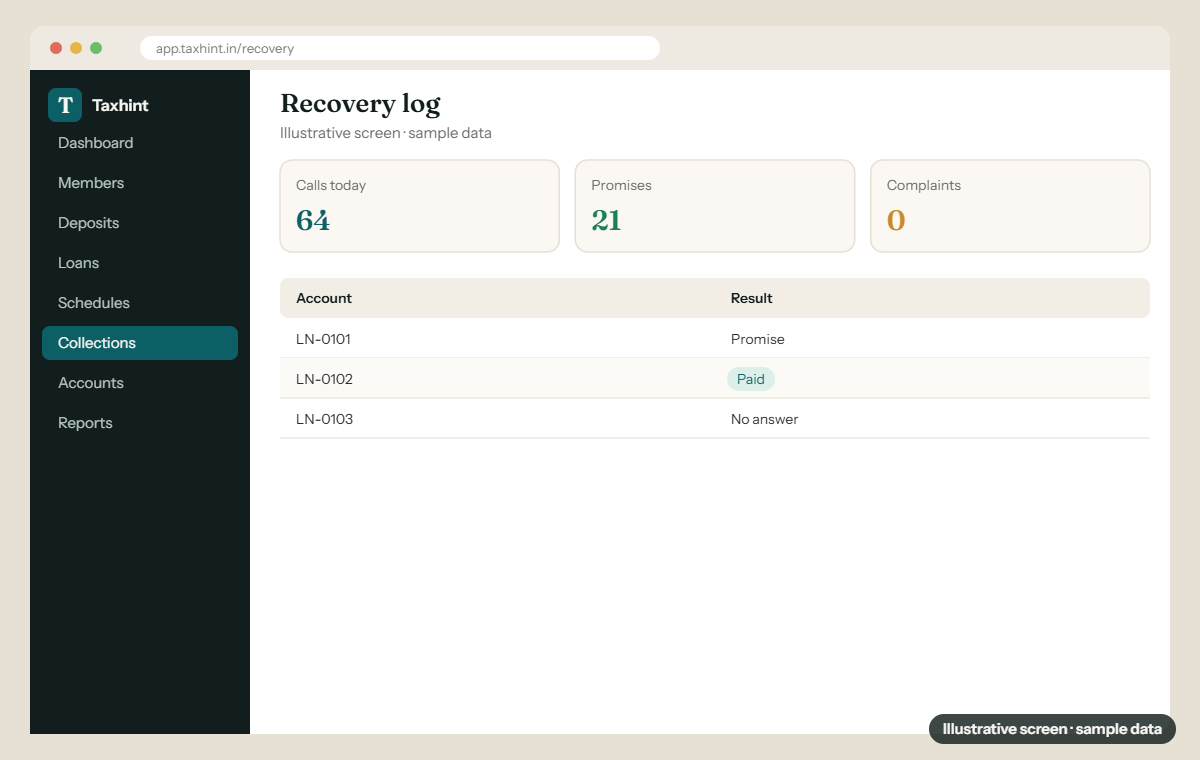
Illustrative example: each recovery call is logged with time and outcome. A customer complaint triggers a review of the call log by a manager who is not part of the recovery team.
Points to include
- Polite language and no threats.
- Contact only at reasonable hours and through proper channels.
- Identity card carried and shown by field staff.
- No contact with unrelated persons about the debt.
- Complaint route clearly told to the customer.
Steps to put it in place
- Draft the code with your CA or lawyer.
- Share it with all staff and agents and take signatures.
- Train them with role play examples.
- Log calls and visits in the software.
- Review complaints every month.
Warning signs to watch
- Repeated complaints about the same person.
- Visits without a log entry.
- Collections that do not match receipts.
- Please verify with your CA, CS or lawyer before you rely on it.
Tips for supervising recovery
Supervisors should listen to a sample of calls each week and read the visit notes. Praise good conduct and correct problems early. Make sure customers know whom to contact if they have a complaint, and review the complaint log in the monthly meeting.
Avoid targets that push staff to take shortcuts. A fair target links to repayment, not to pressure.
- Sample calls each week.
- Give customers a complaint route.
- Set fair targets.
Training and refreshers
Hold a short refresher every quarter and use real, anonymised cases. Ask staff what situations they find hard, and discuss good ways to handle them. Staff who feel supported are more likely to follow the code when under pressure.
- Quarterly refresher.
- Discuss difficult cases openly.
FAQs
Why do I need a code of conduct?
To protect borrowers, agents and the lender’s reputation.
Is it a legal requirement?
Directions apply to regulated lenders. Please verify.
What should agents record?
Each contact, promise and result.
What about complaints?
Log and resolve them quickly. See the grievance module guide.
Want recovery contacts logged and tracked? Book a demo of Taxhint collection software. Talk to Taxhint on +91 93117 95484 or [email protected], or visit taxhint.in.