November 24, 2026 · Guides
Chit Fund vs NBFC: Differences in Business, Rules and Software
A chit fund and an NBFC both deal with money from the public, but the models are different. In a chit, members save together and take turns receiving the pot. In an NBFC, the company lends its own funds, raised from owners or lenders.
Each is regulated under different laws, and the requirements differ. Please verify with your CA or lawyer before choosing a route.
Here is a plain comparison.
In this guide
How money flows
The basic difference.
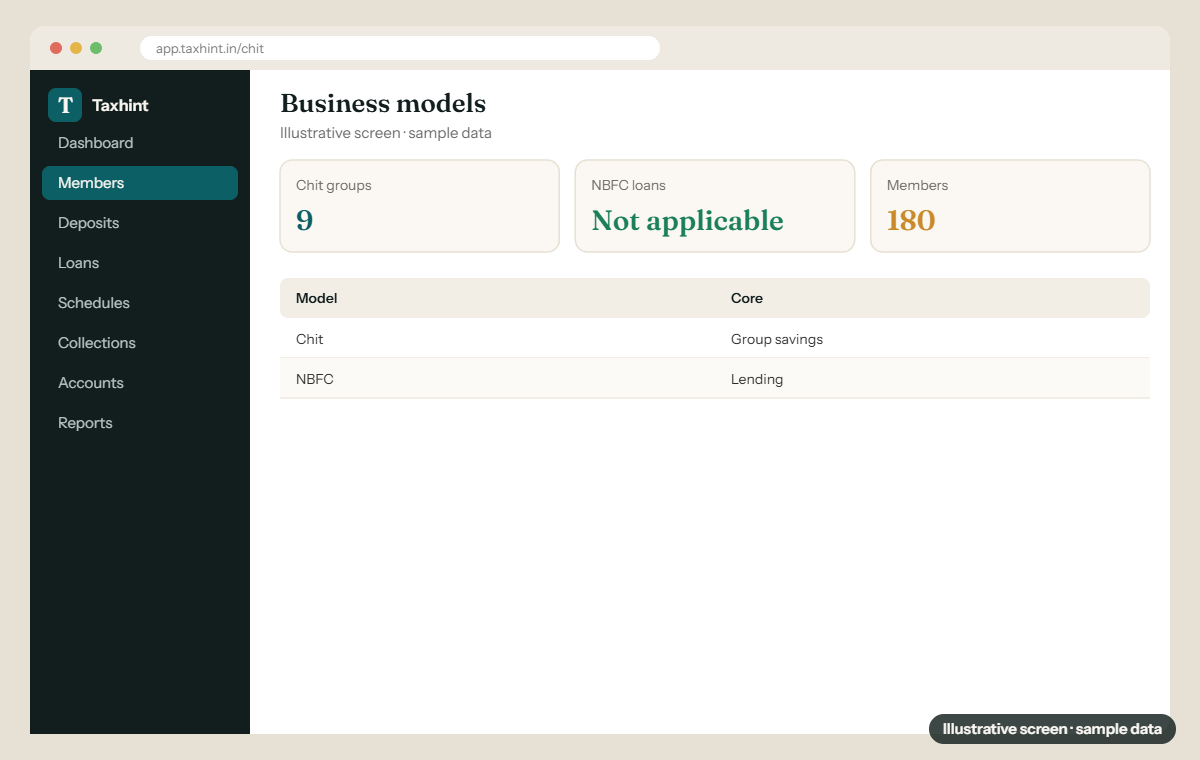
- Chit: members pay monthly and one member receives the pot each auction.
- NBFC: the company lends from its own capital or borrowed funds and earns interest.
Regulation
Different laws.
- Chit funds: Chit Funds Act and state rules.
- NBFCs: RBI directions and the Companies Act.
- Both involve registration and periodic compliance. Please verify.
Records and software
What each needs.
- Chit: groups, tickets, auctions, dividends, prize and surety.
- NBFC: loan accounts, interest, ageing, bureau reporting and returns.
- Some businesses run both and need separate books.
Choosing
Match the model.
- If your strength is group trust and collections, chit may fit.
- If your strength is credit assessment and funding, NBFC may fit.
- Take advice before deciding. See private finance company software.
The Chit Funds Act and state rules apply to chit funds, and they differ by state, so please verify with your CA or lawyer. See loan management software and credit and thrift society software.
| Point | Chit |
|---|---|
| Money | Pooled by members |
| Law | Chit Funds Act |
| Software | Auctions and tickets |
Two different business models
A chit fund pools money from subscribers who take turns to receive it, usually through an auction, while an NBFC lends its own or borrowed funds to customers and earns interest. The law, registration, records and risks are different for each.
Illustrative example: a business owner who wants to run groups of subscribers looks at the chit fund law of the state. A business owner who wants to give loans looks at the NBFC route. Some groups do both through separate entities.
Differences to understand
- Source of funds: subscribers versus lenders and capital.
- Regulator and approvals.
- Revenue: foreman commission versus interest.
- Records and returns.
- Risk: group default versus loan default.
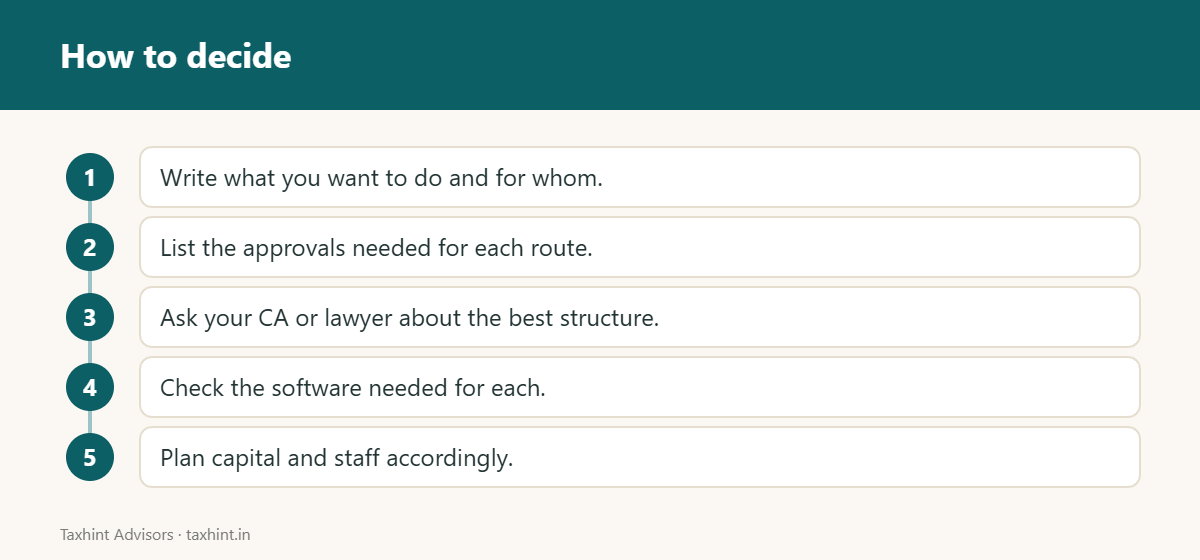
How to decide
- Write what you want to do and for whom.
- List the approvals needed for each route.
- Ask your CA or lawyer about the best structure.
- Check the software needed for each.
- Plan capital and staff accordingly.
Points to confirm
- Registration and compliance for your chosen route.
- Please verify with your CA, CS or lawyer before you rely on it.
Working with both
Some businesses run chit funds and also lend. Keep the two activities and their records separate and take professional advice on structure. Review this with your team once a quarter and update your checklist, because real cases teach more than the first draft.
Taxhint helps with chit fund registration, NBFC registration and software for both.
- Separate records
- Professional advice
- Software for each
Common mistakes
Mixing subscriber money with lending funds, ignoring state rules and underestimating staff needs are common mistakes. Review this with your team once a quarter and update your checklist, because real cases teach more than the first draft.
Plan the structure before you start.
- No mixing of funds
- State rules checked
- Staff planned
FAQs
Can one company do both?
Possible with separate compliance. Please verify.
Which is easier to start?
Depends on route and state. Take advice.
Do both need software?
Yes, with different features.
Does Taxhint cover both?
Taxhint does chit fund software and registration, and NBFC work.
Want software for chit funds or lending? Book a demo of Taxhint software. Talk to Taxhint on +91 93117 95484 or [email protected], or visit taxhint.in.