November 25, 2026 · Guides
Chit Funds Amendment Act 2019 Explained for Organisers
The Chit Funds Act has been amended, and organisers need to understand how the changes may affect their business. State rules also apply, so the practical picture can differ from state to state.
This page explains how to read the amendment and what to check. It does not list specific figures. This is general information, not legal advice. Please read the current official text and verify with your CA, CS or lawyer.
In this guide
- Why organisers should read it
- How to read it
- Areas to check
- Updating your process and software
- Common mistakes
- FAQ
Why organisers should read it
An amendment can change definitions, limits, procedures or responsibilities. If you run groups, even small changes can matter for how you register, run auctions, pay prize money and keep records.
Illustrative example: an organiser asks a lawyer to compare the amended Act with the current group agreement and to list the clauses that need change.
How to read it
Ask your lawyer to review the list before you act.
- Get the official text of the Act and the amendment.
- Mark the sections that deal with your activity.
- Read the related state rules, which may add conditions.
- Compare with your group agreement and procedure.
- Make a list of changes and dates.
Areas to check
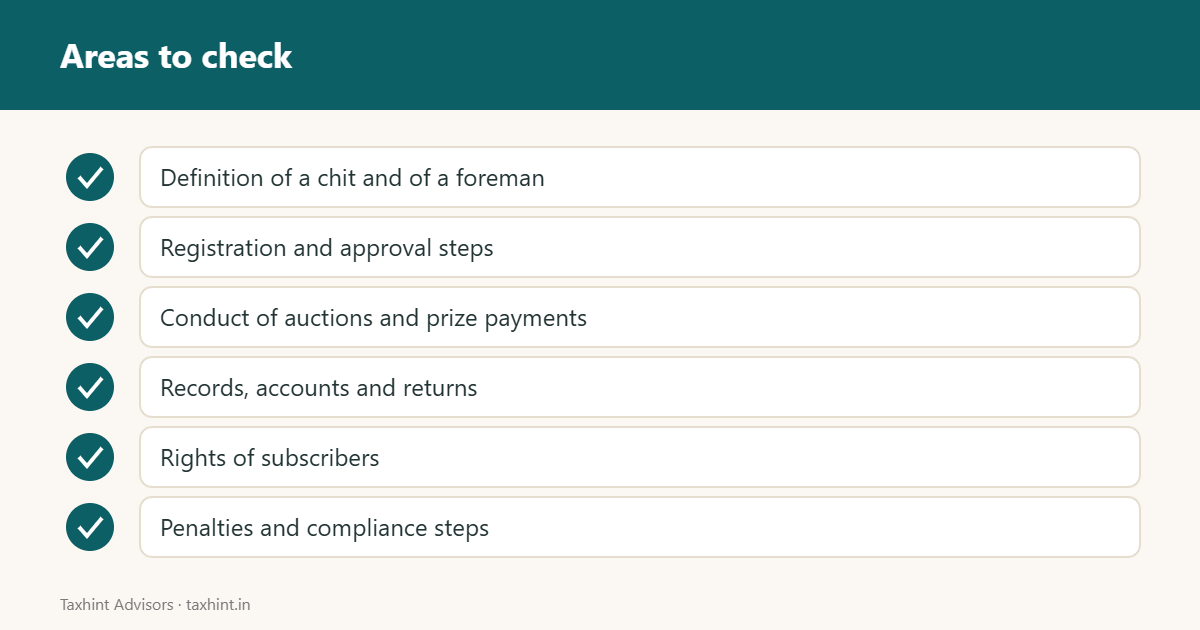
Each area may be handled differently by each state, so use the state specific text.
- Definition of a chit and of a foreman
- Registration and approval steps
- Conduct of auctions and prize payments
- Records, accounts and returns
- Rights of subscribers
- Penalties and compliance steps
Updating your process and software
If the amendment affects records or reports, update your software settings and test them. Update the group agreement and subscriber communication where needed.
Keep a dated note of what changed and why.
- Group agreement review
- Software reports and registers
- Subscriber communication
- Staff training
Common mistakes
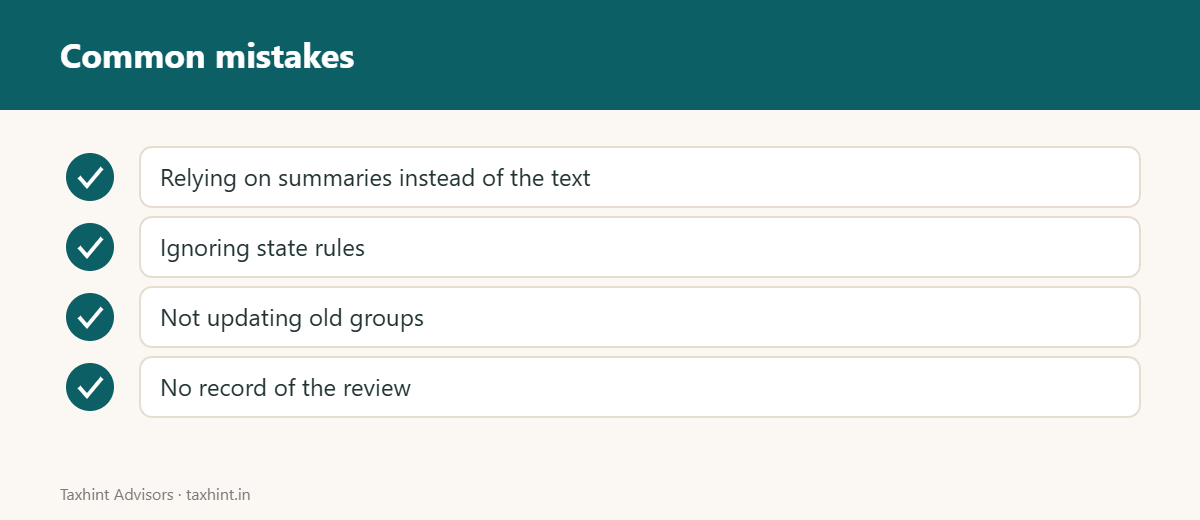
See also: chit fund niyam (Hindi) and how to start a chit fund business. Taxhint also helps with chit fund registration in all states.
- Relying on summaries instead of the text
- Ignoring state rules
- Not updating old groups
- No record of the review
Records to keep
Whatever the rule says, you should be able to show how you reviewed it. Keep a dated note of the text you read, the changes you found, the decisions taken and who approved them. If an auditor or inspector asks, these notes show that your process is real and current. For chit funds, this includes group agreements and the state specific text you relied on.
- Copy of the current official text with the date you downloaded it
- Gap list with owner and due date
- Approval note from management or the board
- Evidence of training for staff
A yearly calendar for chit fund rules
Put the review on a fixed calendar so that it does not depend on memory. A short checklist each quarter is better than a long scramble once a year.
- Quarter one: read the current text and update the gap list.
- Quarter two: test system settings with sample cases.
- Quarter three: refresh staff training and review complaints.
- Quarter four: management review and approval of the updated policy.
Where to get help
If any part of the text is unclear, ask your CA, CS or lawyer to explain it in writing for your case. Taxhint Advisors can help with registration, compliance and software set up for lenders and societies. Contact: +91 93117 95484, [email protected], taxhint.in.
Frequently asked questions
Does the amendment apply in every state?
The Act is central, but states have their own rules. Check both.
Do I need to change my group agreement?
Compare it with the current text with your lawyer.
Does software handle the changes?
It helps with records and reports once you set the rules correctly.
Where do I find the text?
On official government websites. Use the latest consolidated version.
For a demo or questions, contact Taxhint: +91 93117 95484 · [email protected] · taxhint.in