November 25, 2026 · Guides
EMI Card vs Consumer Loan: What Lenders and Customers Should Know
Many shops offer purchases on an EMI card, while others sell through a one time consumer loan. They both split a cost into monthly payments, but they work differently for the customer and for the lender.
This page explains the difference in simple words. This is general information, not financial or legal advice. Please verify with your CA or lawyer.
In this guide
- How an EMI card works
- How a consumer loan works
- Differences that matter
- What lenders should track
- What customers should check
- Mistakes to avoid
- FAQ
How an EMI card works
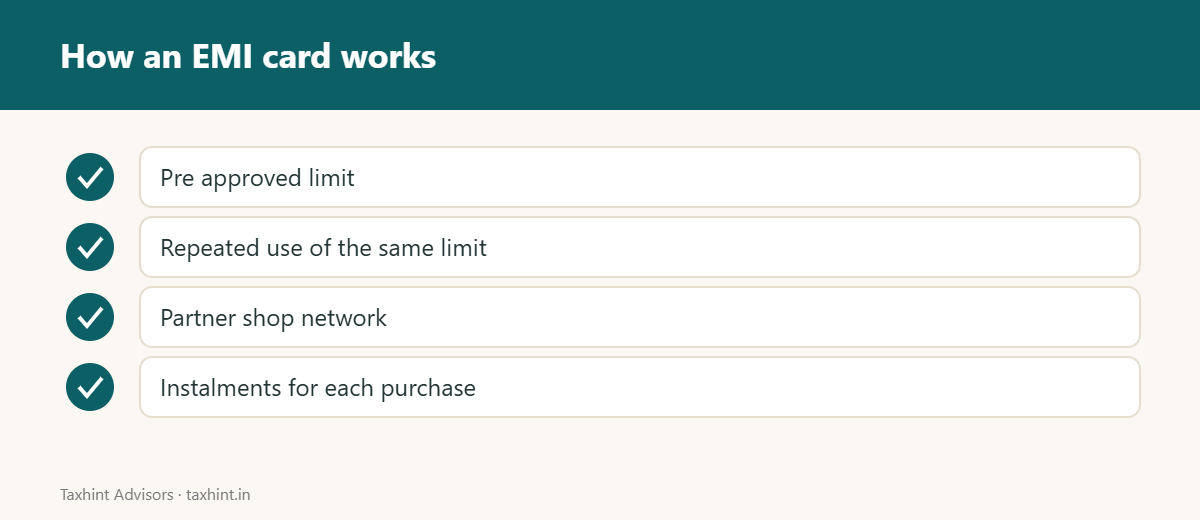
An EMI card gives a customer a pre approved limit. The customer can use it at partner shops, and each purchase is converted into instalments. Once the purchase is repaid, the limit becomes available again, to the extent of repayment.
Illustrative example: a customer has a card with a set limit, buys an appliance and pays it in monthly instalments. Later the customer buys a phone using the remaining limit.
- Pre approved limit
- Repeated use of the same limit
- Partner shop network
- Instalments for each purchase
How a consumer loan works
In a consumer loan, the customer applies for a particular purchase. The lender checks documents, approves a loan amount and disburses it, usually to the seller. The customer then pays a fixed schedule until the loan ends.
Each new purchase needs a new application, unless the lender offers a top up or repeat facility.
- Application per purchase
- Fixed schedule
- Disbursal to the seller
- Loan closes after the last instalment
Differences that matter
The right choice depends on how the customer buys and on the lender policy.
- Convenience: the card is quicker for repeat purchases.
- Credit assessment: a card limit is set once, a loan is assessed each time.
- Charges: the types of charges can differ, so read both carefully.
- Records: a card needs tracking of the limit, a loan needs tracking of a single schedule.
- Risk: a card can build up exposure across many purchases.
What lenders should track
For a card, track the limit, the amount used, the amount available and each purchase schedule. For a loan, track the schedule and the balance. In both cases, record the partner shop and the product.
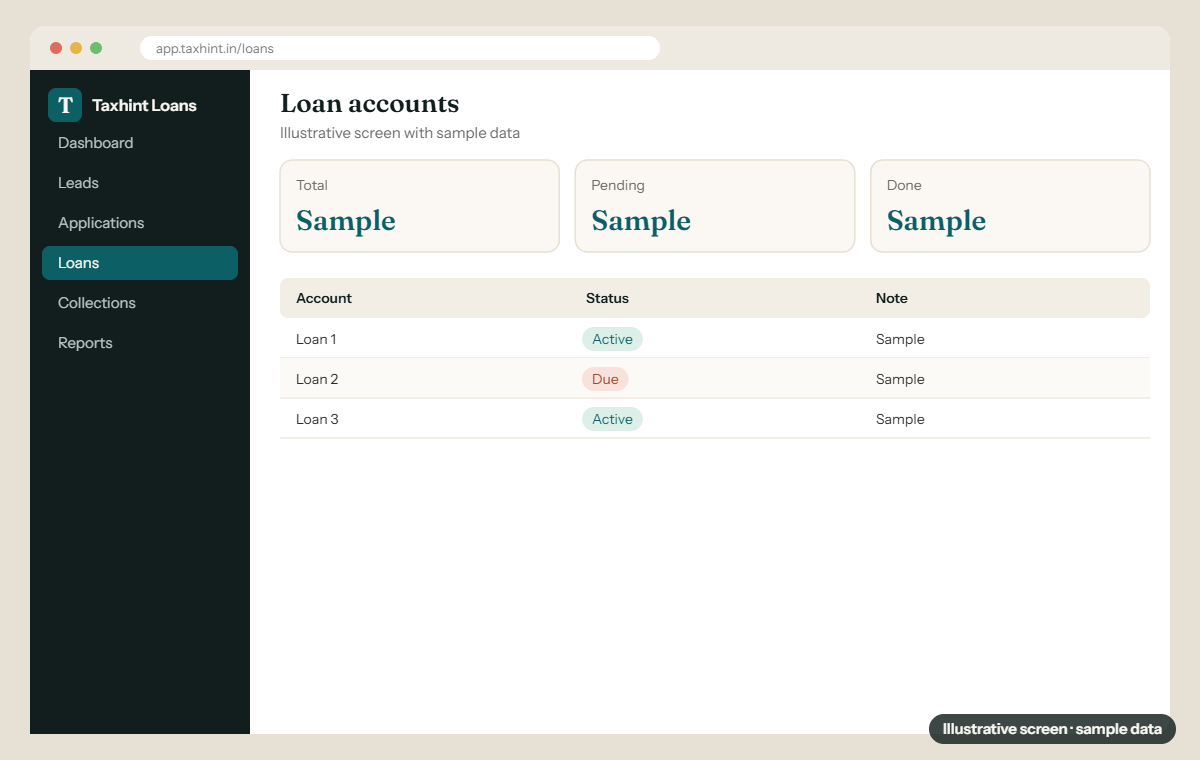
Your software should show a combined view of all dues for one customer, so that collection staff do not confuse them.
- Limit and available balance
- Purchase wise schedules
- Partner shop and product
- Combined dues per customer
What customers should check
Read the key terms, including the instalment, the tenure and every charge, before agreeing. Ask what happens if a payment is missed and how to close early. Keep copies of the agreement and the receipts.
This is general guidance and not financial advice.
- Instalment and tenure
- All charges
- Missed payment terms
- Early closure terms
Mistakes to avoid
Lenders sometimes treat card purchases like loans in the system and lose track of the limit. Customers sometimes assume that a card means free credit and use it beyond their means.
- Mixing limit and loan records
- Not showing charges clearly
- Overusing the limit
- No reminders before due dates
Choosing between the two
Compare the total cost, the repayment period and the terms before you choose. Read the fine print and ask for a written schedule. Please verify with your CA, CS or lawyer.
- Total cost over the period
- Prepayment terms
- Late payment terms
Frequently asked questions
Which is better, EMI card or consumer loan?
It depends on how the customer buys and on the terms. Compare the total cost and the conditions.
Can an EMI card limit change?
It can depend on the lender policy and the customer repayment record.
Are charges the same for both?
Not necessarily. Read the key terms of each product.
Does Taxhint provide loan software for consumer finance?
Taxhint provides loan management software. Ask for a demo for your product type.
For a demo or questions, contact Taxhint: +91 93117 95484 · [email protected] · taxhint.in