November 25, 2026 · Guides
Gold Loan Auction Process Explained for Lenders
Selling pledged gold is the last step when a loan is not repaid. It is also the step most likely to lead to disputes if the process is not clean. A careful, documented process protects the customer and the lender.
This guide explains the usual stages. The exact notice periods and conditions depend on your agreement, the law and applicable directions. This is general information, not legal advice. Please verify the process with your lawyer or CA.
In this guide
- Start with the agreement
- Follow up and notices
- Valuation and the reserve
- Conducting the sale
- After the sale
- Mistakes to avoid
- FAQ
Start with the agreement
Your loan agreement and policy should say when a loan is considered overdue, what notices will be sent and under what conditions the pledged gold may be sold. Customers should have received these terms and signed them at the start.
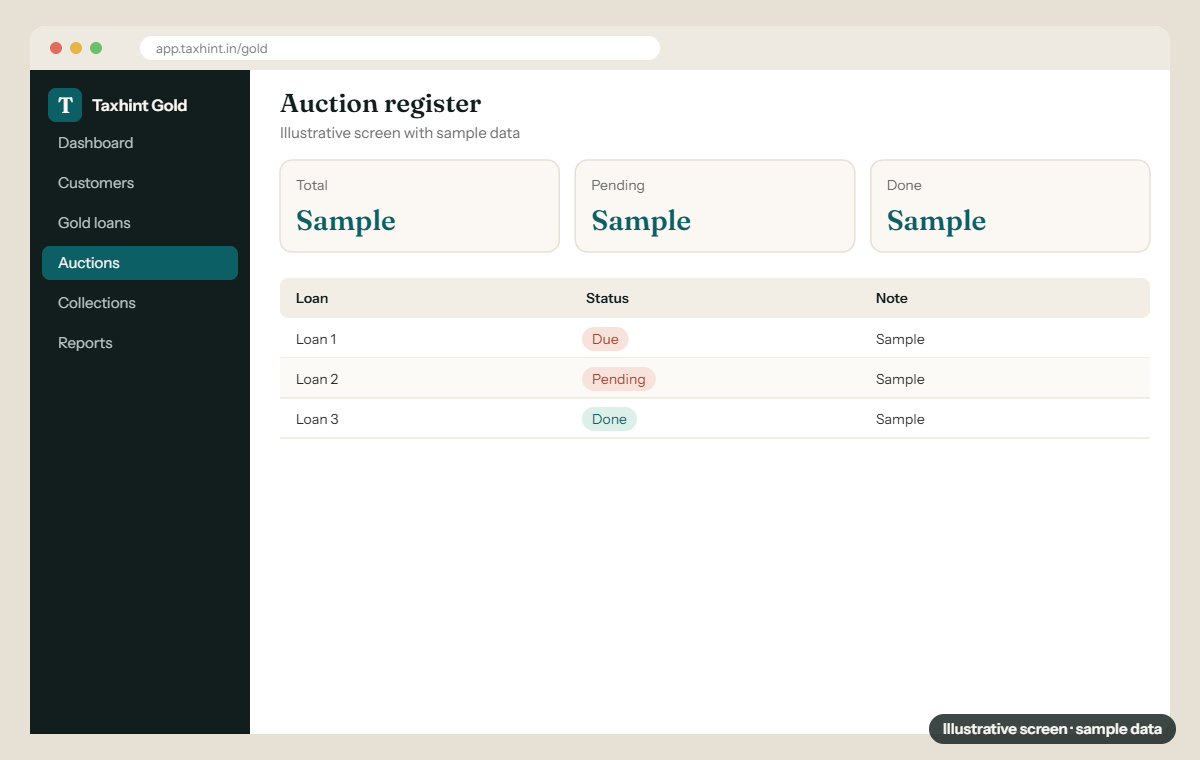
Illustrative example: before any sale, the officer pulls the signed agreement and the notice history and confirms that every step was followed.
- Signed agreement and receipt
- Overdue definition in policy
- Notice terms
- Contact details of the customer
Follow up and notices
Before reaching the auction stage, follow up politely by message and call, and record every attempt. Then send the formal notices in the way your agreement and the law require, and keep proof of delivery.
Give the customer a fair chance to repay, renew or discuss options within your policy.
- Reminder messages and calls
- First written notice
- Final written notice
- Proof of delivery filed
- Manager review before the next step
Valuation and the reserve
Before sale, get a fresh valuation by an authorised person and record it. The sale should be conducted in a way that gets a fair price, and your policy should say how the reserve or minimum is set.
Record the weight, purity and photographs again so that the details match the loan file.
- Fresh valuation record
- Reserve price rule
- Photographs and weights
- Valuer name and date
Conducting the sale
Announce the sale as required, keep a record of participants and bids, and have the sale conducted by authorised staff with a witness where your policy asks. Do not allow staff or their relatives to buy in a way that creates a conflict of interest.
Keep a written record of the result.
- Public notice as required
- Participant and bid record
- Independent witness where required
- Conflict of interest rule
After the sale
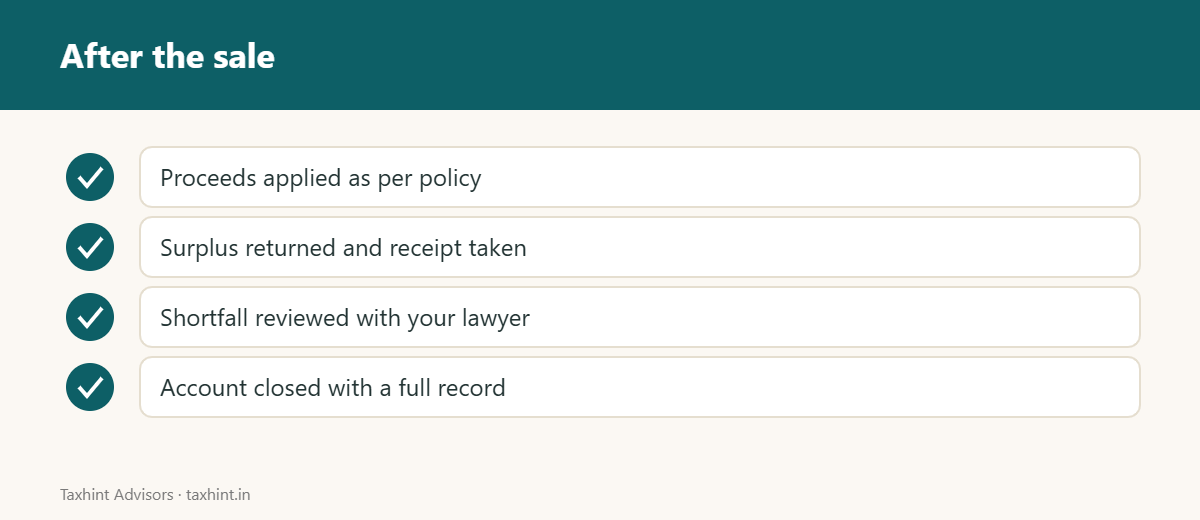
Apply the sale proceeds to the loan, interest and permitted charges. If there is a surplus, return it to the customer in the way your policy and the law require. If there is a shortfall, take advice before any further step.
Update the loan account and close it with a record of every entry.
- Proceeds applied as per policy
- Surplus returned and receipt taken
- Shortfall reviewed with your lawyer
- Account closed with a full record
Mistakes to avoid
The most common mistakes are skipping notices, selling without a fresh valuation, mixing up customer packets and failing to record the process. Each can turn a recovery into a complaint or a legal case.
- Skipping or delaying notices
- No fresh valuation
- Weak packet records
- No witness or record of the sale
Frequently asked questions
Can I sell gold without sending notices?
No. Follow your agreement and the applicable law. Ask your lawyer for the correct process.
Who can buy the gold in an auction?
Your policy should set rules and avoid conflicts of interest. Staff should not buy in a way that creates a conflict.
What if the sale price is lower than the loan?
Take legal advice on further steps. Record the shortfall and your decision.
Can software help?
Yes. It can track overdue days, notice dates and packet details. Your process still needs legal review.
For a demo or questions, contact Taxhint: +91 93117 95484 · [email protected] · taxhint.in