November 24, 2026 · Guides
Microfinance Grievance Redressal: Building a Complaint System Borrowers Trust
Borrowers rarely complain loudly. They stop paying, leave the group or tell their neighbours. A working microfinance grievance redressal system catches the problem early and shows regulators and donors that you take fair practice seriously.
This guide sets out the officers, the process, the records and the escalation path, in the order you can build them.
In this guide
- Step 1: Name the people
- Step 2: Make it visible
- Step 3: Define the process
- Step 4: Keep the register
- Step 5: Report to the board
- Related reading
- Where this comes from
- FAQs
Step 1: Name the people
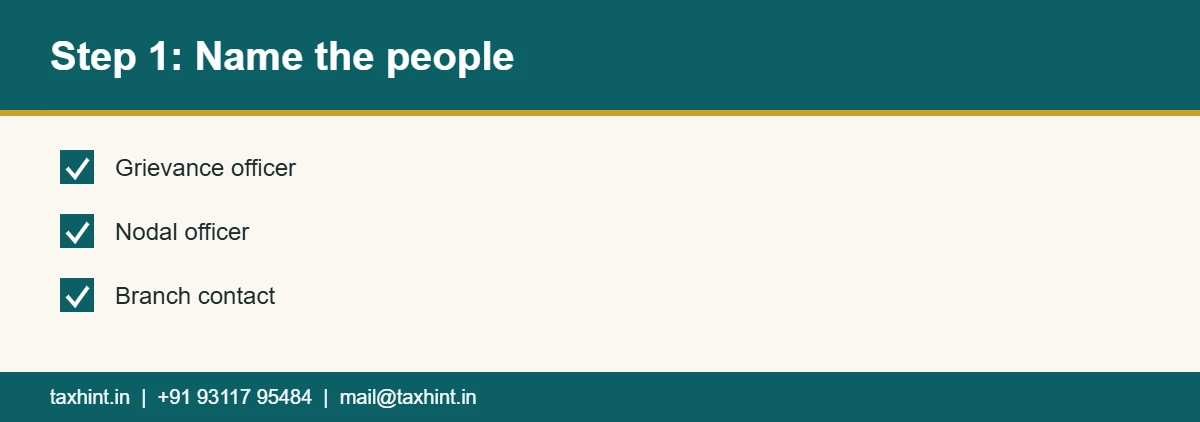
- Grievance officer: receives and resolves complaints. Keep this person independent of collection targets.
- Nodal officer: senior contact for escalations and for regulator queries.
- Branch contact: each branch has a named person for first-level complaints.
Step 2: Make it visible
Print the grievance officer’s name, phone number, email and address on the loan card, receipt, loan agreement and a notice in every branch and centre meeting place. Add the escalation route, including the RBI route described in our ombudsman guide. A borrower who cannot find the number cannot complain.
Step 3: Define the process
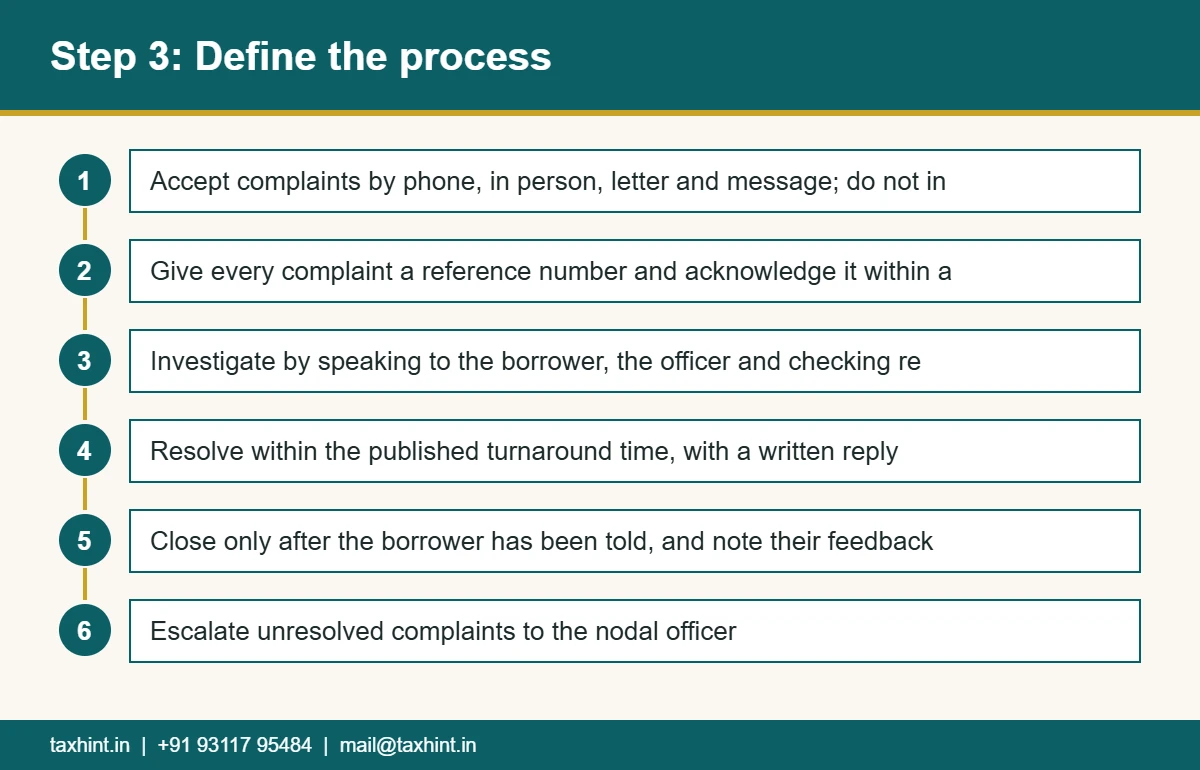
- Accept complaints by phone, in person, letter and message; do not insist on a form.
- Give every complaint a reference number and acknowledge it within a short, fixed time.
- Investigate by speaking to the borrower, the officer and checking records.
- Resolve within the published turnaround time, with a written reply.
- Close only after the borrower has been told, and note their feedback.
- Escalate unresolved complaints to the nodal officer.
Step 4: Keep the register
A complaint register should record the date, borrower, loan, branch, issue, action, person responsible, closure date and borrower response. Review it every month by branch and by issue type. Repeated complaints from one branch or one officer are a signal that needs action. Use the grievance register format if you want a ready layout.
Step 5: Report to the board
Place a short quarterly report before the board: complaints received, closed within time, average resolution time, top issues and any escalation to a regulator. A lender that reports its own problems is easier to trust.
Related reading
Tone and conduct standards are in our fair practices and recovery guide. Many systems include a complaint module; see our microfinance software.
Where this comes from
Source: RBI (NBFC – Microfinance Institution) Directions, 2025. RBI updates these Directions from time to time, so confirm the current text before acting.
FAQs
Who should be the grievance officer?
A senior staff member who does not carry collection targets, so the borrower can trust the independence.
How long should it take to resolve a complaint?
Set a clear time in your policy, publish it and track it. Shorter is better for simple matters.
Must contact details be displayed?
Yes. Contact details and the escalation route should be visible to borrowers in the branch and on loan documents.
Can complaints be taken by phone?
Yes. Do not force borrowers to write. Log the call and give a reference number.
Can software log complaints?
Yes, many loan systems include a complaint module with reminders and reports.
Running loans on spreadsheets? Book a free demo of our microfinance software, starting ₹15,000, or WhatsApp +91 93117 95484.