November 24, 2026 · Guides
NBFC-MFI RBI Returns: How to Build a Reliable Filing Calendar
RBI does not forgive a missed return because a staff member was on leave. Late or inaccurate NBFC-MFI RBI returns create supervisory questions that take weeks to answer, so the discipline of a calendar matters more than any single filing.
RBI sets the forms, portal and due dates, and they change, so this article gives you the system, not a frozen list of dates.
In this guide
- Step 1: Build the master list
- Step 2: Group by rhythm
- Step 3: Name an owner and a reviewer
- Step 4: Make the data reliable
- If you miss a due date
- Related reading
- Where this comes from
- FAQs
Step 1: Build the master list
Open the current RBI Directions for NBFC-MFIs and the Scale Based Regulation Directions, and list every return and statement they mention. Note for each: the name, frequency, the date it is due, the portal or channel, who certifies it and what data it needs. Your auditor and a good compliance professional can help confirm the list once, and then you maintain it.
Step 2: Group by rhythm
| Rhythm | Typical content | Practical tip |
|---|---|---|
| Monthly | Selected portfolio and financial data | Close books by a fixed working day |
| Quarterly | Prudential, liquidity and asset-quality statements | Align with board and committee meetings |
| Annual | Audited accounts, auditor certificates, declarations | Start data collection a month before year-end |
| Event-based | Changes in directors, address, ownership | Trigger a checklist when the event happens |
Step 3: Name an owner and a reviewer
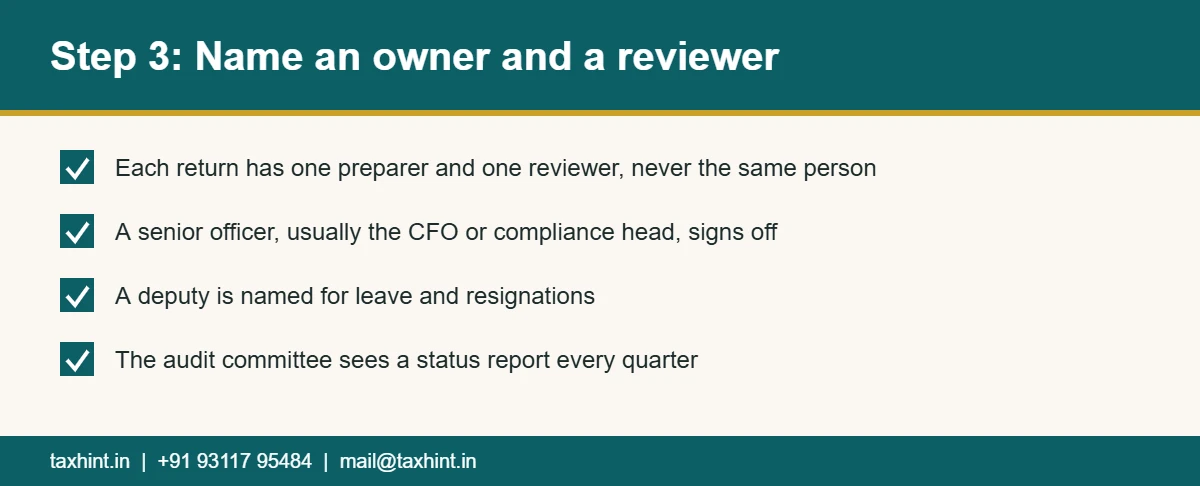
- Each return has one preparer and one reviewer, never the same person.
- A senior officer, usually the CFO or compliance head, signs off.
- A deputy is named for leave and resignations.
- The audit committee sees a status report every quarter.
Step 4: Make the data reliable
Most return errors come from loan data that was never reconciled. Before preparation, reconcile loan outstanding with the ledger, check asset classification and confirm that the report ties to what you send the credit bureaus. Our MIS reports list shows the reports to run first.
If you miss a due date
File as soon as the data is ready, inform your RBI regional office with a short explanation, and fix the cause: a missing owner, late closing or slow approval. Record the incident for the audit committee. Repeated delays are treated as a governance weakness.
Related reading
Keep the tracker next to your inspection checklist, the NOF routine and, for the company side, the compliance calendar.
Where this comes from
Source: RBI (NBFC – Microfinance Institution) Directions, 2025. RBI updates these Directions from time to time, so confirm the current text before acting.
FAQs
Who files RBI returns for an NBFC-MFI?
Authorised officers of the NBFC file them through the RBI portal or the channel RBI specifies.
Do returns need certification?
Some need auditor or officer certification, depending on the return. The instruction for each form says so.
Can a filed return be corrected?
Usually through a resubmission process in the portal. Follow the portal’s instructions and keep the reason on file.
How do I find the due dates?
From the current RBI Directions and circulars applicable to your layer. Build them into the tracker and recheck after each RBI update.
Do we need special software?
No. A well-kept tracker works, but compliance software helps larger NBFCs.
Planning a microfinance company or already running one? Our CAs and CSs handle registration, RBI work and yearly compliance. Get Free Consultation or WhatsApp +91 93117 95484.