November 24, 2026 · Guides
NBFC Cybersecurity and IT Governance: What the RBI 2026 Directions Mean for an MFI
Loan data is personal and financial. If it leaks or the system goes down on a collection day, borrowers and regulators both notice. That is why RBI treats NBFC cybersecurity as a governance matter and has issued a full framework for NBFCs.
This guide explains how the framework is structured, which chapter fits which size of lender, and a baseline checklist any NBFC-MFI can start from.
In this guide
- The framework in brief
- Baseline for smaller NBFC-MFIs
- Additional expectations as you grow
- Your software vendor is part of your risk
- A practical starting checklist
- Related reading
- Where this comes from
- FAQs
The framework in brief
On 31 July 2026 RBI issued the Non-Banking Financial Companies (Cybersecurity, Technology: Risk, Resilience and Assurance Framework) Directions, 2026. It follows the earlier IT governance Master Direction of 2023. The Directions are layered by size: one chapter for base-layer NBFCs with asset size below ₹500 crore and Core Investment Companies, another for base-layer NBFCs with asset size of ₹500 crore and above, and a further chapter for middle layer and above. Most NBFC-MFIs start in the base layer, so the first two chapters matter most.
Baseline for smaller NBFC-MFIs
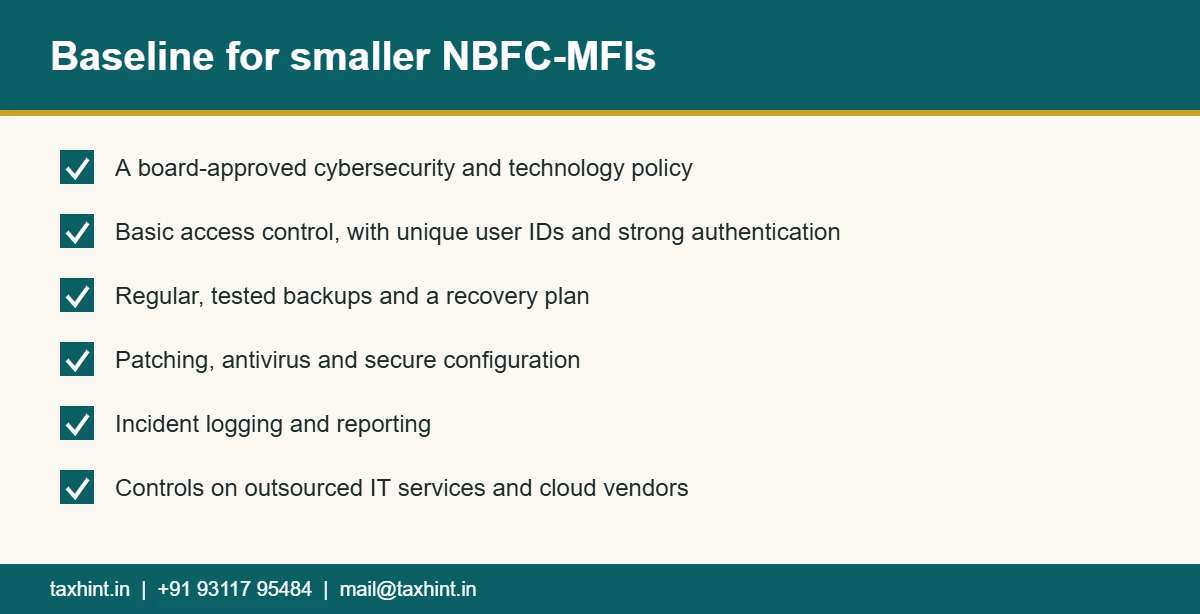
- A board-approved cybersecurity and technology policy.
- Basic access control, with unique user IDs and strong authentication.
- Regular, tested backups and a recovery plan.
- Patching, antivirus and secure configuration.
- Incident logging and reporting.
- Controls on outsourced IT services and cloud vendors.
Additional expectations as you grow
NBFCs at or above the higher base-layer threshold, and those in the middle layer, face fuller requirements on IT governance, IT policy, information security, IT operations, information systems audit, business continuity and disaster recovery, and IT outsourcing. In larger NBFCs an IT strategy or steering committee and a senior information security officer come into play. Check the chapter that applies to your asset size each year.
Your software vendor is part of your risk
Most microfinance lenders run vendor software. Ask the vendor how it protects data, how often it takes backups, where data is hosted, whether it logs access, and how it handles incidents. Get answers in writing. Our guides on cloud vs on-premise and audit trails and security list the questions.
A practical starting checklist
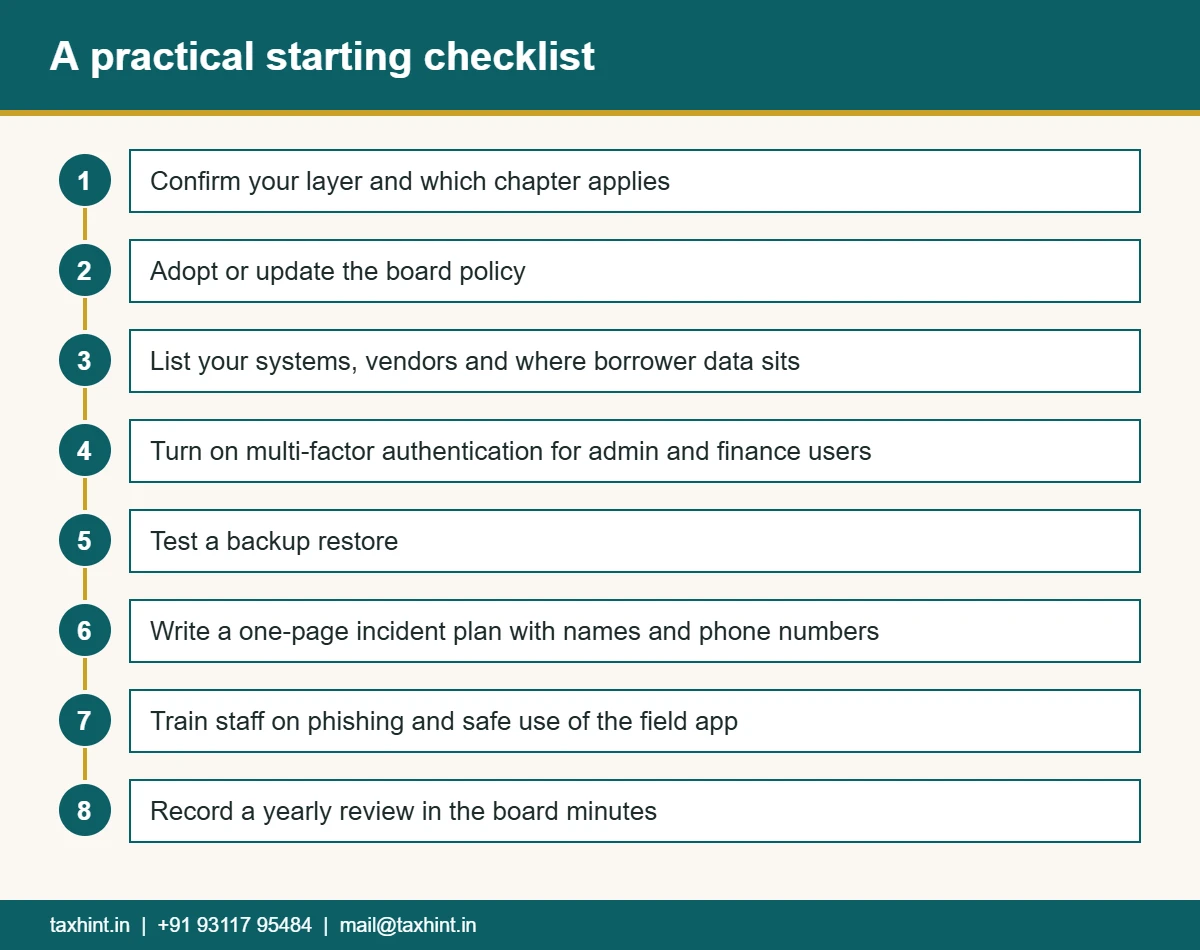
- Confirm your layer and which chapter applies.
- Adopt or update the board policy.
- List your systems, vendors and where borrower data sits.
- Turn on multi-factor authentication for admin and finance users.
- Test a backup restore.
- Write a one-page incident plan with names and phone numbers.
- Train staff on phishing and safe use of the field app.
- Record a yearly review in the board minutes.
Related reading
See DPDP Act and borrower data and board committees.
Where this comes from
Source: RBI NBFC Cybersecurity, Technology: Risk, Resilience and Assurance Framework Directions, 2026. RBI updates these Directions from time to time, so confirm the current text before acting.
FAQs
Does the framework apply to a small NBFC-MFI?
Yes, in a lighter form. Base-layer NBFCs below ₹500 crore have a baseline chapter, and requirements increase with size.
Which Directions are current?
The 2026 Cybersecurity, Technology: Risk, Resilience and Assurance Framework Directions apply to NBFCs. Always check the RBI site for updates.
Do we need an IT audit?
Information systems audit requirements come in at higher layers, but every NBFC should still review its controls regularly.
Who is accountable for IT risk?
The board, through its policy and, in larger NBFCs, an IT committee and a security head.
Can we outsource IT?
Yes, but the NBFC remains responsible and must manage vendor risk.
Planning a microfinance company or already running one? Our CAs and CSs handle registration, RBI work and yearly compliance. Get Free Consultation or WhatsApp +91 93117 95484.