November 24, 2026 · Guides
Microfinance Securitisation and Direct Assignment Explained
Microfinance securitisation and direct assignment let a lender sell a pool of loans to another institution and get cash now instead of waiting for instalments. Banks buy these pools because microloans are short and granular.
This guide explains the two routes, what buyers check and where the rules sit.
In this guide
- Two routes
- What buyers check
- Rules to read
- A worked illustration
- Preparing a first deal
- Related reading
- Where this comes from
- Questions for the buyer
- Accounting and disclosure
- Risks to weigh
- Internal checklist before approaching a buyer
- FAQs
Two routes
| Route | How it works |
|---|---|
| Direct assignment | The loans are sold directly to a buyer, usually a bank, with no tranching |
| Securitisation | Loans are pooled in a special vehicle that issues securities to investors |
What buyers check
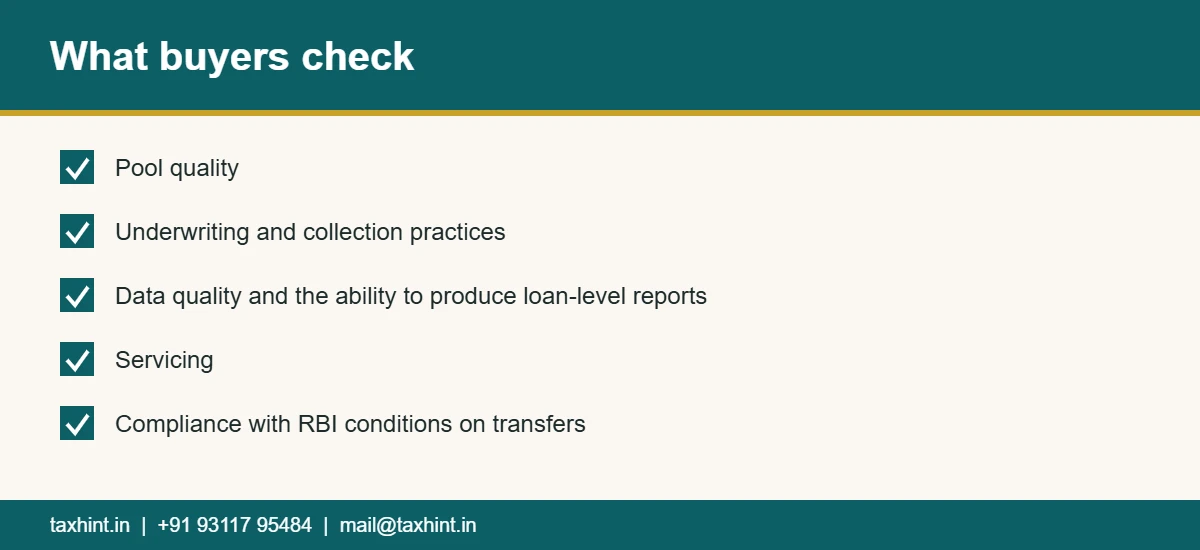
- Pool quality: overdue history and borrower mix.
- Underwriting and collection practices.
- Data quality and the ability to produce loan-level reports.
- Servicing: you continue to collect and remit.
- Compliance with RBI conditions on transfers.
Rules to read
RBI has issued directions on securitisation of standard assets and transfer of loan exposures. They set conditions on minimum holding, retention and disclosure, and they change. Read the current Directions and ask your auditor about accounting before you sign any term sheet.
A worked illustration
This is illustrative, with invented round numbers and not a client case. A lender with a ₹100 crore book sells a ₹20 crore pool to a bank at an agreed price. It receives cash, keeps servicing the loans and passes collections to the bank. The cash funds new disbursement. If the pool performs worse than agreed, warranties or retention terms may apply. The deal helps liquidity but not profit by itself.
Preparing a first deal
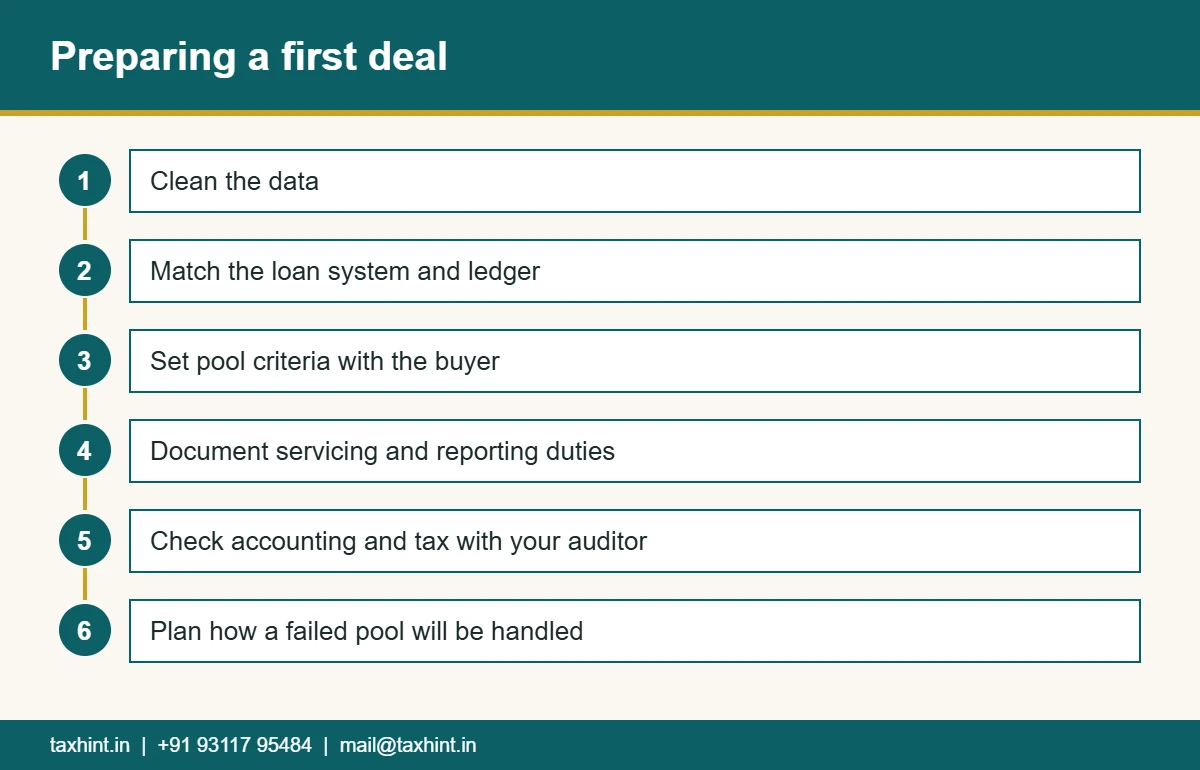
- Clean the data: IDs, dates and balances.
- Match the loan system and ledger.
- Set pool criteria with the buyer.
- Document servicing and reporting duties.
- Check accounting and tax with your auditor.
- Plan how a failed pool will be handled.
Related reading
See funding sources and provisioning.
Where this comes from
Source: RBI – regulations on securitisation and transfer of loan exposures. Figures and policies change, so check the latest version before relying on them.
Questions for the buyer
- Which pool criteria will you apply?
- How do you verify data?
- What reports do you expect each month?
- Who bears first losses?
- How are disputes resolved?
Accounting and disclosure
Whether the sold loans leave your balance sheet depends on the transfer terms and the accounting standard you follow. Retained risk, such as first-loss guarantees, can keep exposure on your books. Prepare a note for your auditor before the deal closes, and disclose the transaction as the Directions and accounting rules require.
Risks to weigh
- Over-reliance on pool sales to fund growth.
- Servicing errors leading to disputes with the buyer.
- Reputation damage if pool performance disappoints.
- Concentration in a few buyers.
Internal checklist before approaching a buyer
- Board approval for the transaction type and size.
- Legal review of loan agreements for assignability.
- Borrower communication plan, including any consent or notice needed.
- Cash-flow model showing the effect on liquidity and profit.
FAQs
Who can buy microfinance pools?
Banks, NBFCs and investors, subject to rules.
Can a Section 8 company sell loans?
Check your MOA, lenders’ consents and any charges on the loans.
Does the lender stop collecting?
Often it continues as servicer under the agreement.
What if the pool turns bad?
Terms in the deal and RBI rules decide who bears the loss.
Is this suitable for small lenders?
Usually after a clear track record and clean data. Smaller lenders often start with bank loans.
How long does a first deal take?
Often several months, mostly for data cleaning, legal review and buyer due diligence.
Planning a microfinance company or already running one? Our CAs and CSs handle registration, RBI work and yearly compliance. Get Free Consultation or WhatsApp +91 93117 95484.