November 26, 2026 · Guides
NBFC Scale-Based Regulation Explained Simply
Since October 2022, RBI regulates NBFCs according to their size, activity and risk. This framework is called scale-based regulation (SBR). A small new lender and a large deposit-taking NBFC no longer follow the same rulebook: the bigger and more connected the NBFC, the stricter the rules.
Here is how the layers work and what they mean for someone starting an NBFC. Always check the current RBI Master Direction before acting, as RBI updates it from time to time. For registration help, see NBFC registration.
In this guide
- The four layers
- Base Layer
- Middle Layer
- Upper and Top Layers
- What SBR changed for everyone
- What it means if you are starting now
- FAQs
The four layers
Every NBFC sits in one of four layers. The layer decides governance, capital and reporting rules.
Base Layer
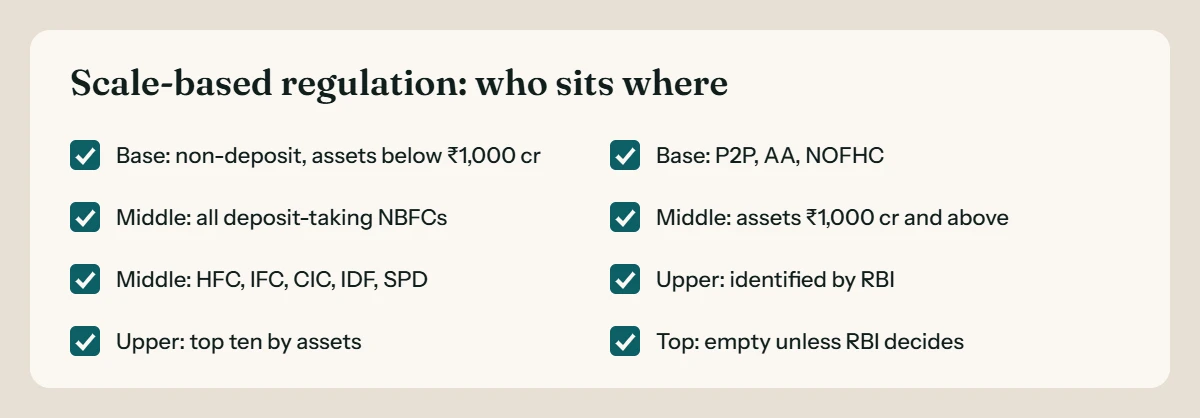
Non-deposit NBFCs with assets below ₹1,000 crore, plus NBFC-P2P platforms, Account Aggregators, non-operative financial holding companies and NBFCs without public funds or customer interface. Most new NBFCs start here. Rules are lighter, but the basics apply: net owned fund, prudential norms, KYC, fair practices and returns.
Middle Layer
All deposit-taking NBFCs, non-deposit NBFCs with assets of ₹1,000 crore and above, and some categories by default: Housing Finance Companies, Infrastructure Finance Companies, Core Investment Companies, Infrastructure Debt Funds and Standalone Primary Dealers. Expect stronger governance, more disclosures and stricter capital rules.
Upper and Top Layers
The Upper Layer holds NBFCs that RBI identifies as needing closer oversight, based on size and other factors; the largest ten by assets are included automatically. The Top Layer is meant to stay empty unless RBI sees a serious risk in a particular Upper Layer NBFC.
What SBR changed for everyone
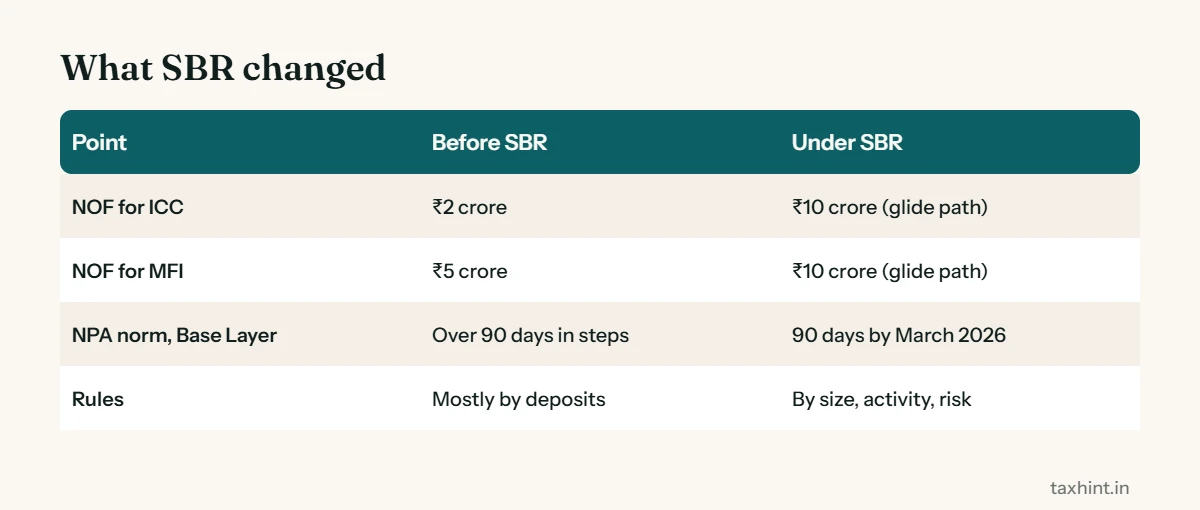
Two changes affect new lenders directly. The regulatory minimum net owned fund for NBFC-ICC, NBFC-MFI and NBFC-Factor rose to ₹10 crore, with a glide path for older NBFCs. And the overdue period for classifying a loan as non-performing was brought to 90 days for all NBFCs, phased in for the Base Layer by March 2026. Our NOF calculator shows where you stand.
What it means if you are starting now
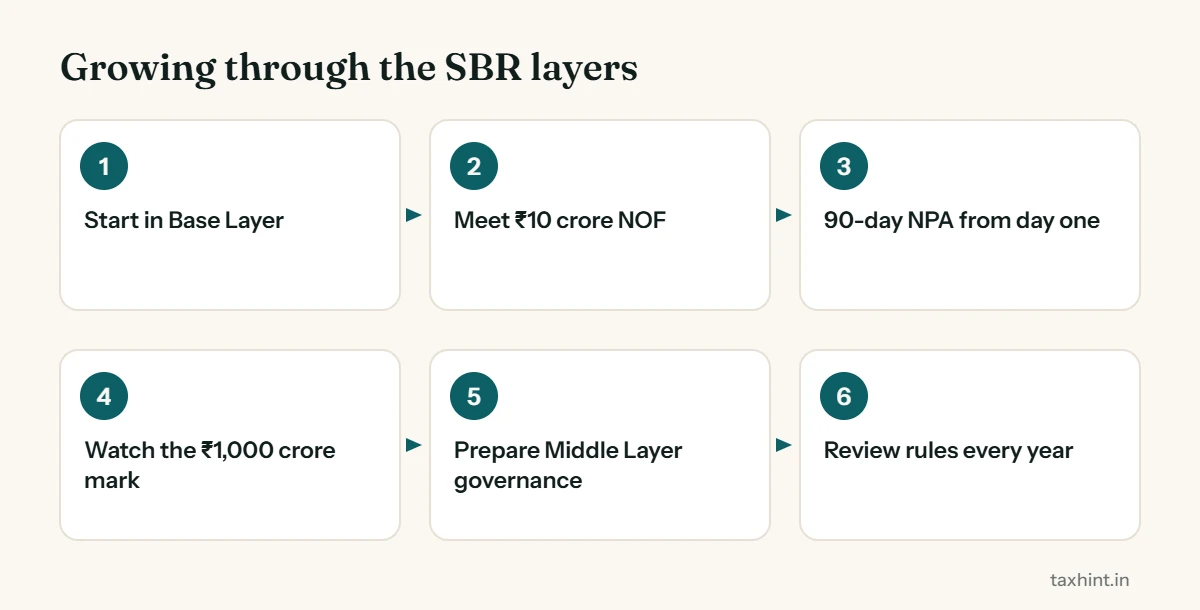
A new NBFC usually starts in the Base Layer, needs ₹10 crore net owned fund for most categories, and must run its loan book on the 90-day NPA norm from day one. Your software should classify loans by days past due automatically; see our loan management software. As you grow towards ₹1,000 crore in assets, plan early for Middle Layer governance. Our NBFC compliance team tracks these thresholds.
Frequently asked questions
What is scale-based regulation for NBFCs?
RBI’s framework, in force since October 2022, that places NBFCs in Base, Middle, Upper and Top layers and applies stricter rules as size and risk grow.
Which layer does a new NBFC start in?
Usually the Base Layer, unless it takes deposits or falls in a category that is placed in the Middle Layer by default.
What is the asset limit for the Base Layer?
Non-deposit NBFCs with assets below ₹1,000 crore are in the Base Layer, along with some specified categories.
What is the NPA norm under SBR?
Loans overdue for more than 90 days are classified as non-performing, with a glide path that ended in March 2026 for the Base Layer.
Should I check the current RBI directions?
Yes. RBI updates its Master Directions; we confirm the latest position before any filing.
Next step: Want to know which layer your NBFC would fall in and what applies? Talk to our CAs. Call +91 93117 95484, email [email protected], or use the form on our NBFC compliance page.