November 25, 2026 · Guides
RBI Gold Loan Directions Explained for Lenders

Gold loan lending is covered by directions that deal with valuation, loan to value, documentation, safe custody and what happens when a loan is not repaid. The text changes from time to time, so you should always read the current version.
This page is a plain language checklist of the topics to look for. It does not quote numbers or limits. This is general information, not legal advice. Please read the current official text and verify with your CA, CS or lawyer.
In this guide
- Why these directions matter
- Topics to look for in the text
- How software supports compliance
- Common gaps
- A simple review routine
- FAQ
Why these directions matter
Gold loans look simple, but the rules around them protect customers and lenders. They cover how gold is valued, how much can be lent against it, how it is kept and how a defaulted loan may be handled.
Illustrative example: a lender updates its gold loan policy once a year. Each time, the compliance officer reads the current directions, marks the topics that apply and lists any change in procedure.
Topics to look for in the text
For each topic, write down who in your team is responsible and which form or screen supports it.
- How the value of gold is to be determined and who does it
- Limits on the amount lent against the value
- Documents and receipts to be given to the customer
- Safe custody, insurance and records
- Steps and notices before any sale of pledged gold
- Treatment of repeat renewals of the same loan
How software supports compliance
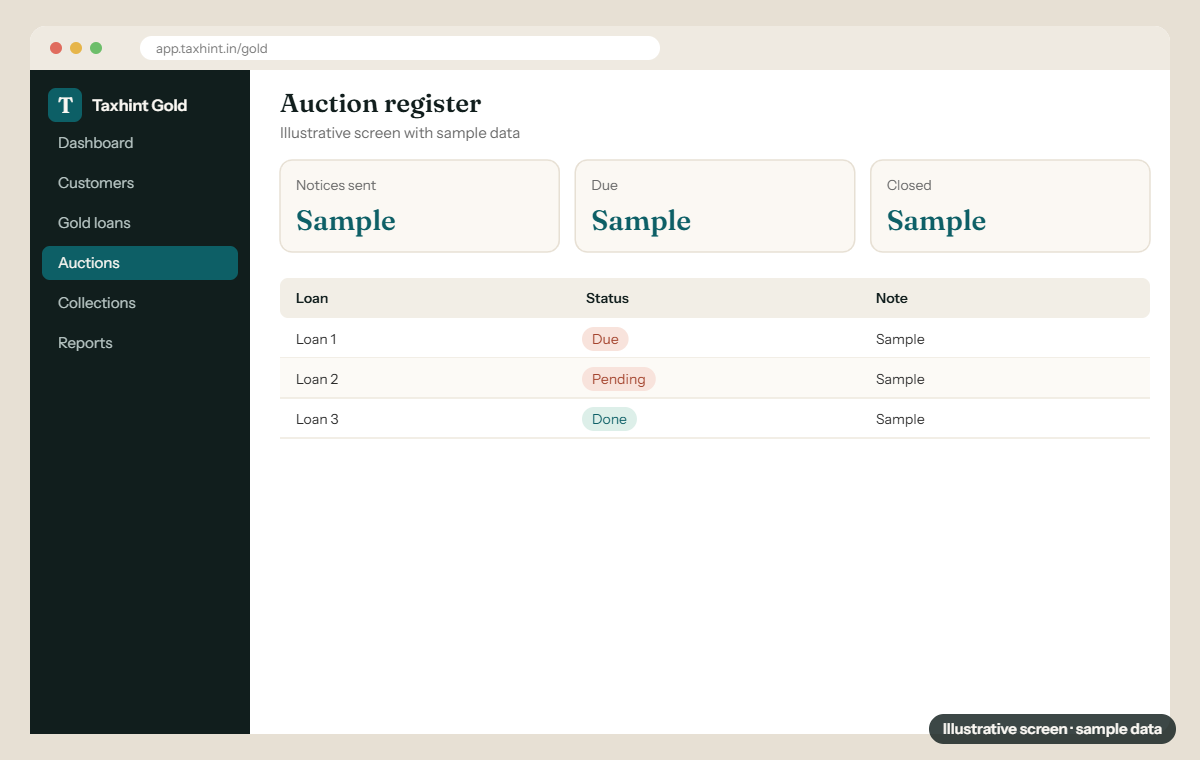
Software cannot replace reading the rules, but it can enforce your policy once you have set it. Examples are blocking a loan above your set limit, printing the required receipt, recording the packet number and listing loans nearing maturity.
Compare the screens with the directions line by line during your yearly review.
- Loan to value check at entry
- Receipt and release forms
- Packet and strong room records
- Maturity and notice reminders
Common gaps
A short yearly gap review, with a written note, is better than a rush before an inspection.
- Policy not updated after the directions change
- Different valuation practice at different branches
- Notices sent late or not recorded
- Auction steps not documented
A simple review routine
Related pages: gold loan fraud controls and part release process.
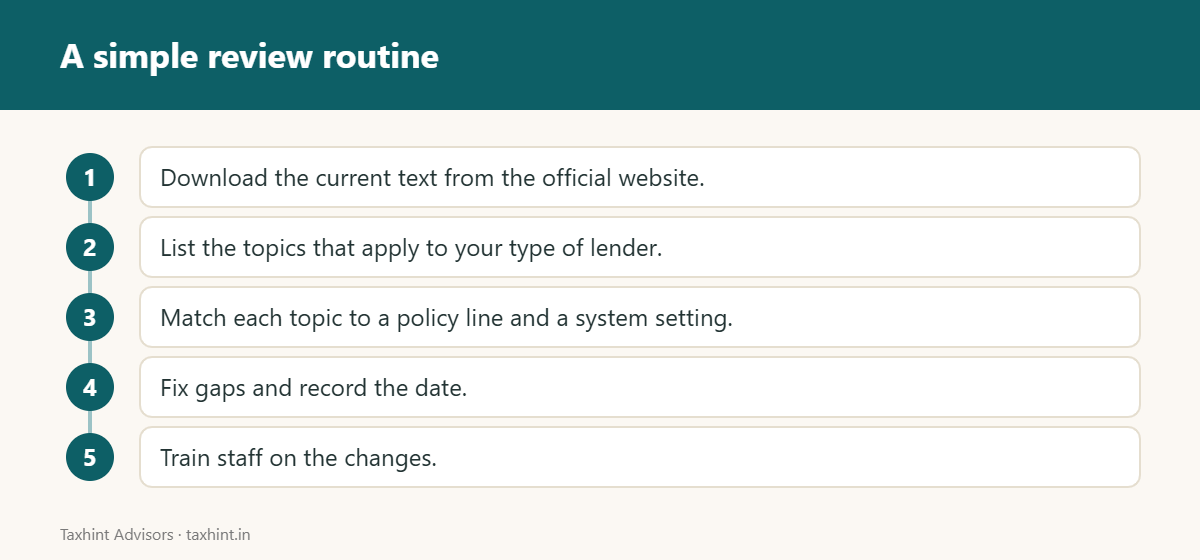
- Download the current text from the official website.
- List the topics that apply to your type of lender.
- Match each topic to a policy line and a system setting.
- Fix gaps and record the date.
- Train staff on the changes.
Records to keep
Whatever the rule says, you should be able to show how you reviewed it. Keep a dated note of the text you read, the changes you found, the decisions taken and who approved them. If an auditor or inspector asks, these notes show that your process is real and current. For gold loans, this includes the valuation records and the packet register.
- Copy of the current official text with the date you downloaded it
- Gap list with owner and due date
- Approval note from management or the board
- Evidence of training for staff
A yearly calendar for gold loan directions
Put the review on a fixed calendar so that it does not depend on memory. A short checklist each quarter is better than a long scramble once a year.
- Quarter one: read the current text and update the gap list.
- Quarter two: test system settings with sample cases.
- Quarter three: refresh staff training and review complaints.
- Quarter four: management review and approval of the updated policy.
Where to get help
If any part of the text is unclear, ask your CA, CS or lawyer to explain it in writing for your case. Taxhint Advisors can help with registration, compliance and software set up for lenders and societies. Contact: +91 93117 95484, [email protected], taxhint.in.
Frequently asked questions
Do these directions apply to every gold lender?
Applicability depends on the type of lender. Check with your CA or lawyer which text applies to you.
Can software make me compliant?
Software helps you apply your policy consistently. Compliance still depends on your policy and your process.
How often should I review?
At least yearly and whenever the text changes.
Where do I find the current text?
On the official website of the regulator. Always use the latest version.
For a demo or questions, contact Taxhint: +91 93117 95484 · [email protected] · taxhint.in