November 25, 2026 · Guides
Nidhi Rules Amendments Explained in Plain Words
Nidhi companies work under rules that are amended from time to time. A change can affect membership, deposits, loans, returns or governance. The right habit is to read each amendment and update your process, not to rely on memory.
This page explains how to read an amendment. It does not state specific limits. This is general information, not legal advice. Please read the current official text and verify with your CA, CS or lawyer.
In this guide
- Why amendments matter
- How to read an amendment
- Areas that may be affected
- Updating your software and forms
- Common mistakes
- FAQ
Why amendments matter
A Nidhi deals with its own members, so rules protect member deposits and keep the company within a defined scope. When a rule changes, daily practice may need to change too.
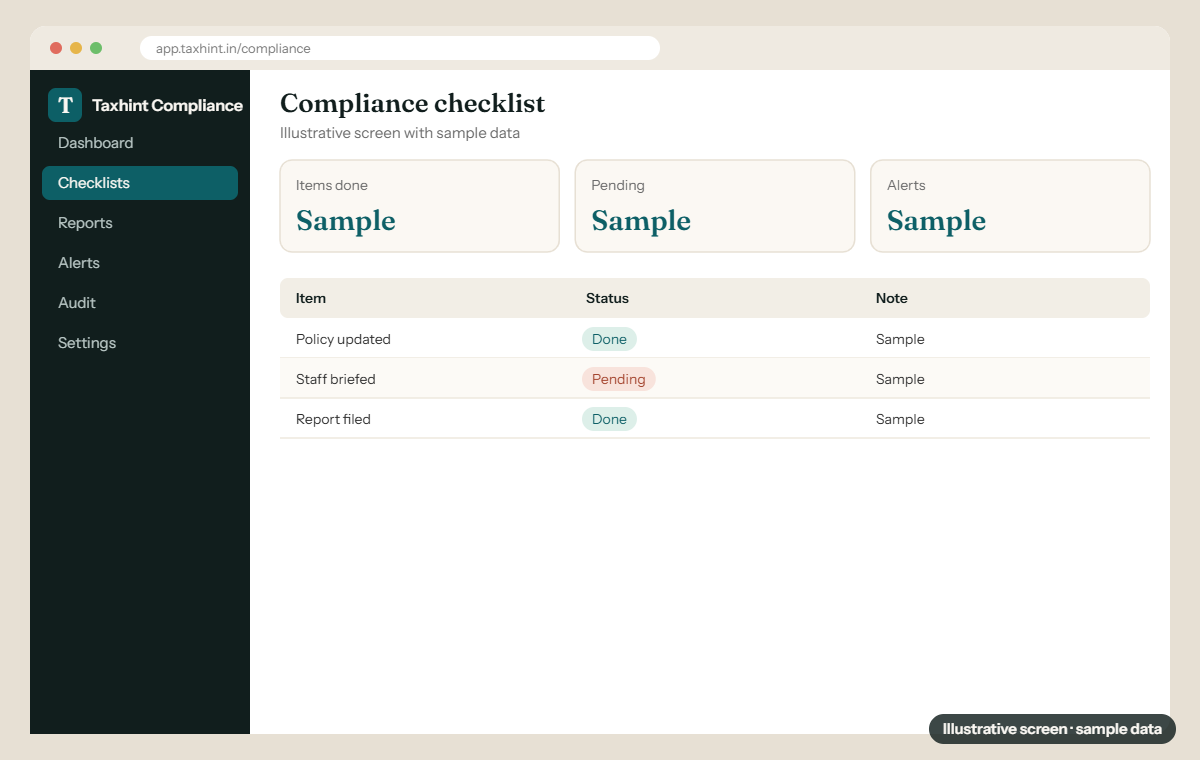
Illustrative example: after an amendment, the company reads the notification, lists each change and decides which forms, software settings and staff instructions need an update.
How to read an amendment
Do not rely on summaries from social media, because they may be wrong or outdated.
- Get the official notification.
- Mark what is new, what is changed and what is removed.
- Note the date from which each change applies.
- Ask your CA or CS how it affects you.
- List actions with an owner and a date.
Areas that may be affected
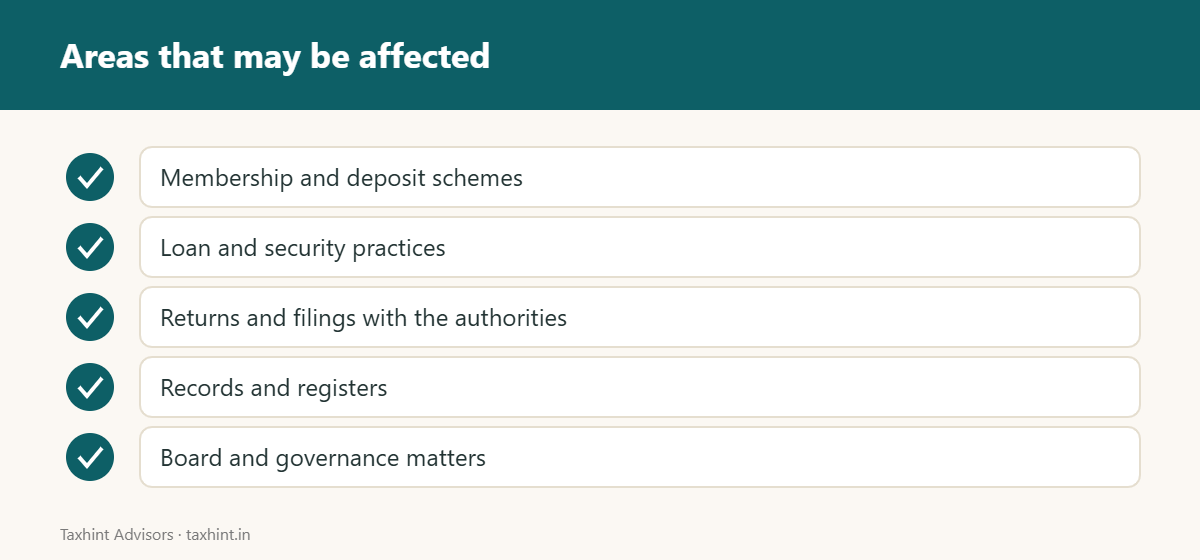
Check each area against your own current practice.
- Membership and deposit schemes
- Loan and security practices
- Returns and filings with the authorities
- Records and registers
- Board and governance matters
Updating your software and forms
If a change affects limits, schemes or reports, update your software settings and test them with sample entries. Update printed forms and member communication at the same time.
Keep a dated note of what changed and why, so that an auditor can follow the trail.
- Scheme settings
- Printed forms and receipts
- Reports and returns
- Staff instructions
Common mistakes
Related pages: Nidhi loan niyam (Hindi) and Nidhi member app.
- Waiting for a notice from someone else
- Updating the policy but not the software
- Applying a change from the wrong date
- No record of the review
Records to keep
Whatever the rule says, you should be able to show how you reviewed it. Keep a dated note of the text you read, the changes you found, the decisions taken and who approved them. If an auditor or inspector asks, these notes show that your process is real and current. For a Nidhi, this includes the member records and the deposit scheme documents.
- Copy of the current official text with the date you downloaded it
- Gap list with owner and due date
- Approval note from management or the board
- Evidence of training for staff
A yearly calendar for Nidhi rules
Put the review on a fixed calendar so that it does not depend on memory. A short checklist each quarter is better than a long scramble once a year.
- Quarter one: read the current text and update the gap list.
- Quarter two: test system settings with sample cases.
- Quarter three: refresh staff training and review complaints.
- Quarter four: management review and approval of the updated policy.
Where to get help
If any part of the text is unclear, ask your CA, CS or lawyer to explain it in writing for your case. Taxhint Advisors can help with registration, compliance and software set up for lenders and societies. Contact: +91 93117 95484, [email protected], taxhint.in.
Frequently asked questions
Who tells me about a rule change?
Do not wait. Monitor official notifications and ask your CA or CS to alert you.
Does every change need a software update?
Not always. Review each change and update only what is affected.
How do I show an auditor I reviewed it?
Keep a dated note listing the change, the impact and the action taken.
Where can I find the current Nidhi Rules?
On the official website of the ministry. Use the latest consolidated text.
For a demo or questions, contact Taxhint: +91 93117 95484 · [email protected] · taxhint.in