November 25, 2026 · Guides
Audit Classification of a Society: Records Software Should Keep
Cooperative societies are audited under state law, and many states classify societies based on audit findings. The classification can affect reputation, dividend and incentives.
Rules and criteria differ by state, so please verify with your auditor. This guide is about keeping records ready.
In this guide
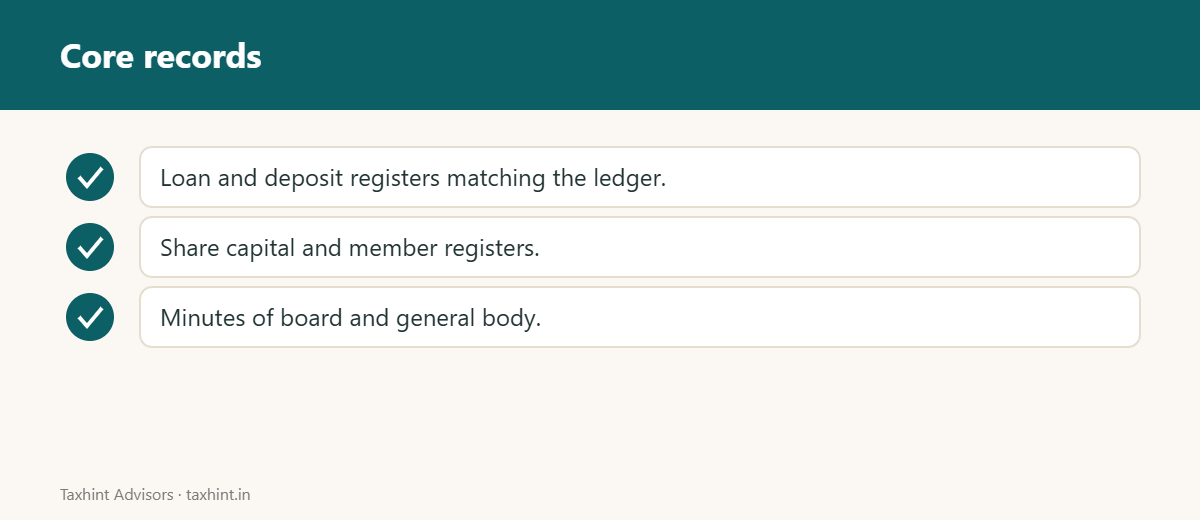
Core records
What auditors check.
- Loan and deposit registers matching the ledger.
- Share capital and member registers.
- Minutes of board and general body.
Rules in this area are specific and change, so please verify the current position with your CA or CS.
Quality of loans
A key criterion.
- Overdue ageing report.
- Recovery steps taken.
- Provisioning as per rules.
Make audit easy
Prepare early.
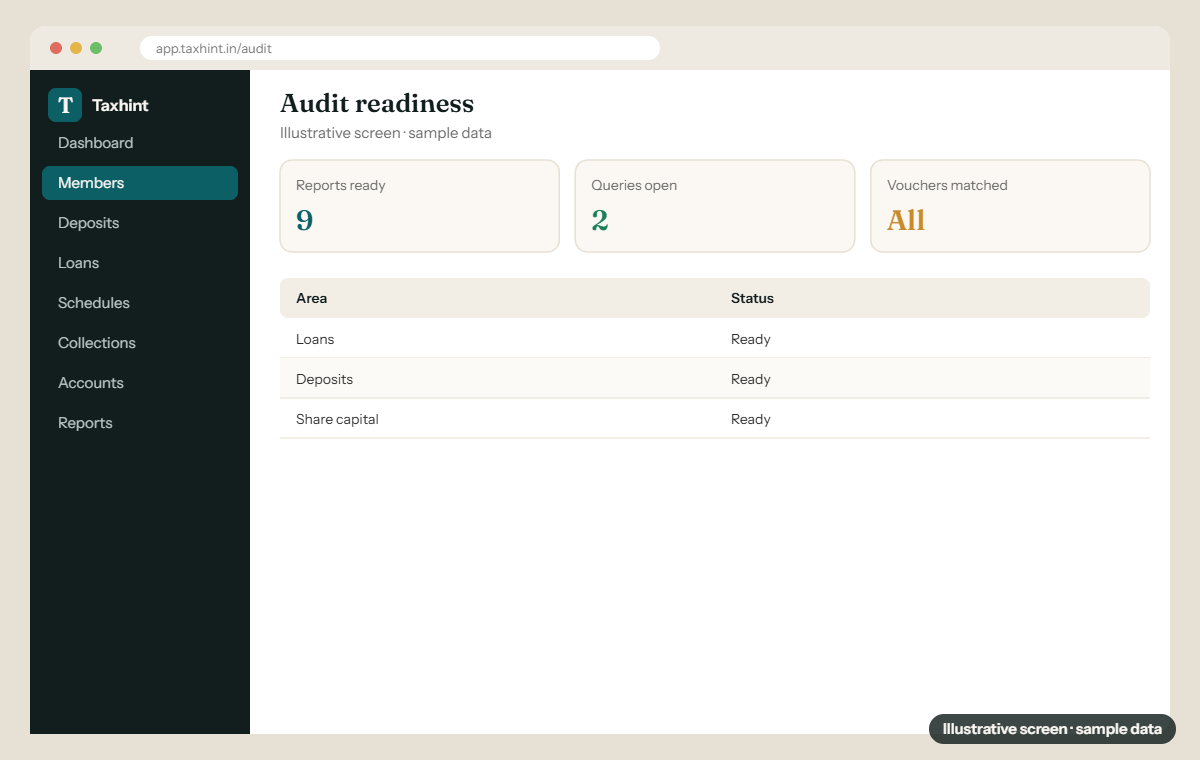
- Reports from software on demand.
- Query log with owners.
- See year-end closing.
See credit and thrift society software.
| Area | Evidence |
|---|---|
| Loans | Ageing and recovery |
| Deposits | Ledger match |
| Governance | Minutes |
Helping the audit classification of a society
Co-operative societies are audited and given a classification based on factors the law and the registrar set. Software can help by producing the reports and data that these factors need, and by showing management where the society stands before the audit.
Illustrative example: before the audit, the team runs reports on overdue loans, reserves, member records and compliance, and fixes what it can before the auditor arrives.
Mistakes to avoid
- Waiting for the audit to learn the position.
- Records not matching the books.
- Overdue loans not classified consistently.
- No evidence for resolutions and meetings.
Steps
- Get the criteria from your auditor or the registrar guidelines.
- Map each criterion to a system report.
- Run the reports each quarter.
- Fix gaps and document actions.
- Prepare a file for the auditor.
Points to confirm
- Current classification criteria for your type and state.
- Please verify with your CA, CS or lawyer before you rely on it.
Working with the auditor
Share the report list early, respond to queries in writing and keep a log. Confirm the current rule text with your CA or CS and note the date you checked it.
Learn from each audit.
- Report list
- Written replies
- Learning notes
Management view
Show the committee a quarterly summary of the criteria and the actions planned. Confirm the current rule text with your CA or CS and note the date you checked it.
Record decisions in minutes.
- Quarterly summary
- Action plan
- Minutes
Questions people ask
Who decides the classification? The audit and the authority as per the law. Please verify with your CA or CS.
Can software improve my classification? It helps you see and fix issues early, but results depend on your actual position.
When should I check? Quarterly, not only before the audit.
Practical tip
Keep a file of evidence for each criterion. Put it in your written procedure so that every new staff member follows it from the first day.
Preparing for audit with the software
Audit goes faster when records are ready. Keep member, loan, deposit and fund reports in one folder every quarter.
The auditor decides the classification, not the software. Please verify with your CA or CS.
- Trial balance matching the ledgers
- Loan and overdue reports
- Resolution and minutes file
- Replies to earlier audit points
FAQs
What is audit classification?
A grade given to societies based on audit. Criteria vary by state.
Does classification matter?
It can affect standing and benefits.
Can software help?
It keeps clean records and reports.
Who audits?
As per state law. Please verify.
Want audit ready reports? Book a demo of Taxhint society software. Talk to Taxhint on +91 93117 95484 or [email protected], or visit taxhint.in.