Microfinance EMI Calculator: flat vs reducing balance
A microfinance EMI calculator for weekly, fortnightly and monthly loans. See the instalment, total interest and schedule, and compare flat with reducing balance.
Calculate your instalment
Indicative only. Figures are rounded to paise for display. Your lender’s actual schedule may differ in rounding, fees or first-instalment date. Nothing here is stored or sent anywhere.
How the microfinance EMI calculator works
This microfinance EMI calculator takes a loan amount, an annual rate, a term and a repayment frequency, then shows the instalment, the total interest and a repayment schedule. You can switch between flat and reducing balance to see how much the method changes what a borrower pays.
Microfinance loans are rarely repaid monthly. Weekly and fortnightly collections are common at centre meetings, so the calculator works out the number of instalments from the term and the frequency. A 12-month loan has 52 weekly, 26 fortnightly or 12 monthly instalments.
Under reducing balance, the periodic rate is the annual rate divided by the instalments per year. Interest each period is charged on the outstanding balance, and the fixed instalment is P × r × (1 + r)n ÷ ((1 + r)n − 1). Under flat rate, interest is simply principal × rate × years, spread equally over all instalments.
Flat vs reducing balance: why the same rate costs differently
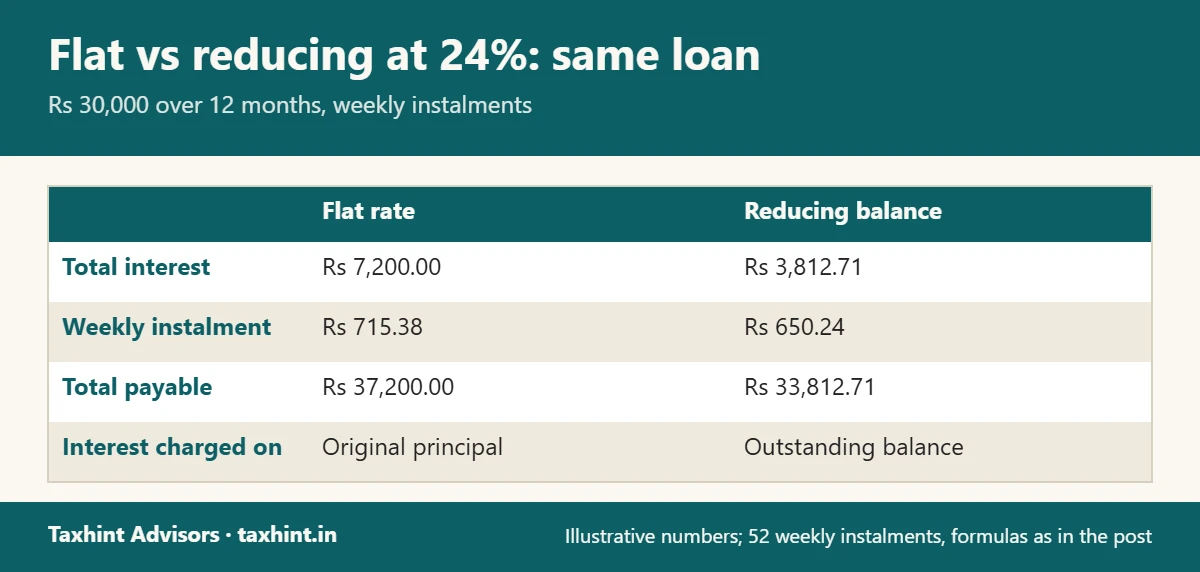
A 24% flat rate and a 24% reducing rate are very different loans. On a flat loan, interest is charged on the original principal for the whole term, even though the borrower has repaid part of it every week. That is why the effective reducing rate of a flat loan comes out close to double the quoted figure on longer terms.
The comparison table in the result shows both methods side by side, with the effective reducing-balance rate that a flat loan works out to. When you quote a rate to a borrower, say clearly which method it is. Our guide to flat vs reducing balance interest in loan software explains how lenders configure each, and microfinance interest rate rules covers what applies to pricing.
Assumptions and limits
The calculator assumes equal instalments, no processing fee, no insurance premium, no GST and no grace period. Real loans often carry some of these, and they raise the effective cost. Rounding on a lender’s system may also differ by a few paise per instalment.
The optional household-income check compares the monthly equivalent of one instalment with 50% of the income you enter. Microfinance rules cap a household’s total monthly loan repayments at 50% of monthly household income, so a borrower with other loans has less room than this tool shows.
Indicative only. Use it to explain a loan to a member or to sanity-check a product, not as a final schedule. Confirm pricing and disclosures with your CA and your Board-approved policy.
Lending as a company? See microfinance software for schedules, collections and member records in one system.
Frequently asked questions
How is a microfinance EMI calculated?
On reducing balance, the instalment is P × r × (1 + r)^n ÷ ((1 + r)^n − 1), where r is the annual rate divided by instalments per year and n is the number of instalments. On a flat loan, total interest is principal × rate × years and the total is split equally over the instalments.
What is the difference between flat and reducing balance interest?
Flat interest is charged on the original principal for the entire term. Reducing balance interest is charged only on the amount still outstanding, so it costs less at the same quoted rate.
Why is the effective rate of a flat loan higher?
The borrower keeps repaying principal, but flat interest ignores that. The calculator solves for the reducing-balance rate that gives the same instalment, which is the real cost of the loan.
Can I calculate weekly microfinance instalments here?
Yes. Choose weekly, fortnightly or monthly. The number of instalments is the term in months times the instalments per year divided by 12, rounded to a whole number.
Does the calculator include processing fees or insurance?
No. It shows interest only. Fees, insurance and taxes would raise the effective cost, so add them separately when you disclose pricing to a borrower.
What is the 50% household income check?
Microfinance rules cap monthly repayment obligations at 50% of monthly household income. The optional field compares one instalment, converted to a month, against half of the income you enter. Existing loans also count towards the cap.
Need loan schedules for your whole book?
Our microfinance software starting ₹15,000 handles flat and reducing balance, weekly and monthly collections and member-wise schedules. Book a free demo.