November 24, 2026 · Guides
Multiple Tickets per Chit Subscriber: How to Manage Them
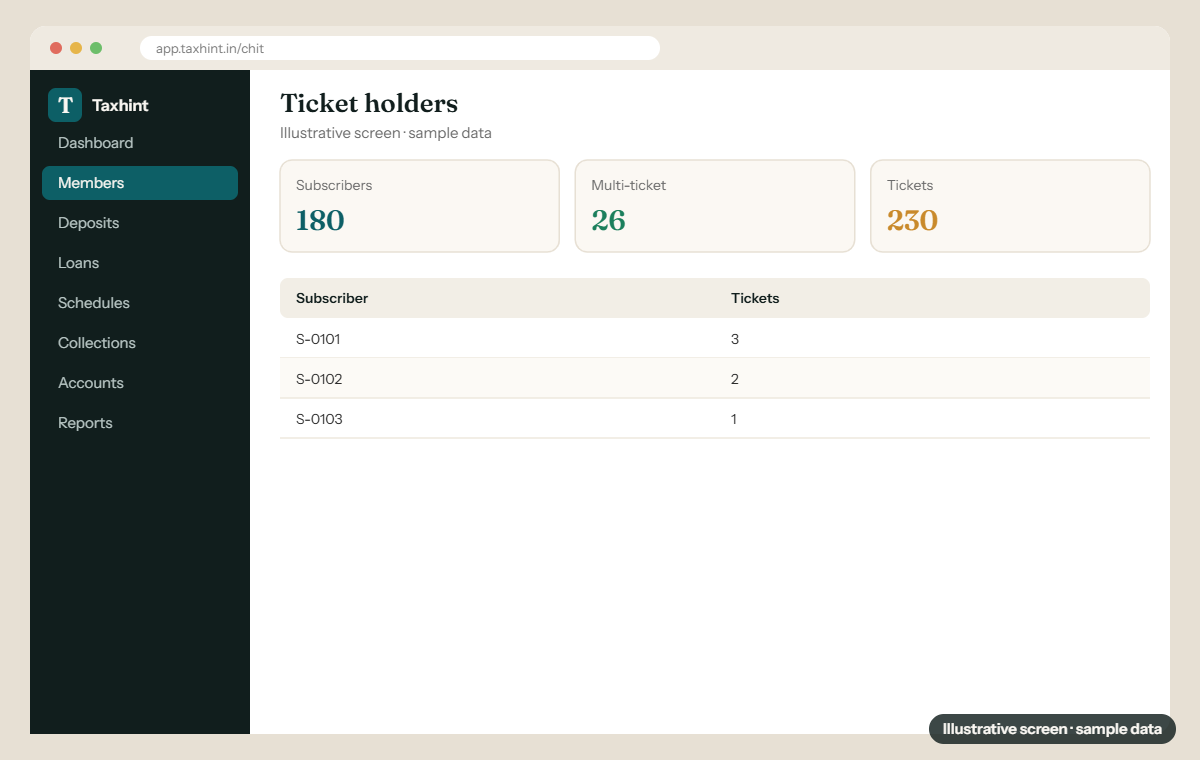
It is common for a subscriber to take more than one ticket in a group, or tickets in several groups. This raises both exposure and complexity: one person can be prized on one ticket and unprized on another.
The rules on how many tickets one person can hold depend on the agreement and state rules. Please verify with your lawyer.
Here is how to keep it clean.
In this guide
Record
One person, many tickets.
- Single KYC record for the subscriber.
- Each ticket numbered and linked.
- Separate instalment history per ticket.
Auction
Be clear on rules.
- Each ticket treated as a member for the auction as per the agreement.
- Prize payment per winning ticket.
- Security per prized ticket.
Exposure
Watch the total.
- Total instalments due across tickets.
- Prized and unprized together.
- Alert when one holder’s dues are high.
See default recovery.
Reports
Show the person and the ticket.
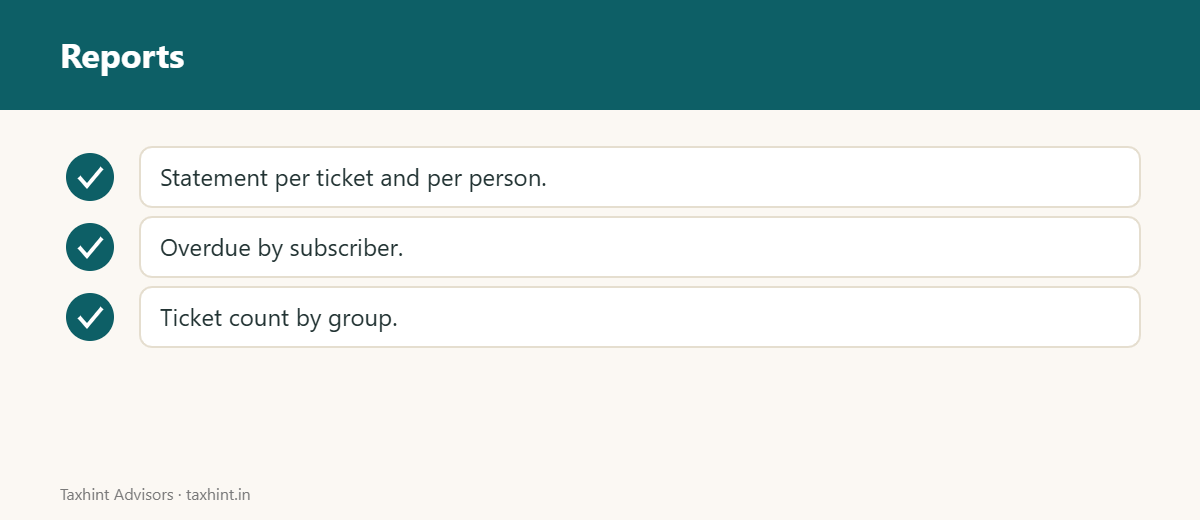
- Statement per ticket and per person.
- Overdue by subscriber.
- Ticket count by group.
The Chit Funds Act and state rules apply to chit funds, and they differ by state, so please verify with your CA or lawyer.
| View | Why |
|---|---|
| By person | Exposure |
| By ticket | Instalments and auction |
| By group | Group health |
When one person holds several tickets
A subscriber may take more than one ticket in a group to increase exposure or improve chances in the auction. Each ticket is treated separately in terms of instalments and prize money, but the person is one customer, and the risk adds up.
Illustrative example: a subscriber holds three tickets in one group. After winning with one, the person must still pay for all three and the organiser should track the total exposure.
Mistakes to avoid
- Treating each ticket as a different customer.
- Not checking the total exposure.
- Allowing many tickets without a limit.
- Confusing dues across tickets.
Steps
- Set a rule on the maximum tickets per person in each group.
- Link tickets to one customer record.
- Track dues by ticket and in total.
- Review the person payment history before adding tickets.
- Apply surety or security rules to each prize.
Points to confirm
- Any limit on tickets allowed by your state or agreement.
- Please verify with your CA, CS or lawyer before you rely on it.
Statements
Give the subscriber a statement for each ticket and a combined view. This avoids confusion and disputes. Review this with your team once a quarter and update your checklist, because real cases teach more than the first draft.
Explain how prize money is handled for each ticket.
- Statement per ticket
- Combined view
- Prize explanation
Managing exposure
Keep a list of subscribers with many tickets and review their payment record each month. Review this with your team once a quarter and update your checklist, because real cases teach more than the first draft.
Talk to them early if payments slow.
- High exposure list
- Monthly review
- Early talk
Questions on exposure
Ask how many tickets a person holds across groups and how their payment record looks. Put the answer in writing and revisit it every quarter, because the first version is rarely the best.
- Tickets per person
- Payment record
- Total exposure
FAQs
Can one person hold many tickets?
As per the agreement and rules. Please verify.
Is KYC needed per ticket?
One KYC per person, linked to all tickets.
What if one ticket defaults?
Follow your default process and watch the other tickets.
Should statements be combined?
Offer both a ticket wise and a person wise view.
Want ticket and person wise views for chit groups? Book a demo of Taxhint chit fund software. Talk to Taxhint on +91 93117 95484 or [email protected], or visit taxhint.in.