November 24, 2026 · Guides
Chit Fund vs Recurring Deposit: What Members Should Understand
Members often compare a chit fund with a recurring deposit because both involve monthly payments. The comparison is not exact, since a chit gives the chance of an early lump sum while a recurring deposit gives a fixed maturity amount.
This is general information and not financial advice. Please talk to your CA or adviser for your own decision, and verify rules and terms before joining.
Here are the main differences.
In this guide
How they work
Different mechanics.
- Chit: monthly instalments, a pot goes to one member each auction, others get a dividend.
- Recurring deposit: fixed monthly deposits with interest declared in advance.
What changes between them
Key points.
- Certainty: recurring deposit returns are fixed, chit returns depend on bidding.
- Liquidity: a chit can give an early lump sum with a discount.
- Risk: a chit depends on members paying, a deposit on the institution.
Before joining a chit
Check the basics.
- Foreman is registered as the rules require. Please verify.
- Agreement read and understood. See chit fund agreement format.
- Understand the effect of bidding on your final return.
- Keep receipts and statements.
Use the calculators
See your own numbers.
- Try the chit fund returns vs FD calculator.
- Compare with a recurring deposit calculator.
The Chit Funds Act and state rules apply to chit funds, and they differ by state, so please verify with your CA or lawyer.
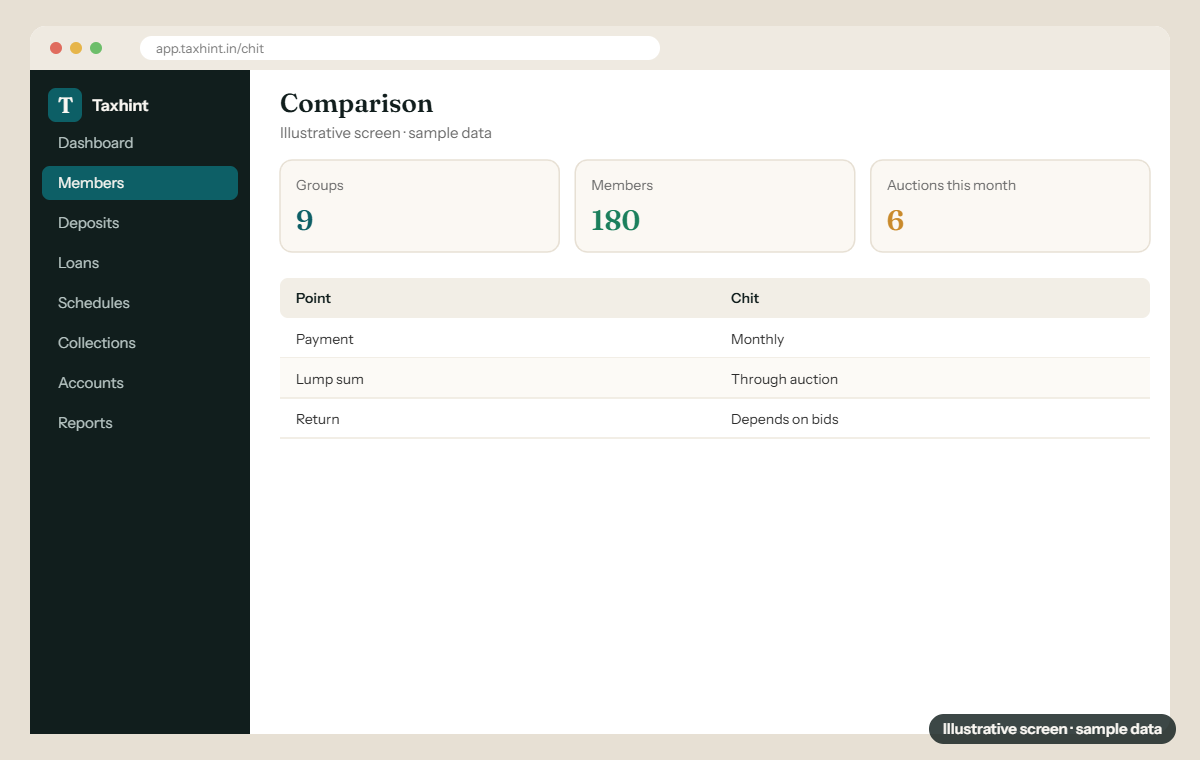
| Point | Chit |
|---|---|
| Return | Depends on bids |
| Lump sum | Possible through auction |
| Certainty | Lower |
Two ways to save regularly
A recurring deposit and a chit fund both involve regular monthly payments. But a recurring deposit pays a stated amount at maturity, while a chit fund gives a lump sum to one member each month through an auction or draw, with the rest getting the amount at their turn plus dividend or discount outcomes.
Illustrative example: a person who wants a predictable amount at the end chooses a recurring deposit. A person who needs a lump sum early and is willing to bid for it may consider a chit fund.
Differences to understand
- Return: fixed in a deposit, variable in a chit.
- Access to money: at maturity versus at the winning turn.
- Risk: depends on the institution versus the group.
- Rules: deposit rules versus chit fund law.
- Costs: interest versus commission and discounts.
Questions a saver should ask
- How certain is the amount I receive?
- What if I need money earlier?
- Who runs the scheme and is it registered?
- What happens if others default?
- What are all the costs?
Points to confirm
- This is general information, not financial advice.
- Please verify with your CA, CS or lawyer before you rely on it.
For organisers
If you offer both, explain the difference clearly so customers choose with understanding. Review this with your team once a quarter and update your checklist, because real cases teach more than the first draft.
Use plain language and written examples.
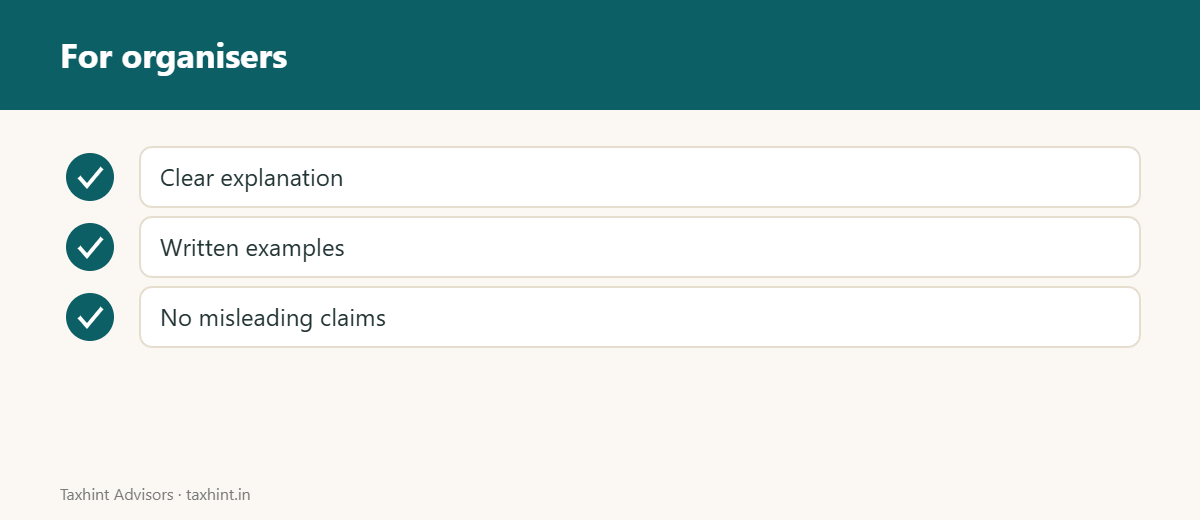
- Clear explanation
- Written examples
- No misleading claims
Records
Keep each product record separate and show statements in a format customers can understand. Review this with your team once a quarter and update your checklist, because real cases teach more than the first draft.
Check that your software supports both.
- Separate records
- Plain statements
- Software check
FAQs
Is chit better than recurring deposit?
It depends on your needs, risk and bidding. Not advice.
Can I lose money in a chit?
Returns depend on bidding and member payments.
Are chit funds regulated?
Yes, under the Chit Funds Act and state rules. Please verify.
What should I check before joining?
Registration, agreement and the foreman’s record.
Want to compare numbers yourself? Use the Taxhint chit fund and RD calculators. Talk to Taxhint on +91 93117 95484 or [email protected], or visit taxhint.in.