November 27, 2026 · Guides
Co-operative Society AGM and Board Elections: Rules and Practice
The general meeting is where members hold the board to account. The board election decides who runs the society for the next term. Both are set by your state Act, its rules and your bye-laws.
Here is how to run them cleanly. For multi-state societies, see MSCS board elections.
In this guide
- The annual general meeting
- Board elections
- Who can vote and stand
- Common mistakes
- How we help
- A worked example
- What goes in the AGM notice
- A worked example
- FAQs
The annual general meeting
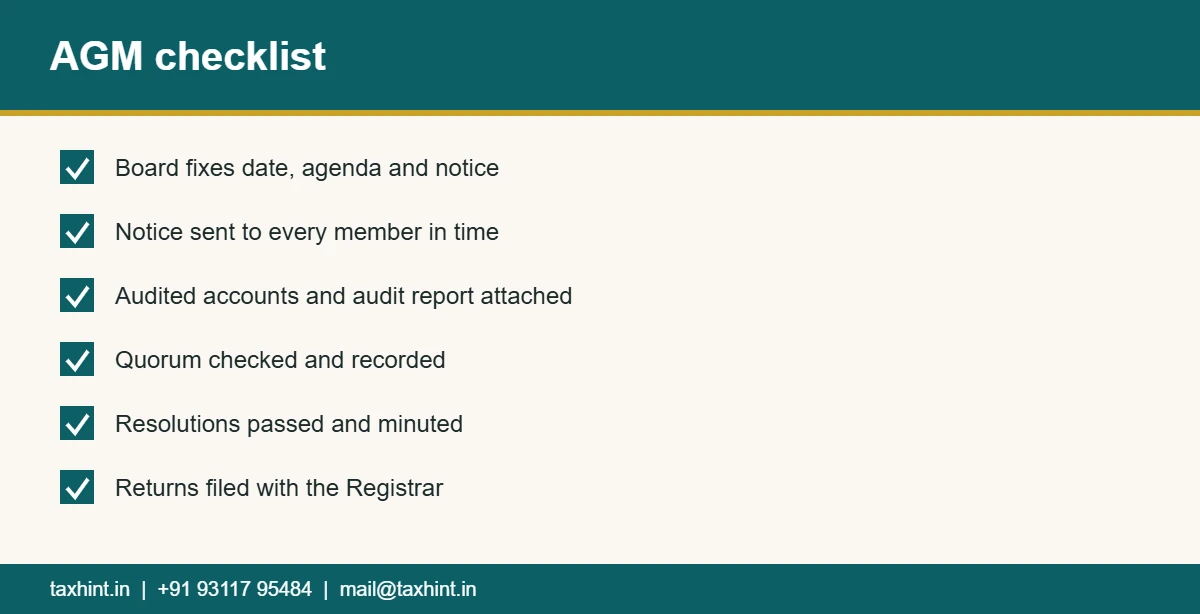
The AGM adopts the audited accounts, considers the audit report, approves the budget and the use of surplus, and deals with other business in the bye-laws. Notice, quorum and voting follow the Act and bye-laws.
Board elections
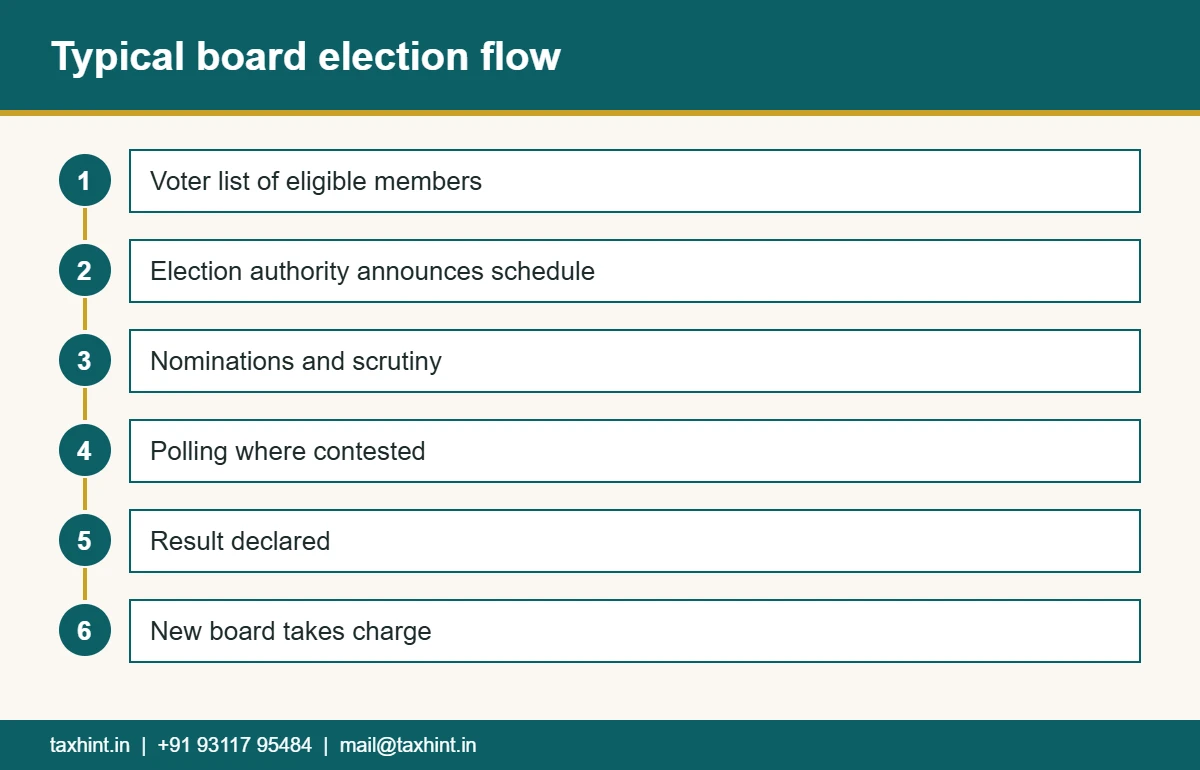
After the 97th Constitutional Amendment, co-operative boards have a five-year term and elections are to be held before the term ends, usually through a state co-operative election authority. Your state Act sets the authority, the procedure and the timeline.
Who can vote and stand
Usually only active members with dues paid, as defined in the Act and bye-laws, can vote or stand. Defaulters are commonly barred. Keep the member register current so the voter list is not challenged.
Common mistakes
Late AGM. Missing the statutory period invites penalties and Registrar action.
Outdated member list. The most common ground for election disputes.
Poor minutes. Decisions not minuted are hard to defend later.
How we help
We prepare notices, agenda, minutes and returns. See annual compliance and audit and annual return.
A worked example
A housing society’s board term is ending. Six months ahead, it updates the member register, removes members who have left and records new allottees. It writes to the state election authority with the voter list. The authority announces the schedule; nominations come in, a few are rejected at scrutiny because the candidates had unpaid dues, and polling is held for the contested seats.
Separately, the AGM is held within the time set by the Act. The audited accounts and the audit report are circulated with the notice, the quorum is recorded and every resolution is minuted. Both events go smoothly because the records were ready.
What goes in the AGM notice
- Date, time and place
- Agenda items
- Audited accounts and audit report
- Budget and proposed use of surplus
- Any bye-law amendments with the text
Send it to every member in the way the bye-laws require and keep proof of dispatch.
A worked example
A credit society’s year ends in March. The board finishes the audit by early summer, fixes the AGM date within the period the state Act allows and sends notice with the audited accounts to every member. On the day, the quorum is checked before any business. Members approve the accounts, ask questions on two overdue loans and pass the budget. The secretary writes the minutes the same week and files the returns with the Registrar. Two years later, the board’s five-year term comes near its end, and the society writes to the election authority well in advance.
Frequently asked questions
What does the AGM of a society approve?
The audited accounts, audit report, budget, use of surplus and other business in the bye-laws.
How long is a co-operative board term?
Five years under the framework set by the 97th Constitutional Amendment, as adopted in state Acts.
Who conducts elections?
Usually a state co-operative election authority under the state Act.
Can defaulters vote?
State Acts and bye-laws commonly bar defaulting members.
Where are the rules for my society?
In your state Co-operative Societies Act, its rules and your bye-laws.
Need help? Need help with your AGM or election papers? Get Free Consultation or call +91 93117 95484.