November 24, 2026 · Guides
Data Retention for Lenders: How Long to Keep Loan Records
Keeping everything forever is risky and keeping too little is also risky. Different laws set different periods for accounting records, KYC records and transaction records, and the periods depend on your entity type.
Please verify the periods with your CA or CS. This guide shows how to build a retention plan and apply it in software.
In this guide
List your records
Start with a simple table.
- KYC and identity records.
- Loan agreements and security papers.
- Receipts, ledgers and statements.
- Collection notes and complaints.
Rules in this area change, so please verify the current position with your CA, CS or compliance officer.
Set periods
One owner decides.
- Find the legal minimum for each record type.
- Add a buffer in policy where needed.
- Write the period against each record in a table.
- Get it approved by management.
Apply in software
Do not rely on memory.
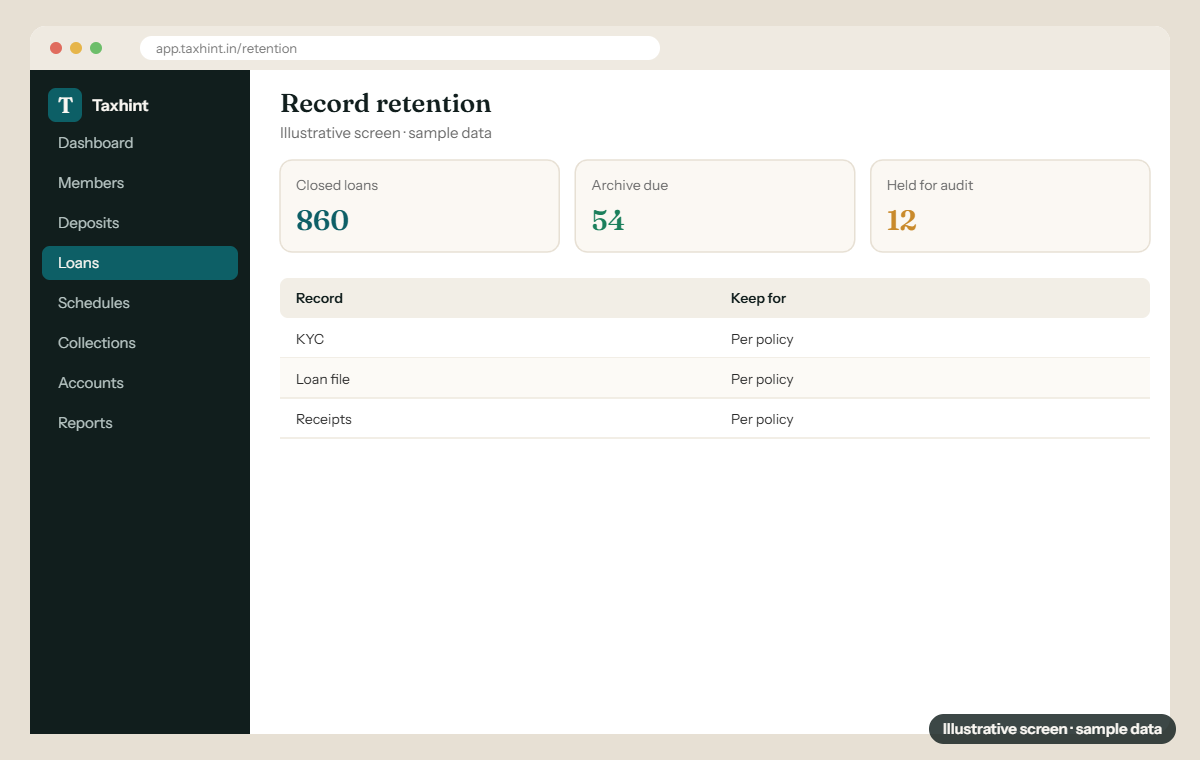
- Mark a closure date on each loan.
- Report of files due for archive.
- Hold on files under dispute or audit.
- Delete only with approval and log.
See data protection and loan management software.
| Record | Action at end |
|---|---|
| KYC | Archive or delete as per policy |
| Loan file | Archive |
| Disputed file | Hold |
Keeping records without keeping them forever
Lenders must keep certain records for a period set by law and by their own policy. Keeping everything forever creates risk, and deleting too early creates problems if there is a dispute. The practical answer is a retention schedule that lists each record type, how long it is kept and who decides when it is deleted.
Illustrative example: loan files are kept for a set period after closure, KYC records for a longer period, and marketing contacts only until the customer asks to stop. The schedule is approved by management and followed each year.
Mistakes to avoid
- No written schedule.
- Deleting records because storage is full.
- Different branches following different periods.
- Backups containing old data nobody manages.
Steps to set it up
- List record types you hold.
- Write the retention period for each, checked with your CA or lawyer.
- Add the closure date and retention end date in the system.
- Run an annual review before deletion.
- Log what was deleted and when.
Points to confirm
- Retention periods that apply to your category.
- Rules on customer data after closure.
- Please verify with your CA, CS or lawyer before you rely on it.
Handling deletion safely
When the retention period ends, delete data in a controlled way. Get approval, remove it from the live system and from backups as per your process, and keep a short log. Never delete in a hurry because of storage limits, and make sure that anything under dispute or inquiry is held back.
- Approval before deletion.
- Hold anything under dispute.
- Log what was deleted.
A short retention table to start with
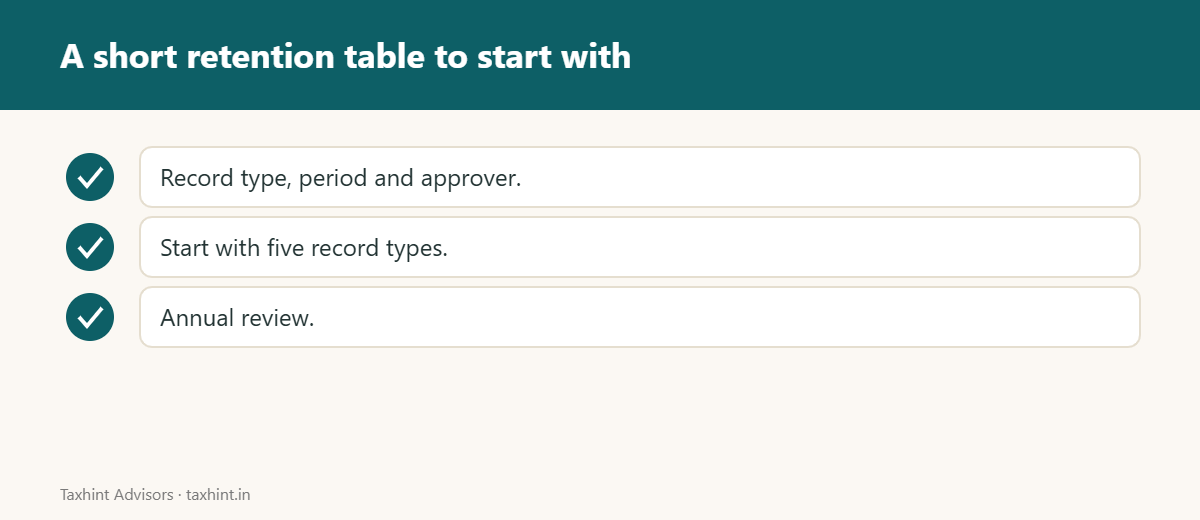
Make a simple table with three columns: the record type, how long you keep it and who approves deletion. Start with loan files, KYC, receipts, complaints and marketing contacts. Fill the periods after checking with your CA or lawyer, and review the table once a year.
- Record type, period and approver.
- Start with five record types.
- Annual review.
FAQs
How long must I keep records?
It depends on the law and entity. Please verify.
Can I delete after closure?
Not before the legal minimum.
What if a file is under dispute?
Keep it until the matter is closed.
Should paper be scanned?
Scanning helps, but keep originals as required.
Want files flagged for archive automatically? Book a demo of Taxhint loan software. Talk to Taxhint on +91 93117 95484 or [email protected], or visit taxhint.in.