November 24, 2026 · Guides
Fair Practices Code for NBFCs: Making It Work in Software
Regulated lenders are expected to follow a fair practices code. It covers how you describe loans, disclose charges, give notices and handle complaints.
The directions are detailed and change, so please verify them with your CA or compliance officer. This is how to make a code real in daily operations.
In this guide
Before the loan
Tell the borrower clearly.
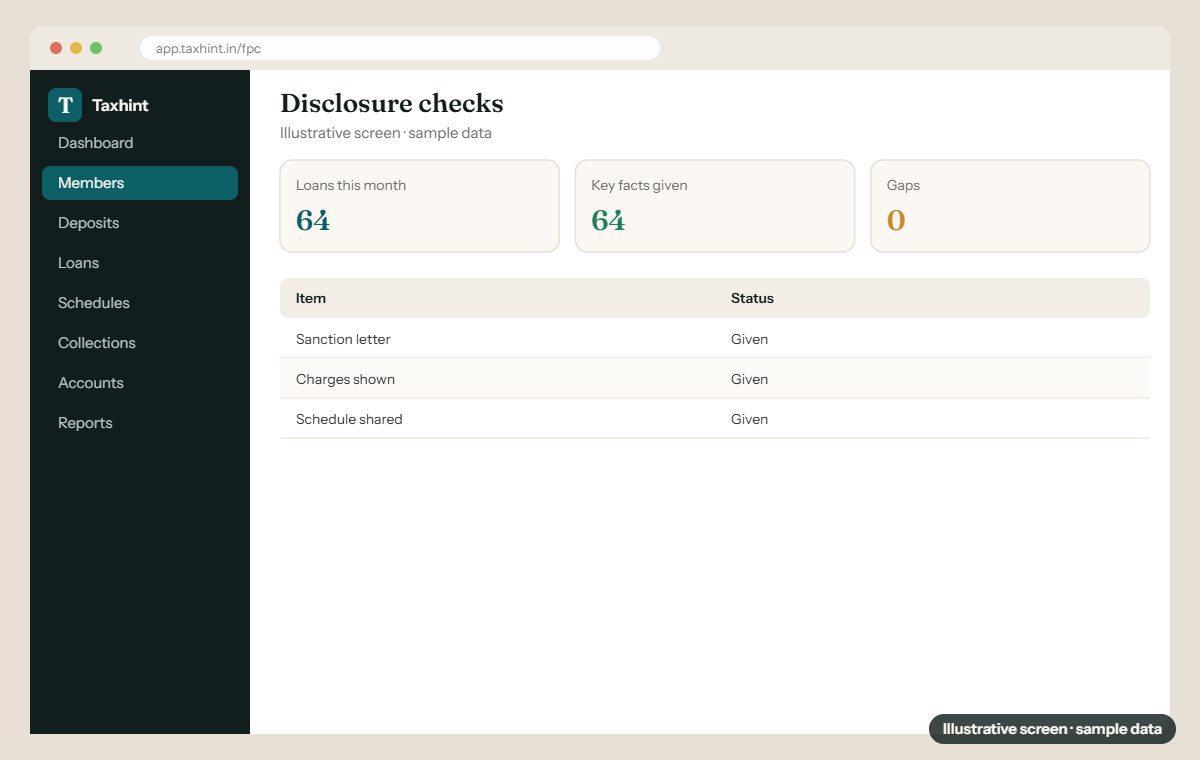
- Interest rate, charges and tenure in the sanction letter.
- Repayment schedule given to the borrower.
- Terms in a language the borrower understands.
Rules in this area change, so please verify the current position with your CA, CS or compliance officer.
During the loan
Keep them informed.
- Notice before any change in terms.
- Statement on request.
- Reminders before due dates.
Recovery and closure
Conduct matters.
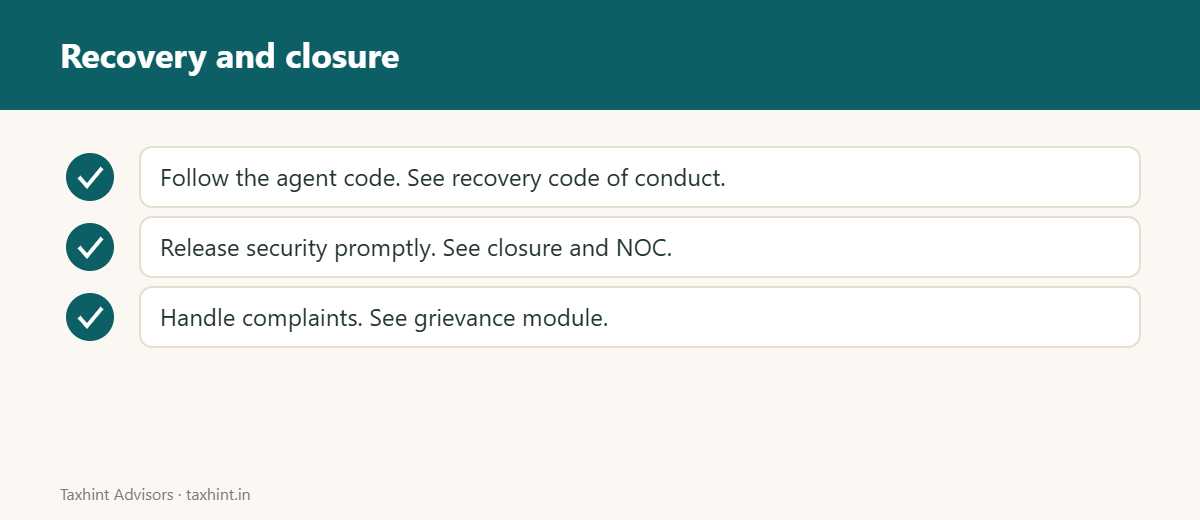
- Follow the agent code. See recovery code of conduct.
- Release security promptly. See closure and NOC.
- Handle complaints. See grievance module.
See NBFC software and loan management software.
| Stage | Evidence |
|---|---|
| Sanction | Letter with charges |
| During | Statement and notices |
| Closure | NOC and release |
Turning a code into daily practice
A fair practices code is a written commitment on how you treat customers: clear information before the loan, fair charges, respectful recovery and a way to complain. It only works if staff know it and the systems support it. Software can show the key terms on screen, print them in the agreement and keep records of what was explained.
Illustrative example: at sanction, the officer opens the key facts page, reads the main terms with the customer and the customer signs. The same page is attached to the loan file. If a dispute arises, the file shows what was shared.
Mistakes to avoid
- Policy exists on paper but staff have never read it.
- Charges described differently in different documents.
- Key terms given only in English to a customer who reads another language.
- No record that terms were explained.
Steps to apply it
- Prepare a one page summary of your code for staff.
- Create a key facts page for each loan product.
- Share the terms in the customer language where possible.
- Record that the terms were explained and signed.
- Review complaints against the code every quarter.
Points to confirm
- Which requirements apply to your category of lender.
- Board approval and review cycle for the code.
- Please verify with your CA, CS or lawyer before you rely on it.
Training and review
Train new staff on the code in their first week and refresh everyone once a year with real examples. Ask staff which parts are hard to follow at the counter and simplify the process where you can.
Review the code every year with management, using complaint data and feedback from customers, and update it when your products or the rules change.
Keep a dated record of each version so you can show which version applied at any point in time.
One more habit
Display a short summary of your code at every branch and on your website, in simple language. Customers who know their rights ask better questions and trust you more.
Update the display whenever the code changes.
FAQs
What is a fair practices code?
A set of standards for how a lender deals with borrowers.
Does it apply to every lender?
Directions apply to regulated lenders. Please verify.
Should the code be public?
Display it as required. Please verify.
Can software help?
It can generate letters, statements and notices consistently.
Want standard letters and statements for every loan? Book a demo of Taxhint NBFC software. Talk to Taxhint on +91 93117 95484 or [email protected], or visit taxhint.in.