November 25, 2026 · Guides
Handling Gold Loan Customer Complaints: A Simple Process

Complaints in gold lending often relate to valuation, charges, delays in release or sale of gold. A fair and quick process keeps small issues from becoming large disputes and shows your customers that you take their concerns seriously.
This guide gives a simple routine any branch can follow. This is general information, not legal advice. Please verify the process with your lawyer or CA.
In this guide
- Make it easy to complain
- Record every complaint
- Investigate and reply
- Escalate when needed
- Learn from complaints
- Mistakes to avoid
- FAQ
Make it easy to complain
Display the complaint contact on the wall, on the receipt and on your website. Give a phone number and an email, and tell customers the time within which they will get a reply. Staff should accept a complaint politely whenever it is raised.
Illustrative example: a customer finds a mismatch in the weight on the receipt. The staff note the complaint, give a complaint number and promise a reply by a stated date.

- Contact details on receipts
- Wall display at the branch
- Phone and email
- Reply time stated
Record every complaint
Write each complaint in a register or in software with the date, customer, loan number, issue and the person handling it. Do not rely on memory or on phone calls without a record.
A good record also lets you see patterns, such as many complaints about one branch or one charge.
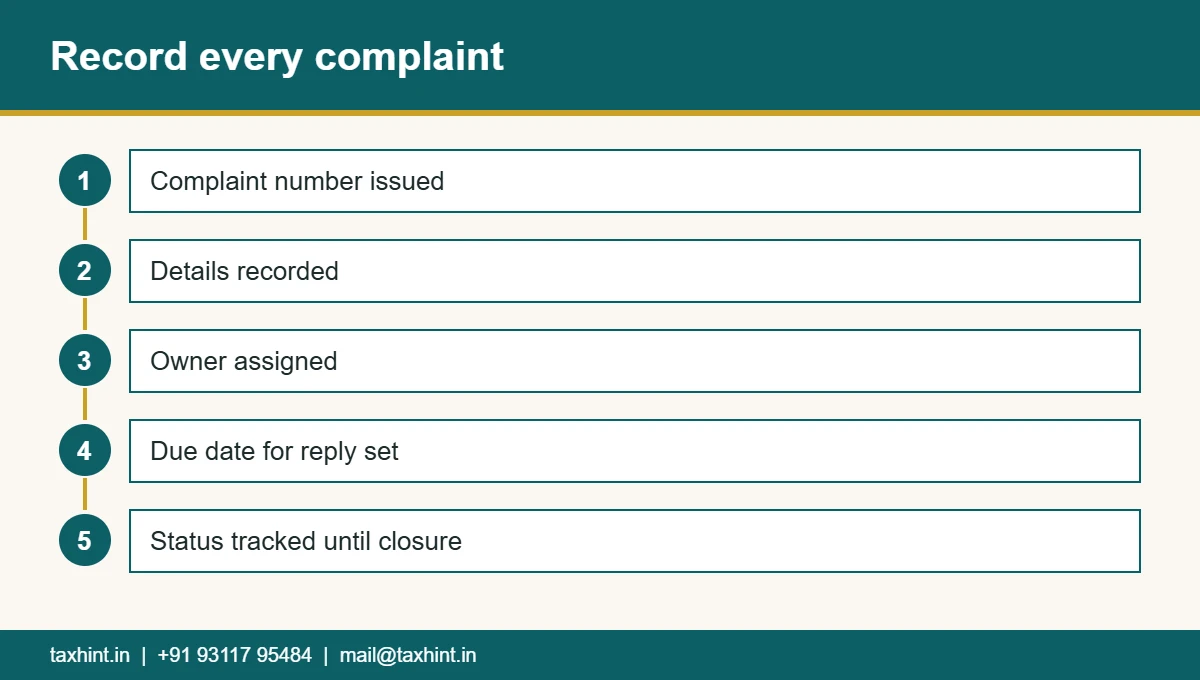
- Complaint number issued
- Details recorded
- Owner assigned
- Due date for reply set
- Status tracked until closure
Investigate and reply
Check the loan record, the receipt, the packet photograph and the staff notes. Where the customer is right, correct the error and say so. Where the record supports your position, explain it calmly with copies of the documents.
Send the reply in writing, in simple words, and keep a copy.
- Loan and receipt records
- Photographs and weight records
- Staff statement
- Written reply with date
Escalate when needed
If the branch cannot resolve the complaint, move it to a senior officer and tell the customer. Set a rule for which complaints always go up, for example those about fraud or a claim of lost gold.
If the customer is unhappy with your reply, tell them about the next level of complaint available to them.
- Escalation levels
- Always escalate fraud or lost gold claims
- Inform the customer of the next step
Learn from complaints
Review complaints every month. Group them by type and branch, and fix the causes. For example, if many complaints are about valuation, review training and equipment. If many are about release delays, review the release steps.
Share the findings with staff and report the main points to management.
- Monthly review by type and branch
- Root cause list
- Staff briefing
- Management summary
Mistakes to avoid
Do not ignore complaints made by phone, delay replies or argue with customers. Do not change records after a complaint. Do not punish staff for reporting problems, because you want them to bring issues forward early.
- No record of verbal complaints
- Late or no replies
- Changing records after a complaint
- Blaming staff for reporting issues
Learning from complaints
Review complaints every month, find the common causes and fix the process. This lowers repeat complaints. Please verify with your CA, CS or lawyer.
- Monthly complaint review
- Root cause notes
- Process fixes
Frequently asked questions
How fast should I reply?
Set a clear time in your policy and keep to it. A prompt acknowledgement helps even when the full reply takes longer.
Should I record verbal complaints?
Yes. Note them with the date and treat them like written ones.
What if the complaint is about fraud?
Escalate immediately to a senior officer, secure the records and the packet, and take legal advice.
Can software track complaints?
Yes. A complaint module can track owners, due dates and status. See our grievance redressal guide: NBFC grievance module.
For a demo or questions, contact Taxhint: +91 93117 95484 · [email protected] · taxhint.in