November 25, 2026 · Guides
How to Start Consumer Durable Finance: Store Tie-Ups, Process and Controls
Consumer durable finance lives in stores. Customers want a fast decision at the counter, and stores want a lender who answers quickly and pays on time.
The lending itself is regulated, so choose the legal form carefully. Please verify with your CA.
Here is the outline.
In this guide
Choose the legal form
Lending needs a legal base.
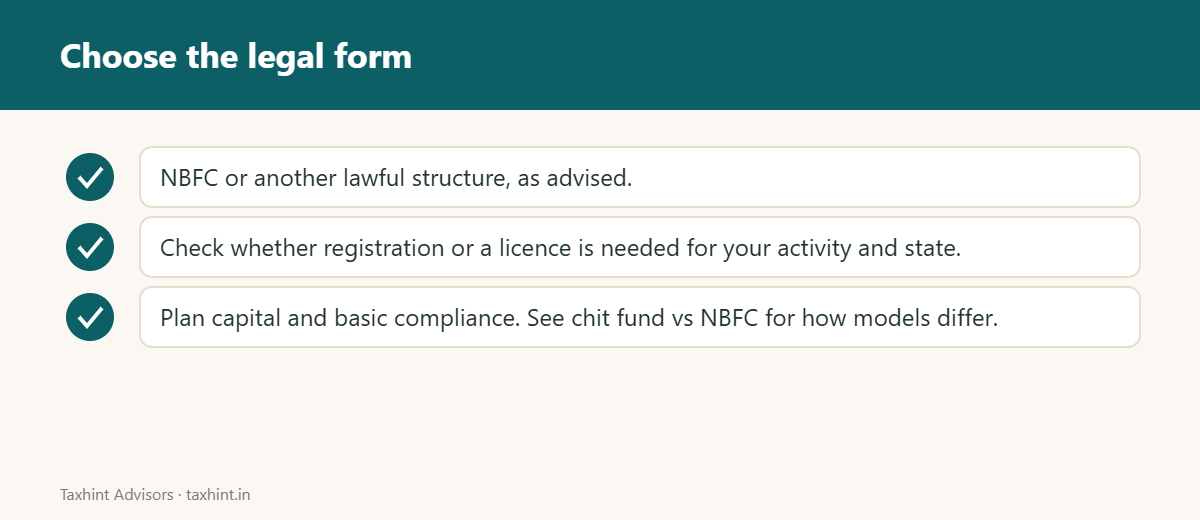
- NBFC or another lawful structure, as advised.
- Check whether registration or a licence is needed for your activity and state.
- Plan capital and basic compliance. See chit fund vs NBFC for how models differ.
Rules differ by state and entity type, so please verify with your CA or lawyer before you decide.
Store tie-ups
Make it simple for them.
- Agreement on roles and payout.
- Staff training on documents.
- Store wise rejection and overdue review.
Process
Quick but controlled.
- KYC and a fast credit check.
- Approval and mandate. See consumer durable process.
- Delivery proof before payment to the store.
- Collections from day one.
Systems and fraud control
Do not skip them.
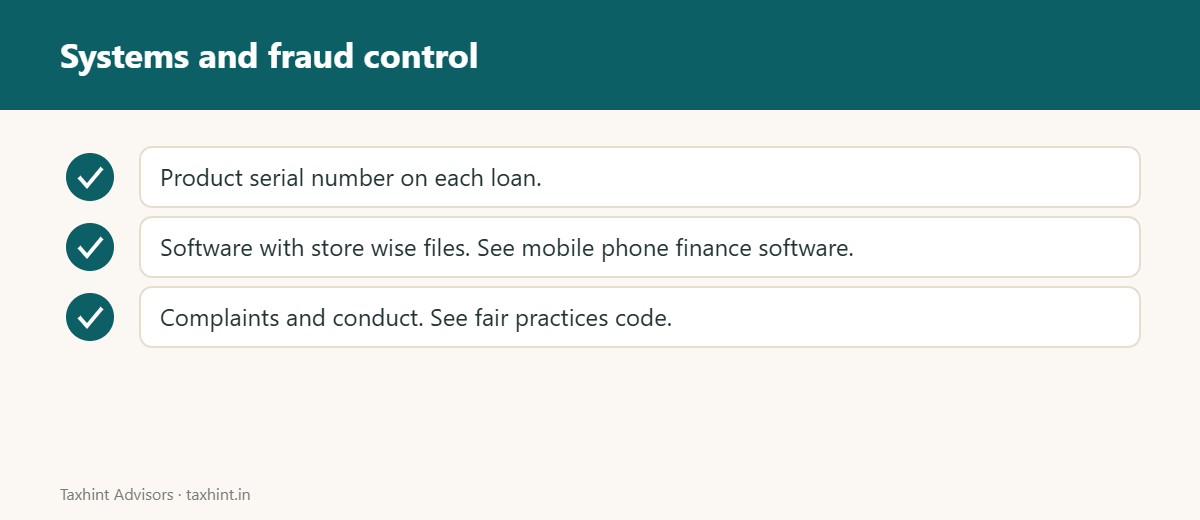
- Product serial number on each loan.
- Software with store wise files. See mobile phone finance software.
- Complaints and conduct. See fair practices code.
Rules differ by state and entity type, so please verify with your CA or lawyer before you decide.
| Step | Output |
|---|---|
| Legal form | Decision |
| Stores | Agreements |
| Process | Checklists |
| Software | Live system |
Understanding the model
Consumer durable finance lets customers buy appliances and electronics in instalments. Shops bring customers, the lender finances the purchase and the customer repays. Margins depend on volume, low default and low cost per file.
Illustrative example: a lender partners with a few electronics shops, approves small loans through a simple form and pays the shop after delivery is confirmed.
Early mistakes to avoid
- Paying shops before delivery.
- Weak customer checks because of speed.
- Unclear charges.
- No process for returns and disputes.
Steps
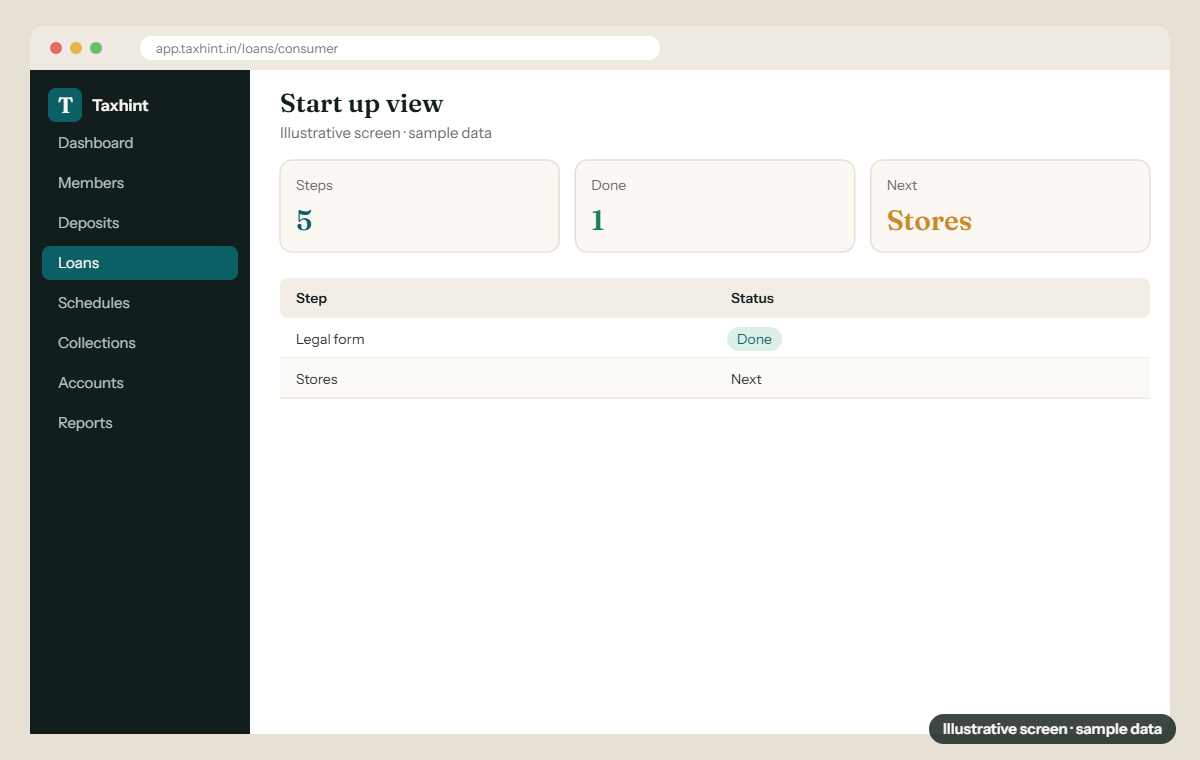
- Settle the legal route and capital.
- Design products and charges.
- Sign agreements with shops.
- Set up software and collection.
- Launch with a few shops and review.
Points to confirm
- Registration and disclosure rules for your category.
- Please verify with your CA, CS or lawyer before you rely on it.
Working with shops
Give shops a simple guide and a contact person. Review shop wise files, rejections and overdue every month. Note the answers and review them with your CA or lawyer.
Share feedback with shops that do well.
- Shop guide
- Monthly review
- Feedback
Customer clarity
Show the total cost, schedule and charges before signing. Give a copy of the agreement. Note the answers and review them with your CA or lawyer.
Keep a record that terms were explained.
- Total cost
- Schedule
- Agreement copy
Collection
Use reminders, mandates where possible and calls. Keep respectful conduct. Note the answers and review them with your CA or lawyer.
Review defaults by product and shop.
- Reminders
- Mandates
- Product and shop view
Technology and data
Use software that records the product, serial number, shop and schedule, and that shows overdue by shop. Test with sample files and train shop staff on submitting clean applications. Note the answers and review them with your CA or lawyer.
Review data monthly.
- Product and serial
- Shop wise overdue
- Monthly data review
FAQs
Do I need a licence?
Depends on your structure and activity. Please verify.
How fast must approval be?
As fast as your checks allow, usually within minutes at the counter.
What is the main risk?
Fraud at the store and early defaults.
Does Taxhint help?
Yes, with registration and loan software.
Planning consumer finance? Talk to Taxhint about registration and software. Talk to Taxhint on +91 93117 95484 or [email protected], or visit taxhint.in.