November 24, 2026 · Guides
Loan Top-Up Process for Lenders: Steps and Controls
A good borrower comes back and asks for more money. A top-up is the easiest loan to sell, since you already know the customer. It is also where records get messy: two loans, two schedules, two sets of interest.
Here is a clean way to handle it.
In this guide
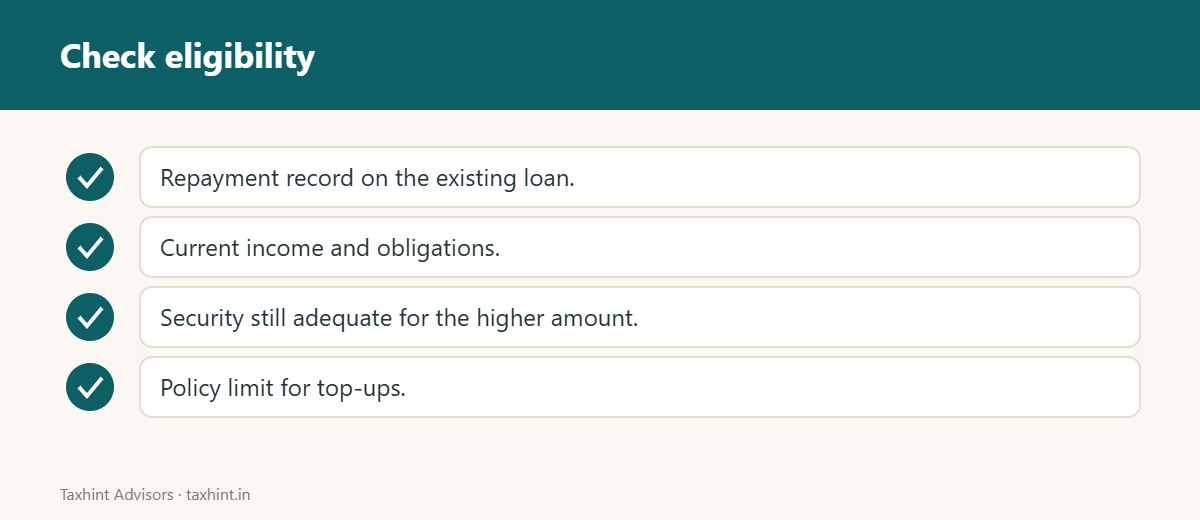
Check eligibility
Do not skip the checks.
- Repayment record on the existing loan.
- Current income and obligations.
- Security still adequate for the higher amount.
- Policy limit for top-ups.
Two ways to structure it
Pick one and stay consistent.
- Close the old loan and issue a single new loan for the total.
- Keep the old loan and add a second loan on the same security.
- The first gives one schedule. The second needs more tracking.
Steps
Same process each time.
- Customer request and updated documents.
- Appraisal and approval.
- Foreclosure figure for the old loan. See foreclosure calculator.
- Issue sanction letter. See sanction letter.
- Disburse only the extra amount and adjust the old balance.
- Create the new schedule.
Records
Keep a clear link.
- Link the new loan to the old one.
- Print one combined statement.
- Review top-ups monthly for quality.
Rules on fees and disclosures depend on your entity, so please verify with your CA or CS. See loan management software.
A worked example
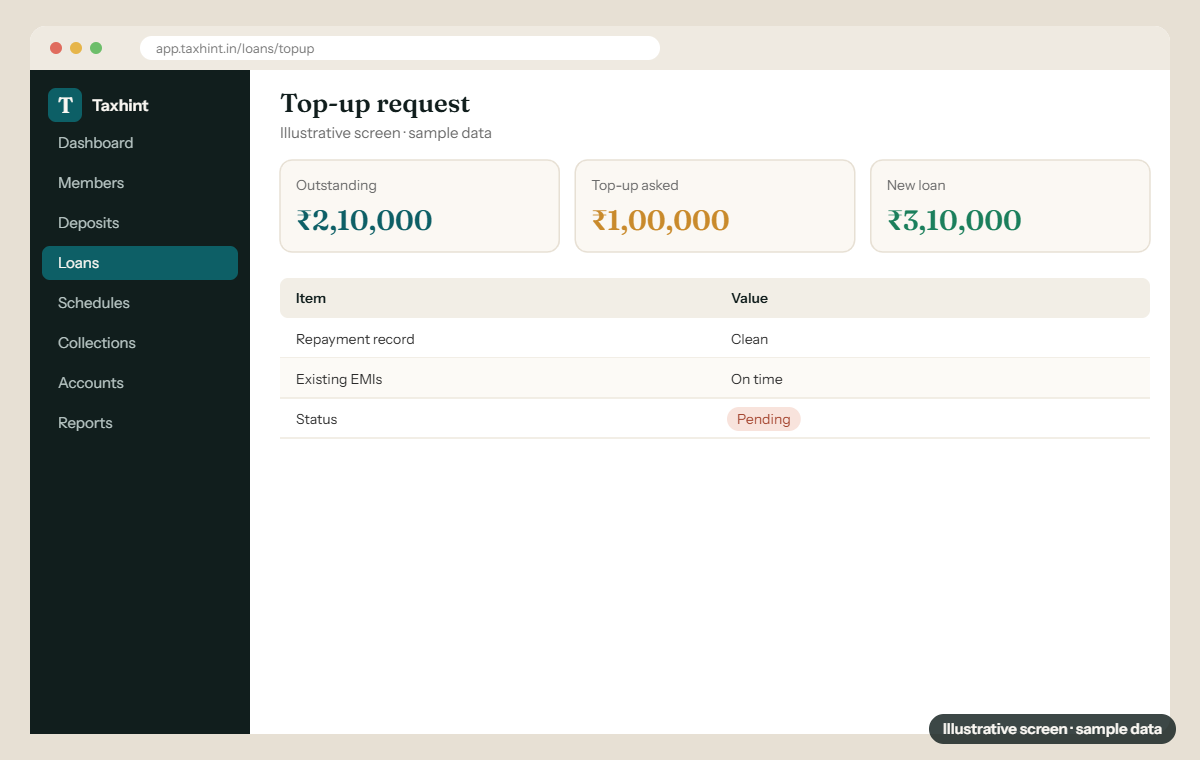
A borrower has ₹2,10,000 outstanding on a loan with 14 months to go and a clean record. He asks for ₹1,00,000 more. You check income, security and policy, then close the old loan using a foreclosure figure of ₹2,10,000, issue a new loan of ₹3,10,000 and pay him only the extra ₹1,00,000. A new schedule begins. One loan, one statement, one due date. The numbers are illustrative.
Risks to watch
- Repeated top-ups can hide a borrower’s stress. Look at the number of top-ups per borrower.
- Security may not cover the higher amount. Revalue where needed.
- Fees on the old loan and the new loan can confuse borrowers. Explain them clearly.
- Staff may push top-ups to hit targets. Review them in the monthly meeting.
Top-up file checklist
| Item | Status |
|---|---|
| Request signed | Yes or no |
| Updated KYC and income | Yes or no |
| Security rechecked | Yes or no |
| Foreclosure figure for old loan | Yes or no |
| New sanction letter | Yes or no |
| New schedule given | Yes or no |
Do not disburse until every row is yes.
A top up step by step
A top up gives an existing customer additional money on the same account or a new loan that closes the old one. Before offering it, check repayment history, the current balance and whether the new total fits your policy. Document the purpose and get a fresh sanction.
Illustrative example: a customer with a good record asks for more money half way through the tenure. The officer reviews the last payments, calculates the new EMI and tenure options and puts the proposal for approval.
Mistakes to avoid
- Topping up a customer who is already overdue.
- No fresh KYC or consent.
- Old and new balance mixed in one entry.
- Schedule not regenerated.
Top up checklist
- Repayment history reviewed.
- New total checked against policy.
- Fresh sanction and consent signed.
- Old balance closed or adjusted properly.
- New schedule shared with the customer.
FAQs
What is a loan top-up?
An additional loan to an existing borrower, often on the same security.
Should I close the old loan?
Often yes. One schedule is easier to manage.
What checks should I do?
Repayment record, income, security and policy limits.
Is a new sanction letter needed?
Yes. Document the new terms.
Want top-ups handled cleanly in your loan software? Book a demo of Taxhint software. Talk to Taxhint on +91 93117 95484 or [email protected], or visit taxhint.in.