November 24, 2026 · Guides
Microfinance KYC Policy: A Practical AML and KYC Outline
A microfinance KYC policy is one of the first documents an RBI inspector asks to see, and it is a board document, not a branch checklist. It tells staff who may become a customer, what proof to take, how often to refresh it and when to raise an alarm.
Below is a practical outline you can adapt, followed by the controls that make the policy work in a field-based business.
In this guide
- The parts of the policy
- Identification in the field
- Risk categories in a microfinance setting
- Monitoring and alerts
- Officers and training
- Review the policy
- Where this comes from
- FAQs
The parts of the policy
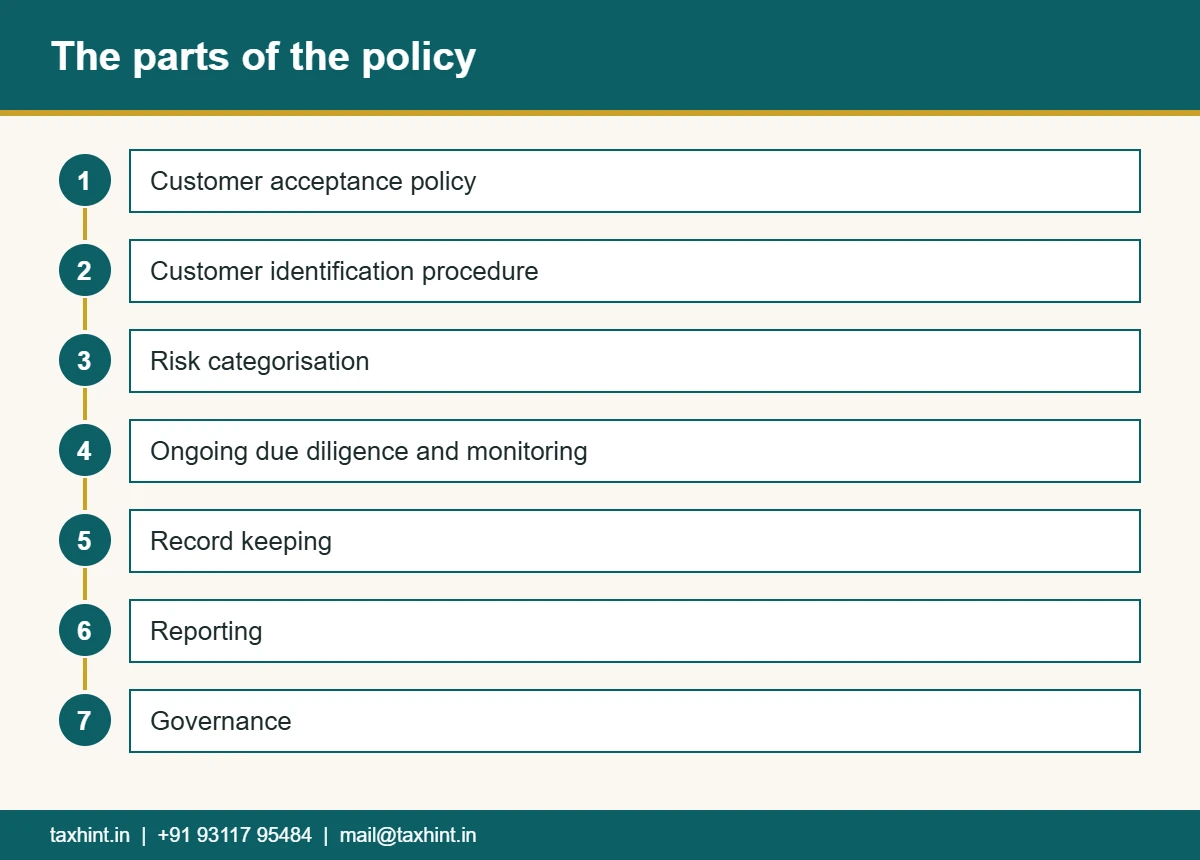
- Customer acceptance policy: who can and cannot be accepted, and why.
- Customer identification procedure: documents accepted, how they are verified and by whom.
- Risk categorisation: low, medium and high risk categories with rules for each.
- Ongoing due diligence and monitoring: what unusual activity looks like and what staff do about it.
- Record keeping: what is stored, in what form and for how long.
- Reporting: the process for cash and suspicious transaction reports.
- Governance: the designated director, the principal officer and training.
Identification in the field
Take officially valid documents as the current KYC rules allow, check the original, record the number and take a photograph. Do not accept an unreadable or unverified copy. Field staff need a short checklist; see the KYC checklist. Where Aadhaar-based or digital verification is used, follow the consent and storage rules and tell the borrower what you are doing.
Risk categories in a microfinance setting
Most microfinance borrowers are low-risk, small-ticket individuals, but the policy must still define what makes a customer higher risk. Examples a policy might use include unusual loan repayment patterns, large cash repayments out of line with the declared income, repeated prepayments from third parties or customers who cannot explain the source of repayment. The policy should say what extra checks apply to each category.
Monitoring and alerts
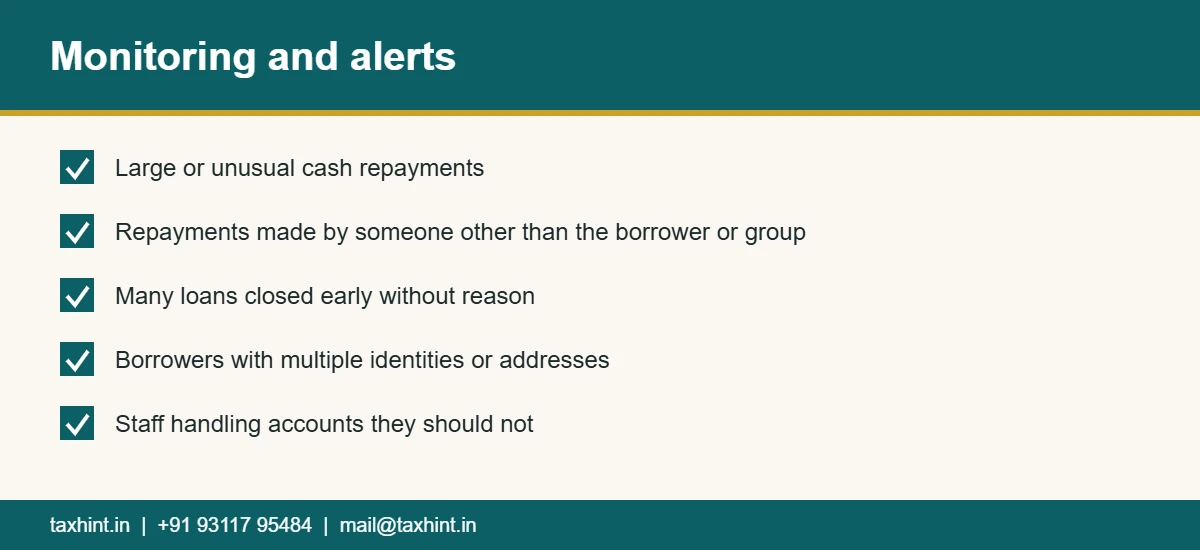
- Large or unusual cash repayments.
- Repayments made by someone other than the borrower or group.
- Many loans closed early without reason.
- Borrowers with multiple identities or addresses.
- Staff handling accounts they should not.
Officers and training
The board names a designated director and a principal officer for AML reporting. Train field staff at joining and every year, record attendance and keep short refreshers for new patterns. Link this to the PMLA reporting obligations and the policy pack.
Review the policy
Review the policy at least annually and whenever RBI updates the KYC rules. Record the review in the board minutes.
Where this comes from
Source: RBI KYC and PML guidance for NBFCs, and PMLA rules. RBI updates these Directions from time to time, so confirm the current text before acting.
FAQs
Who approves the KYC and AML policy?
The board of directors approves it, and reviews it at least once a year.
Who is the principal officer?
A senior officer appointed by the board to report to the Financial Intelligence Unit and to oversee the policy.
How long must KYC records be kept?
For the period the PML Rules and RBI KYC Directions specify. Do not delete them earlier.
Do small loans need full KYC?
Yes. Small ticket size does not remove the KYC requirement, though simplified procedures may exist for low-risk accounts.
Do we need to refresh KYC?
Yes, on a risk-based schedule set by the current RBI KYC Directions.
Planning a microfinance company or already running one? Our CAs and CSs handle registration, RBI work and yearly compliance. Get Free Consultation or WhatsApp +91 93117 95484.