November 24, 2026 · Guides
MFIN and Sa-Dhan: Choosing and Using a Microfinance SRO

Two industry bodies, MFIN and Sa-Dhan, are recognised by RBI as self-regulatory organisations for NBFC-MFIs. Understanding MFIN and Sa-Dhan helps you decide which to join and what you take on by joining.
This guide explains the SRO role, the common benefits and the questions to ask before you apply.
In this guide
- What an SRO does
- Typical functions
- How to choose
- A worked illustration
- After joining
- Related reading
- Where this comes from
- How to prepare to join
- Risks of ignoring the SRO
- Questions to ask existing members
- FAQs
What an SRO does
MFIN says its SRO function supports member NBFC-MFIs in following regulatory and industry standards, with a focus on customer protection. RBI recognised MFIN as an SRO for NBFC-MFIs in 2014, making it the first, and Sa-Dhan received recognition in 2015. Business Standard reported in 2025 that microfinance has two SROs, Sa-Dhan and MFIN.
Typical functions
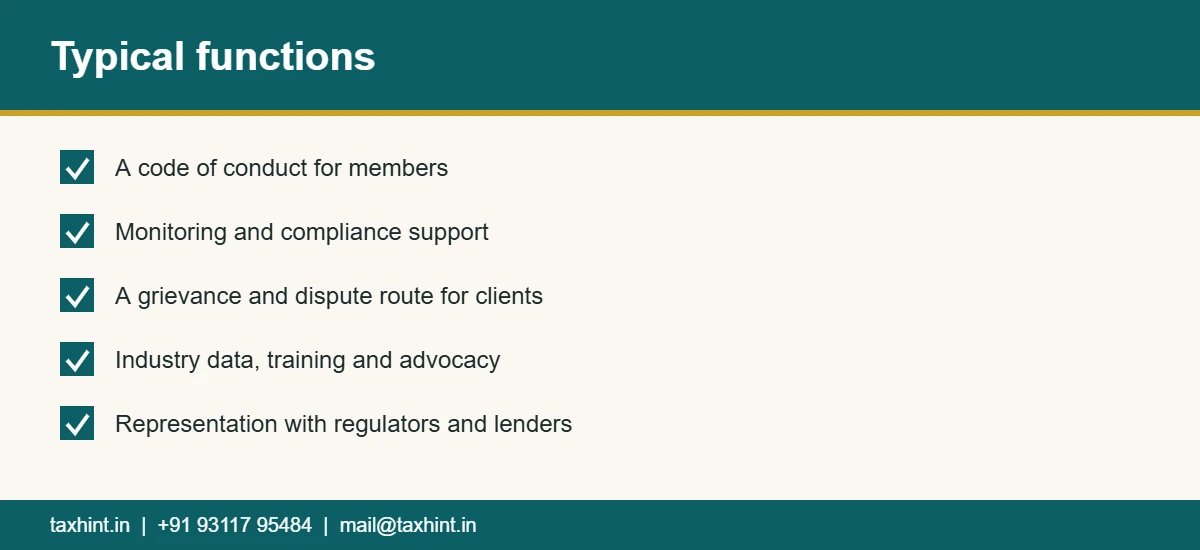
- A code of conduct for members.
- Monitoring and compliance support.
- A grievance and dispute route for clients.
- Industry data, training and advocacy.
- Representation with regulators and lenders.
How to choose
| Question | Why it matters |
|---|---|
| Who are the members and how large are they? | Peers and market voice |
| What does the code of conduct require? | Your operating cost and discipline |
| What services and training do they offer? | Practical support |
| What are the fees and reporting duties? | Cost and workload |
| How do they handle complaints? | Client protection and reputation |
A worked illustration
This is illustrative, not a client case. A new NBFC-MFI compares both bodies. It reads each code of conduct, compares membership fees and training calendars, and speaks to two existing members. It chooses one, and the board records the reasons. Within three months the company has aligned its policies with the code and its staff have attended induction training. Joining early gave it a ready checklist for its own policy pack.
After joining
- Appoint an officer for SRO liaison.
- Calendar all submissions and training.
- Map the code to your policies; see pricing policy and grievance cell.
- Share SRO findings with the board.
Related reading
Read NBFC-MFI क्या है and industry trends 2026.
Where this comes from
Sources: MFIN – SRO; Sa-Dhan SRO recognition (2015); Business Standard, October 2025.
How to prepare to join
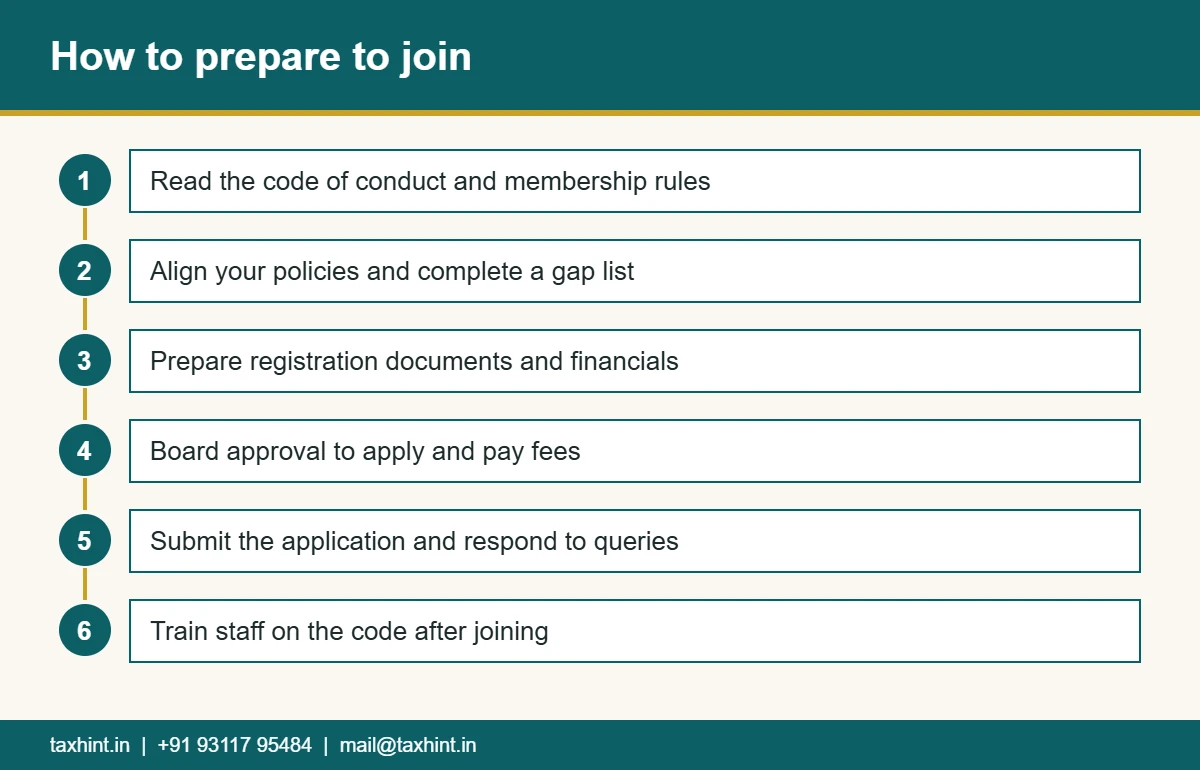
- Read the code of conduct and membership rules.
- Align your policies and complete a gap list.
- Prepare registration documents and financials.
- Board approval to apply and pay fees.
- Submit the application and respond to queries.
- Train staff on the code after joining.
Risks of ignoring the SRO
- Compliance gaps against RBI expectations.
- Weaker standing with lenders and raters.
- Missed alerts on industry-wide issues.
- Disputes with no recognised route.
Questions to ask existing members
- How useful is the SRO in a real dispute?
- How heavy is the reporting burden?
- Did joining help with funding or ratings?
- What would you change about the SRO?
FAQs
Is SRO membership mandatory for NBFC-MFIs?
RBI’s framework expects NBFC-MFIs to be part of a recognised SRO. Check the current Directions for exact wording.
Can we join both?
Check each body’s rules. Many lenders pick one.
Does a Section 8 company join an SRO?
Membership rules differ. Ask the body directly.
What does membership cost?
Fees vary. Ask for the current fee schedule.
Where do I get the membership form?
From the SRO’s website or office. Ask for the current application pack.
How soon should a new NBFC-MFI join?
Plan to join early, so your policies follow the code from the start.
Planning a microfinance company or already running one? Our CAs and CSs handle registration, RBI work and yearly compliance. Get Free Consultation or WhatsApp +91 93117 95484.