November 24, 2026 · Guides
Periodic KYC Updation for NBFCs: Schedule and Tracking
KYC is not a one-time task. Regulated lenders are expected to refresh customer KYC at intervals that depend on the customer’s risk. Missing it creates audit findings.
The intervals and methods are set by the rules, so please verify them with your CA or compliance officer.
In this guide
Set the schedule
Link it to risk.
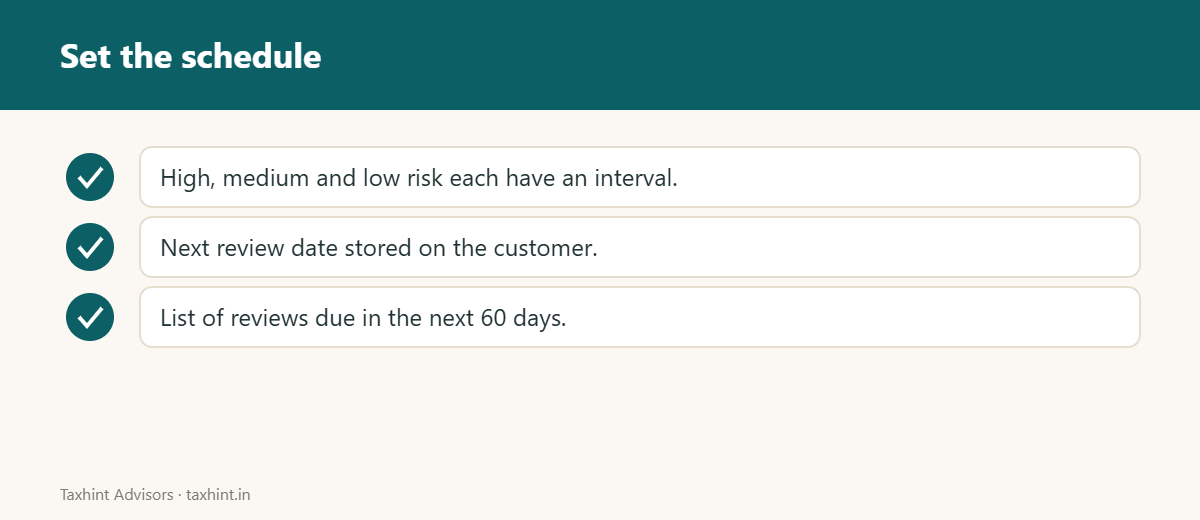
- High, medium and low risk each have an interval.
- Next review date stored on the customer.
- List of reviews due in the next 60 days.
Rules in this area change, so please verify the current position with your CA, CS or compliance officer.
Do the update
Keep it simple for the customer.
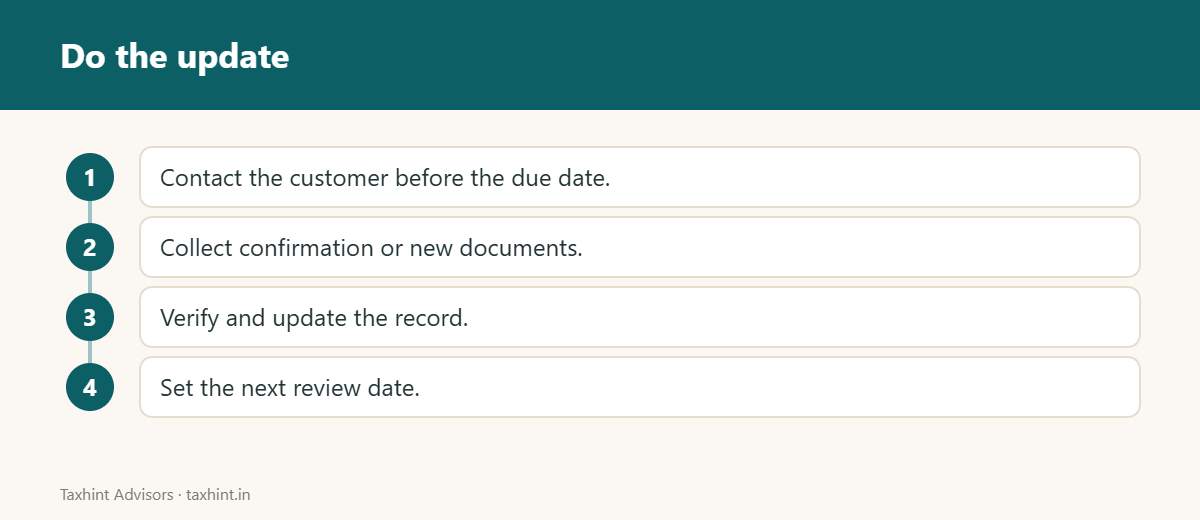
- Contact the customer before the due date.
- Collect confirmation or new documents.
- Verify and update the record.
- Set the next review date.
Track and escalate
Do not let it slip.
- Overdue list shown to the branch manager.
- Restrictions on new transactions as per policy.
- Report to the compliance officer monthly. See KYC checklist.
See NBFC software and loan management software.
| Risk | Action |
|---|---|
| High | Shortest interval |
| Medium | Middle interval |
| Low | Longest interval |
Running periodic updation as a project
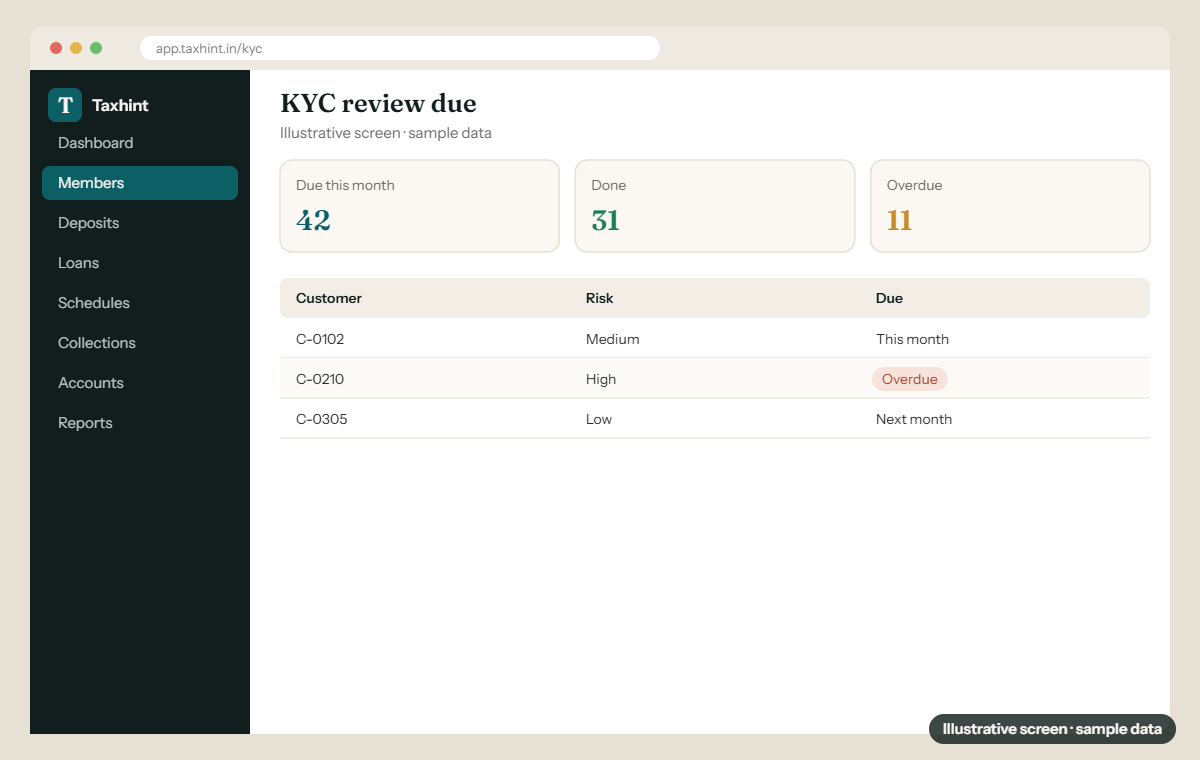
Periodic updation means refreshing customer KYC at set intervals, depending on the risk of the customer. Doing it well needs a list of who is due, a way to contact them, a simple way for them to send documents and a record of the update. Without software, this list is hard to keep.
Illustrative example: each month the system lists customers whose KYC is due in the next sixty days. The team sends a message, collects documents at the branch or through a link and updates the record. Customers who do not respond get a second reminder and then a call.
Mistakes to avoid
- No list of who is due.
- Treating all customers the same regardless of risk category.
- Updating the document but not the verification date.
- Giving up after one reminder.
Steps to apply it
- Define risk categories and review cycles in your policy.
- Add the next due date to each customer record.
- Run a monthly due list and track responses.
- Record the new verification with date and officer.
- Report pending and overdue updates to management.
Points to confirm
- Intervals and process required for your category.
- What to do when a customer does not respond.
- Please verify with your CA, CS or lawyer before you rely on it.
Making it easy for customers
Offer more than one way to update: at the branch, by a secure link or through a visit where your policy allows. Explain in simple words why the update is needed and what documents to bring.
Send reminders by message and by call, and thank customers when they complete the update. Customers who find it simple finish quickly.
Track how many updates are completed within thirty days of the first reminder, and improve the process if the number is low.
One more habit
Keep a small log of customers who could not be reached and the steps tried. This protects you in an audit and helps decide the next action.
Review the log every month with the manager.
FAQs
How often must KYC be updated?
It depends on risk category and the rules. Please verify.
Can customers update online?
Where your process allows it.
What if a customer does not respond?
Follow your policy and the rules on restrictions.
Who tracks it?
The branch with oversight by compliance.
Want KYC review dates and reminders on every customer? Book a demo of Taxhint NBFC software. Talk to Taxhint on +91 93117 95484 or [email protected], or visit taxhint.in.