November 24, 2026 · Guides
NBFC Statutory Auditor Appointment: What the RBI 2026 Directions Mean for an MFI
Appointing the wrong auditor, or appointing the right one the wrong way, causes real trouble for an NBFC. The rules for NBFC statutory auditor appointment have been tightened by RBI, and the latest statutory audit Directions came in 2026.
This guide explains in plain words how the framework works for an NBFC-MFI. It is a summary: always confirm against the current RBI text.
In this guide
- Which NBFCs the framework applies to
- Term, cooling-off and joint audit
- Board policy and audit committee
- Steps for an NBFC-MFI
- Companies Act still applies
- Related reading
- Where this comes from
- FAQs
Which NBFCs the framework applies to
RBI’s statutory audit framework covers NBFCs, including housing finance companies. The Directions let non-deposit-taking NBFCs with asset size below ₹1,000 crore continue with their existing procedure, so many smaller NBFC-MFIs fall in that relaxed group. Once an NBFC reaches ₹1,000 crore, the full framework applies. The asset size is measured at the end of the previous financial year.
Term, cooling-off and joint audit
Under the framework, an audit firm is appointed for a continuous term of three years, followed by a six-year cooling-off period before the same firm can be reappointed. NBFCs with asset size of ₹15,000 crore and above must conduct the audit through at least two audit firms. Eligibility criteria depend on asset size, covering partner strength, experience, professional staff and information-systems audit capability. There are also limits on how many NBFCs and banks an audit firm can audit in a year.
Board policy and audit committee
The board, through its audit committee, should have a written policy on how auditors are shortlisted, assessed and appointed. The policy should list the criteria, the process for inviting proposals, and how conflicts are checked. Concurrent auditors of the entity should not be considered for statutory appointment.
Steps for an NBFC-MFI
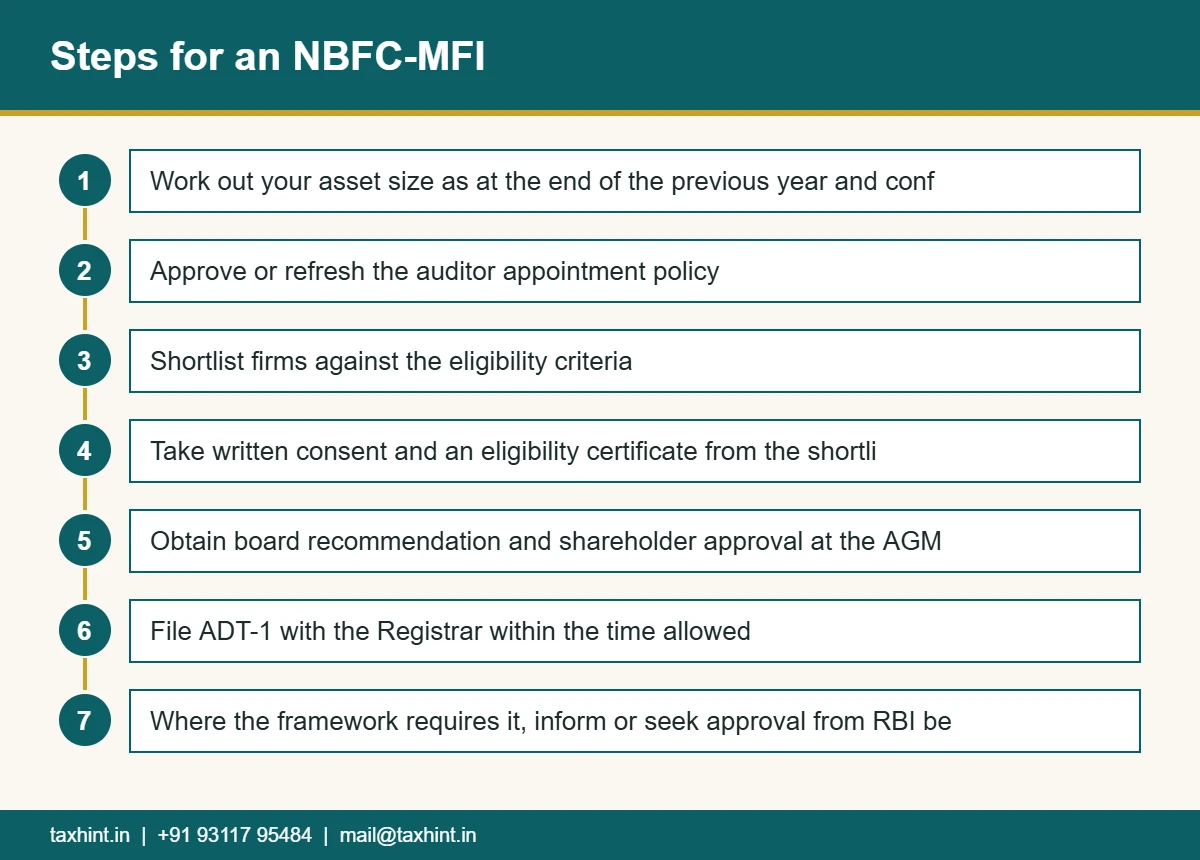
- Work out your asset size as at the end of the previous year and confirm which regime applies.
- Approve or refresh the auditor appointment policy.
- Shortlist firms against the eligibility criteria.
- Take written consent and an eligibility certificate from the shortlisted firm.
- Obtain board recommendation and shareholder approval at the AGM.
- File ADT-1 with the Registrar within the time allowed.
- Where the framework requires it, inform or seek approval from RBI before or after appointment.
Companies Act still applies
RBI’s three-year term sits beside the Companies Act rules on auditor tenure, so check both before reappointing. Read our guide to auditor appointment and ADT-1 for the company-law side.
Related reading
Plan this together with RBI returns and your board committees. A new NBFC-MFI should also check the steps in RBI registration.
Where this comes from
Source: RBI NBFC Statutory Audit Directions, 2026 (RBI/DoS/2026-27/465). RBI updates these Directions from time to time, so confirm the current text before acting.
FAQs
Does the RBI audit framework apply to a small NBFC-MFI?
Non-deposit-taking NBFCs below ₹1,000 crore asset size can continue their existing procedure, while larger ones follow the full framework.
What is the term of an NBFC statutory auditor?
Under the framework, a continuous term of three years, followed by a six-year cooling-off before the same firm returns.
Is joint audit required?
For NBFCs with asset size of ₹15,000 crore and above, at least two audit firms must conduct the audit.
Can a concurrent auditor be statutory auditor?
No. The framework says concurrent auditors should not be considered.
Is an individual chartered accountant allowed?
The framework speaks of audit firms and sets partner-strength criteria for the bigger NBFCs. Check eligibility for your size.
Planning a microfinance company or already running one? Our CAs and CSs handle registration, RBI work and yearly compliance. Get Free Consultation or WhatsApp +91 93117 95484.