November 25, 2026 · Guides
RBI Digital Lending Directions Explained
If you lend through an app or website, or through partners, the directions on digital lending shape how you disclose terms, move funds, handle data and answer complaints. The text is updated from time to time, so use the current version.
This page lists the topics to check and does not quote numbers. This is general information, not legal advice. Please read the current official text and verify with your CA, CS or lawyer.
In this guide
Who this concerns
Lenders who offer loans through digital channels and those who work with technology or sourcing partners need to look at these directions. The responsibility for customer treatment stays with the lender even when a partner runs the app.
Illustrative example: a lender uses a partner app for applications. The compliance team checks that the lender name is shown clearly and that disbursal and repayment flow as the directions expect.
Topics to look for
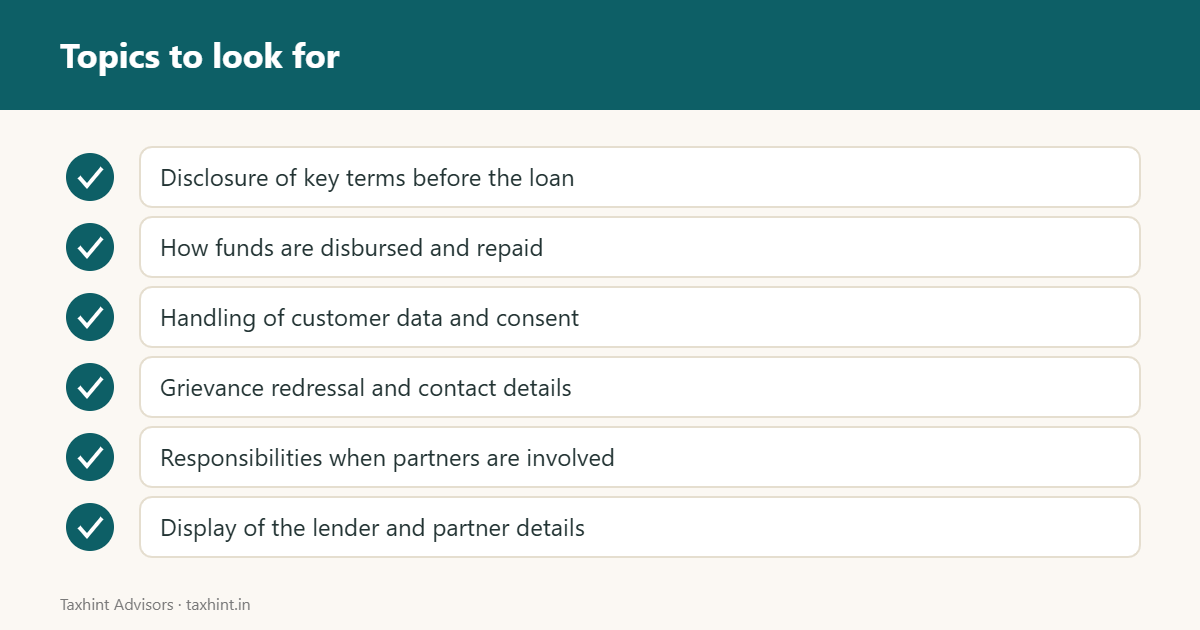
For each topic, note where it appears in your app, agreement or process.
- Disclosure of key terms before the loan
- How funds are disbursed and repaid
- Handling of customer data and consent
- Grievance redressal and contact details
- Responsibilities when partners are involved
- Display of the lender and partner details
Checking your journey
Fix any gap and record the date of the review.
- Walk through the app as a customer.
- Screenshot every screen that shows terms or charges.
- Confirm the flow of funds with your CA.
- Check consent screens and how consent is saved.
- Test the complaint route.
Working with partners
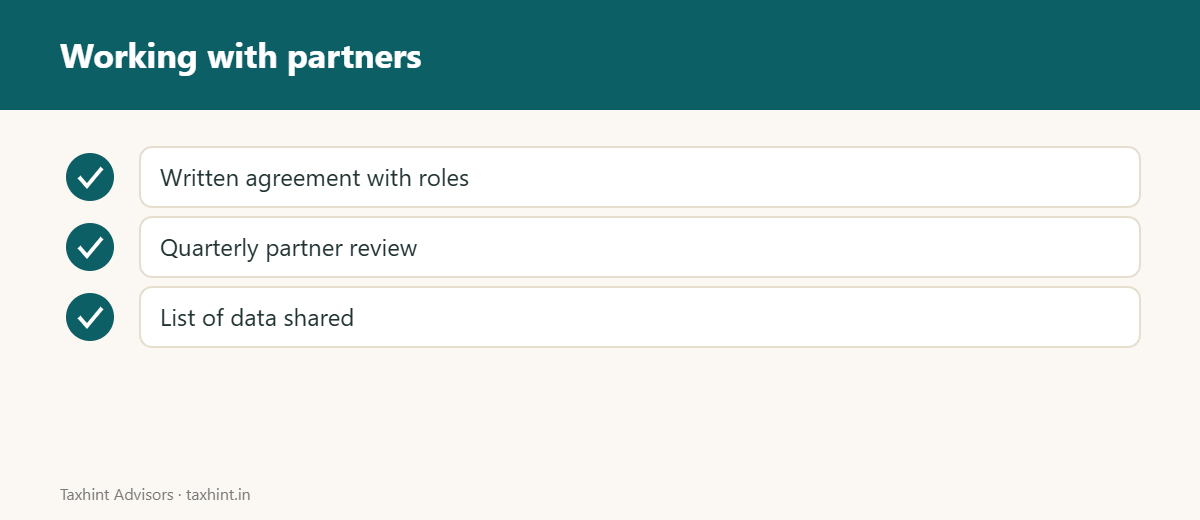
Put roles, data handling and complaint handling into a written agreement reviewed by your lawyer. Review partner practices and complaints regularly.
Keep a list of partners, what they do and what data they see.
- Written agreement with roles
- Quarterly partner review
- List of data shared
Common gaps
See also: digital lending guidelines for software and DPDP Act for lenders.
- Terms hidden on later screens
- Consent not saved in a retrievable form
- Funds passing through accounts that your adviser has not approved
- Partner details unclear to the customer
Records to keep
Whatever the rule says, you should be able to show how you reviewed it. Keep a dated note of the text you read, the changes you found, the decisions taken and who approved them. If an auditor or inspector asks, these notes show that your process is real and current. For digital lending, this includes screenshots of the app journey and partner agreements.
- Copy of the current official text with the date you downloaded it
- Gap list with owner and due date
- Approval note from management or the board
- Evidence of training for staff
A yearly calendar for digital lending
Put the review on a fixed calendar so that it does not depend on memory. A short checklist each quarter is better than a long scramble once a year.
- Quarter one: read the current text and update the gap list.
- Quarter two: test system settings with sample cases.
- Quarter three: refresh staff training and review complaints.
- Quarter four: management review and approval of the updated policy.
Where to get help
If any part of the text is unclear, ask your CA, CS or lawyer to explain it in writing for your case. Taxhint Advisors can help with registration, compliance and software set up for lenders and societies. Contact: +91 93117 95484, [email protected], taxhint.in.
Frequently asked questions
Do these directions apply to NBFCs and banks both?
Applicability depends on the type of lender. Ask your CA or lawyer which text applies to you.
Who is responsible if the partner app has a problem?
Responsibility for customer treatment generally rests with the lender. Review your agreements with your lawyer.
Do I need to change my software?
Compare your journey with the current text and update where there is a gap.
Where is the current text?
On the official website of the regulator. Use the latest version.
For a demo or questions, contact Taxhint: +91 93117 95484 · [email protected] · taxhint.in