November 25, 2026 · Guides
RBI KYC Master Direction for Lenders: A Plain Guide
The KYC master direction sets out how regulated lenders identify customers, assess risk, keep records and refresh information. It is updated from time to time, so read the current version before you finalise your policy.
This page is a checklist of topics, with no numbers or limits quoted. This is general information, not legal advice. Please read the current official text and verify with your CA, CS or lawyer.
In this guide
- What the direction is about
- Topics to look for
- How software helps
- Common gaps
- A simple review routine
- FAQ
What the direction is about
In simple words, it asks you to know who your customer is, to understand the risk they carry, to keep records and to review them at suitable intervals. The details depend on the type of lender and customer.
Illustrative example: a lender builds a KYC policy by listing the documents it accepts, the checks it performs, the risk categories it uses and how often it reviews each category.
Topics to look for
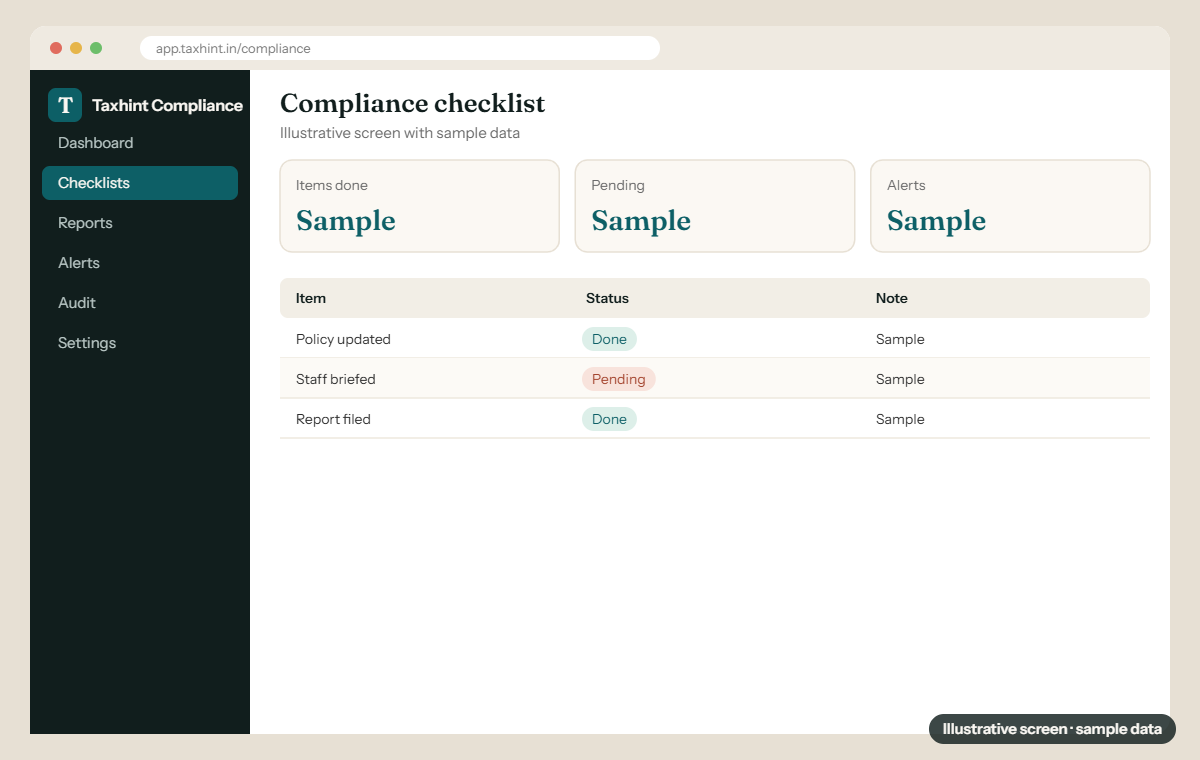
Write the page or section of the direction next to each line of your policy so that you can show the link.
- Customer identification at onboarding
- Accepted documents and how they are verified
- Risk categories and what each needs
- Ongoing monitoring of accounts
- Periodic updating of KYC
- Record keeping and the period for which records are kept
- Special cases such as non individuals and beneficial owners
How software helps
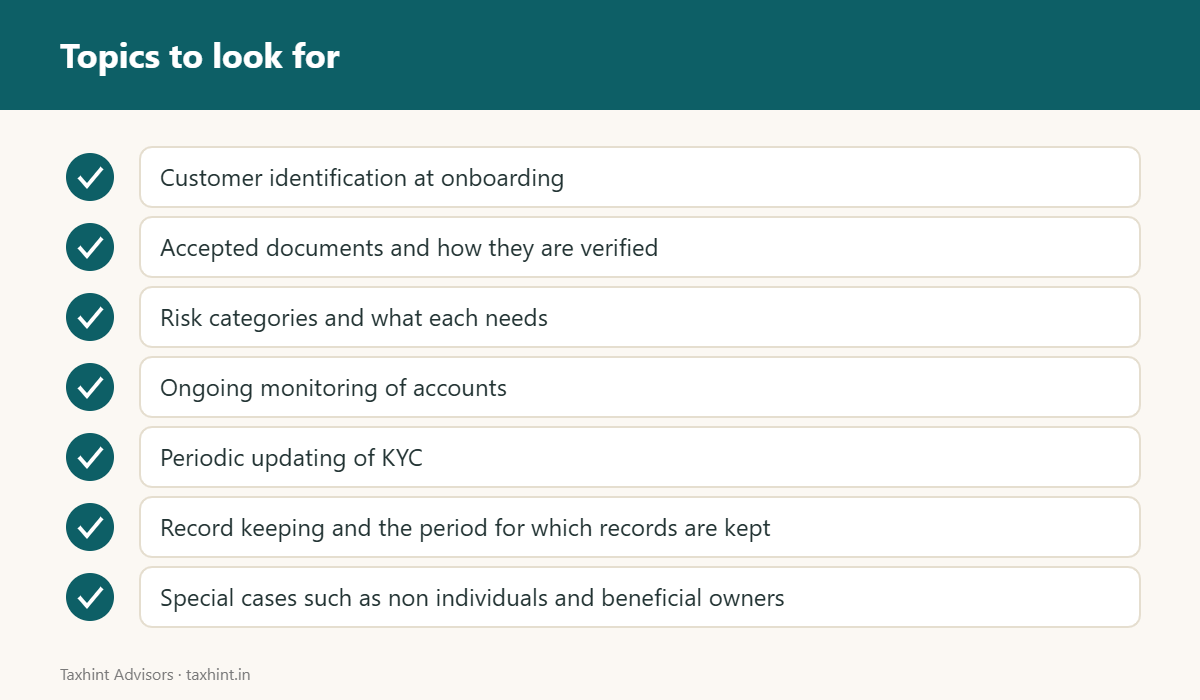
Your software can store documents, mark verification status, set review dates by risk category and report incomplete records. These features support your policy but do not replace it.
Use a monthly report of incomplete and overdue KYC to keep the file clean.
- Verification status and officer name
- Risk category on the customer record
- Review reminders
- Reports of incomplete KYC
Common gaps
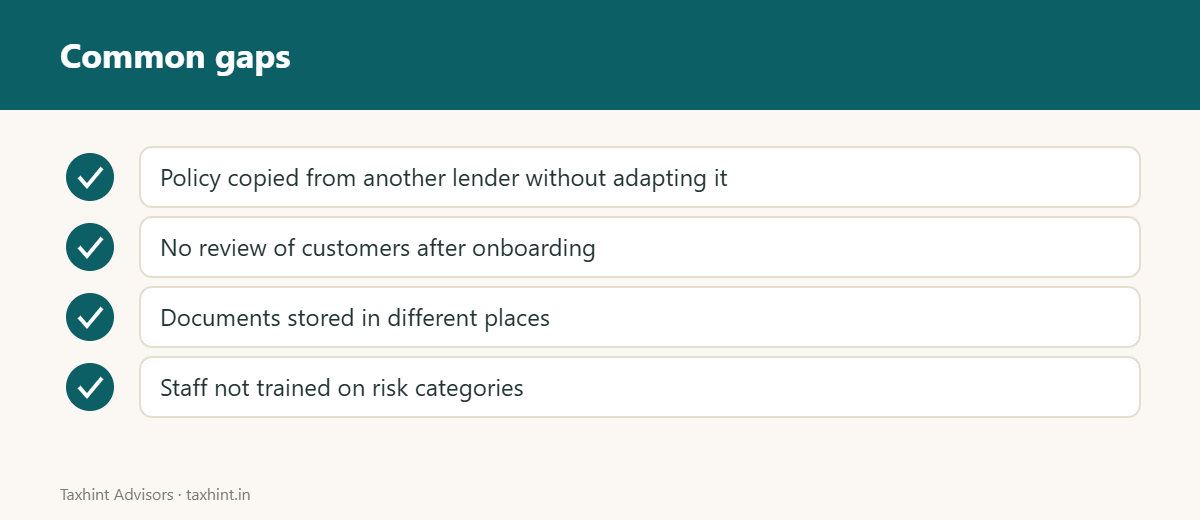
A yearly review with a written note closes most of these gaps.
- Policy copied from another lender without adapting it
- No review of customers after onboarding
- Documents stored in different places
- Staff not trained on risk categories
A simple review routine
See also: KYC checklist for software and periodic updation.
- Read the current direction.
- List topics that apply to you.
- Compare with your policy and your software.
- Fix gaps and record the date.
- Train staff and test with sample customers.
Records to keep
Whatever the rule says, you should be able to show how you reviewed it. Keep a dated note of the text you read, the changes you found, the decisions taken and who approved them. If an auditor or inspector asks, these notes show that your process is real and current. For KYC, this includes the policy, the risk categories and a sample of verified customer files.
- Copy of the current official text with the date you downloaded it
- Gap list with owner and due date
- Approval note from management or the board
- Evidence of training for staff
A yearly calendar for KYC
Put the review on a fixed calendar so that it does not depend on memory. A short checklist each quarter is better than a long scramble once a year.
- Quarter one: read the current text and update the gap list.
- Quarter two: test system settings with sample cases.
- Quarter three: refresh staff training and review complaints.
- Quarter four: management review and approval of the updated policy.
Where to get help
If any part of the text is unclear, ask your CA, CS or lawyer to explain it in writing for your case. Taxhint Advisors can help with registration, compliance and software set up for lenders and societies. Contact: +91 93117 95484, [email protected], taxhint.in.
Frequently asked questions
Is the KYC direction the same for all lenders?
No. Applicability depends on the type of lender. Ask your CA or lawyer.
Can I accept any document?
Only those permitted for your category. Check the current text.
How often should KYC be refreshed?
It depends on the risk category as per the current text and your policy.
Does software ensure compliance?
It helps apply your policy. Your policy must follow the current direction.
For a demo or questions, contact Taxhint: +91 93117 95484 · [email protected] · taxhint.in