November 24, 2026 · Guides
Tractor Finance Documents: Checklist for Lenders and Farmers
A tractor loan file has more parts than a two-wheeler file. There is the farmer, the land, the dealer, the tractor and often a guarantor. A missing paper at the start usually turns into a delay at disbursal or a problem at recovery.
Use this checklist as a base and adapt it to your policy. The final list depends on your lender type and local practice, so please verify with your CA.
It helps to print the list and tick items with dates. A file that is complete on day one is far easier to manage for the next three or five years.
In this guide
Farmer details
Identity and capacity.
- Identity and address proof with photograph.
- PAN or Form 60 as per policy.
- Bank details and mandate if used.
- Reference contacts in the village.
Land and income
Show repayment ability.
- Land ownership or lease records.
- Crop pattern and rough yearly income noted by the officer.
- Other income such as dairy or transport, if any.
- Existing loans disclosed.
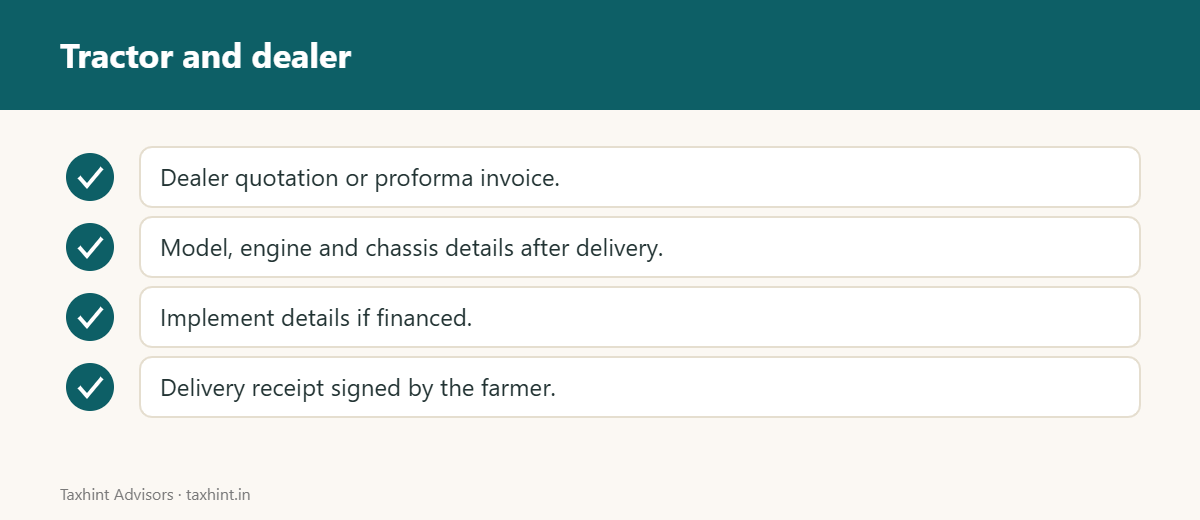
Tractor and dealer
Link the loan to the asset.
- Dealer quotation or proforma invoice.
- Model, engine and chassis details after delivery.
- Implement details if financed.
- Delivery receipt signed by the farmer.
After disbursal
Close the loop.
- RC with hypothecation entry received and filed.
- Insurance copy stored with expiry date.
- Guarantor documents and signed agreement on file.
- Missing items list reviewed every week.
See checklist by loan type and tractor loan software. Practice and rules differ by lender, entity type and state, so please verify with your CA or CS before you finalise your policy.
| Group | Key documents |
|---|---|
| Farmer | KYC, bank details |
| Land | Ownership or lease record |
| Tractor | Quotation, delivery receipt |
| After | RC, insurance, agreement |
Why farm loan files need extra care
Tractor loans depend on the farmer land and crop cycle, so the file holds more than identity papers. Land records, crop details and income from farming help you understand repayment ability. A clear checklist saves repeat visits to a village.
Illustrative example: an officer visits a village with a printed checklist, collects the papers on the spot, photographs the land document and enters everything the same evening.
Mistakes to avoid
- Land records not matched with the applicant name.
- No note on the crop and the harvest months.
- Dealer quotation without a signature or date.
- Insurance and registration papers collected late.
Checklist for the field officer
- Identity and address proof checked against originals.
- Land details noted with the source document.
- Income and crop information recorded in simple words.
- Dealer quotation and vehicle details collected.
- Photographs and the signed application scanned the same day.
Points to confirm
- State specific rules on registration and any subsidy papers.
- Please verify with your CA, CS or lawyer before you rely on it.
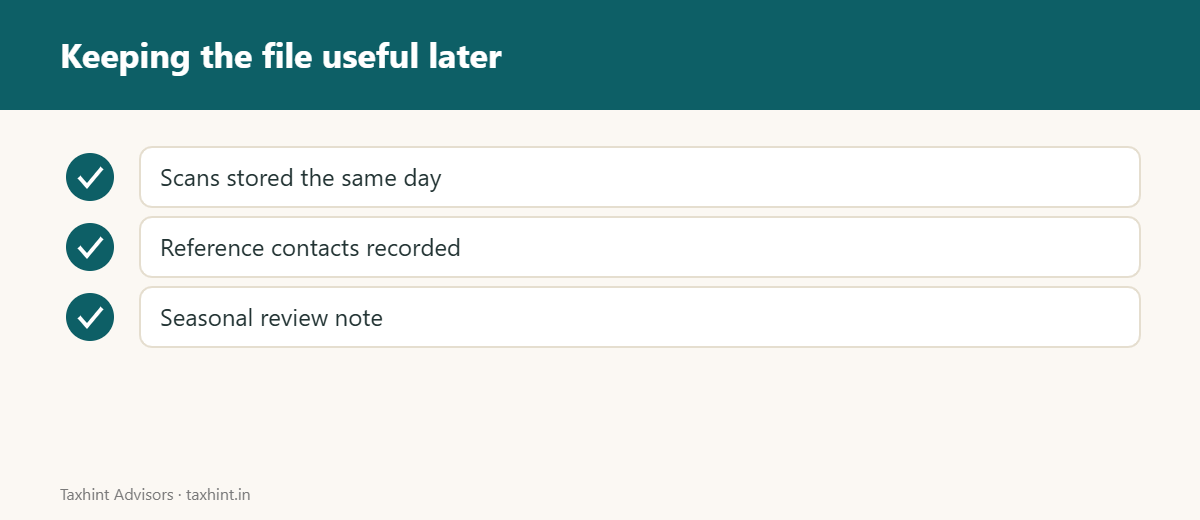
Keeping the file useful later
Scan every document and store it against the loan number, because a farmer may be hard to reach later. Keep one note in the file about references in the village who know the customer.
Review the file again before each seasonal instalment, so that you know the crop situation and can plan the reminder.
- Scans stored the same day
- Reference contacts recorded
- Seasonal review note
FAQs
Are land records always needed?
Depends on your policy and the loan size. Many lenders ask for them.
Is a guarantor required?
Set this in policy and follow it for every file.
When is the RC usually received?
After registration. Record a follow-up date.
How do I track missing papers?
Use a checklist per loan with status and date.
Want a tractor loan checklist inside every file? Book a demo of Taxhint loan software. Talk to Taxhint on +91 93117 95484 or [email protected], or visit taxhint.in.