November 26, 2026 · Guides
Types of Co-operative Society in India
Co-operative societies come in many forms, but they share the same idea: members pool money and effort, own the society together and share its benefits. The type of society decides its objects, its bye-laws and sometimes its member rules.
Here are the main types and who each suits. When you have picked one, see how to register a co-operative society or our co-operative society registration service.
In this guide
- The main types at a glance
- Credit and thrift societies
- Housing societies
- Dairy and agricultural societies
- Consumer and multipurpose societies
- Multi-state societies
- How to choose the type
- Every type needs good records
- Common mistakes
- FAQs
The main types at a glance
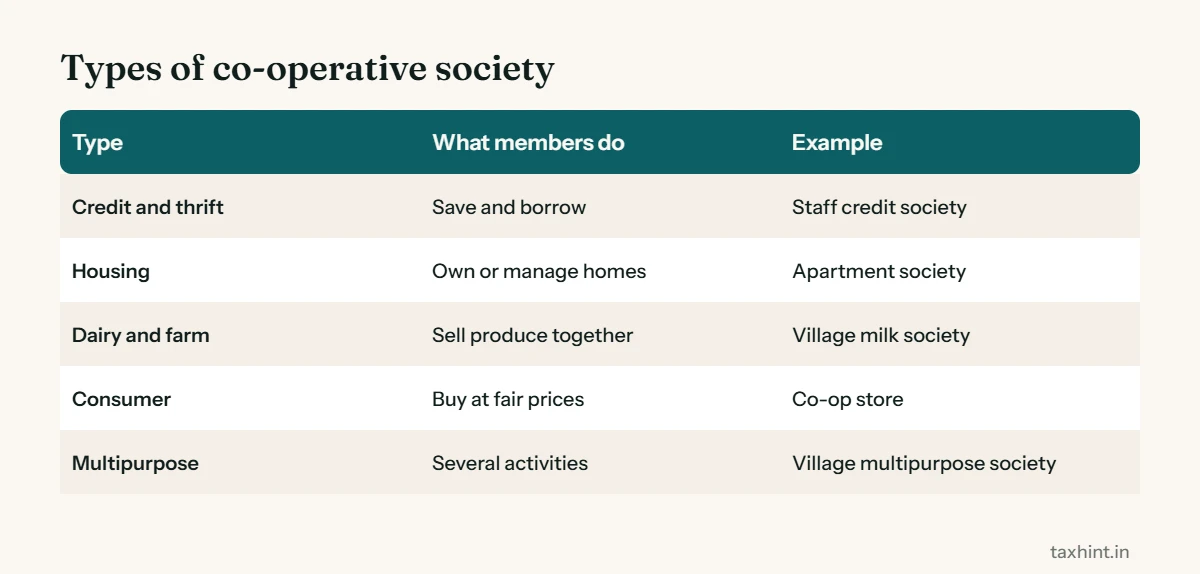
Most societies fall into one of these groups.
Credit and thrift societies
Members save regularly and borrow from the pool. Common among employees of one organisation, traders in a market, or residents of a village. They work only with members. See credit co-operative society registration and how to start one.
Housing societies
Members own or manage flats, plots or a colony together. Many are formed after possession to take over maintenance from a builder. See housing society registration.
Dairy and agricultural societies
Producers collect, process and sell together for better prices: milk, crops, inputs or equipment. See dairy society registration. Some producer groups compare this with a producer company.
Consumer and multipurpose societies
Consumer societies run shops for members at fair prices. Multipurpose societies combine several activities, such as credit, supply and marketing, which needs carefully written bye-laws and sometimes extra approvals.
Multi-state societies
Any of these types can work across states by registering under the Multi-State Co-operative Societies Act, 2002 with the Central Registrar. See multi-state co-operative society registration.
How to choose the type
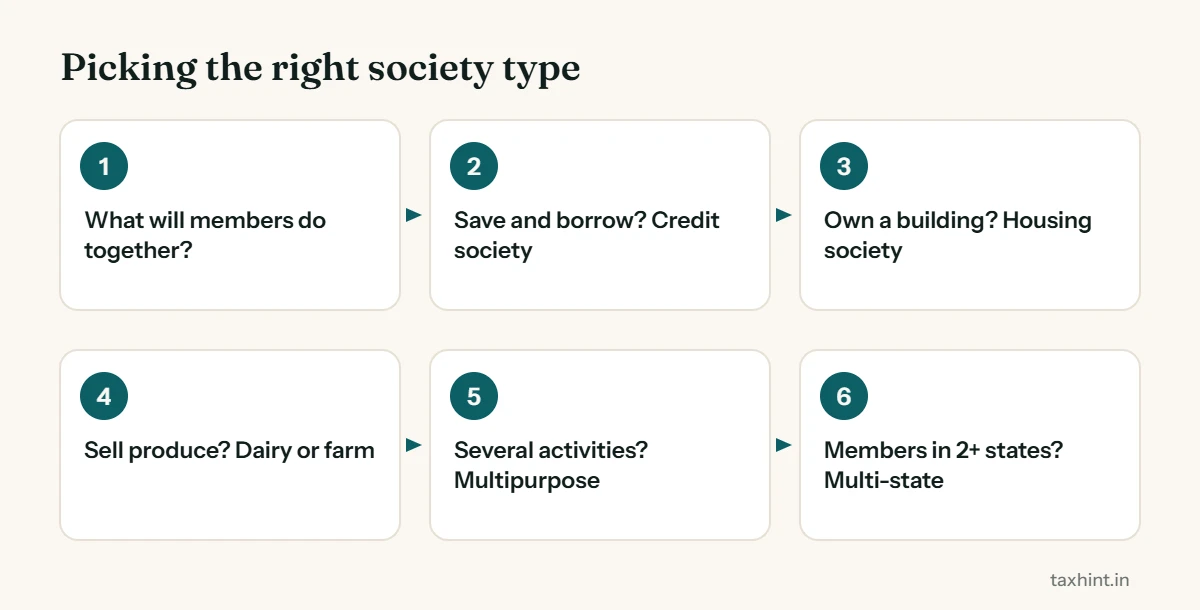
Start from what members will actually do together, then check your state’s rules for that type.
Every type needs good records
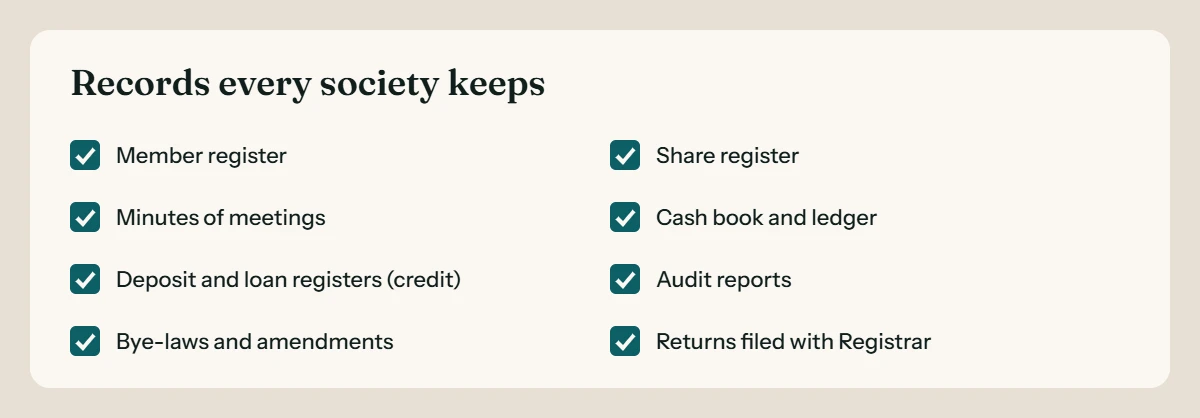
Whatever the type, the society keeps member and share registers, holds an annual general meeting, gets its accounts audited and files returns with the Registrar. See co-operative society audit and annual compliance.
Common mistakes when picking a type
Choosing multipurpose to keep options open. Wide objects look flexible, but Registrars look harder at them and the bye-laws get complicated. Start with the main activity and amend the bye-laws later if needed; see bye-law amendment.
Using a housing society for lending. A housing society that starts giving loans to members is going beyond its objects. Savings and loans belong in a separate credit society.
Ignoring the area of operation. A dairy society that later wants farmers from the next district may find its bye-laws do not allow them. Think about where members will come from in five years, not just today.
Frequently asked questions
What are the main types of co-operative society?
Credit and thrift, housing, dairy and agricultural, consumer, producer and multipurpose societies, any of which can be multi-state.
Which type can give loans?
A credit co-operative society lends to its members as its bye-laws and state Act allow.
Can one society do several activities?
A multipurpose society can, if its bye-laws and state rules allow.
Does the type change the registration process?
The steps are similar, but documents, member rules and bye-laws differ by type and state.
Can you help pick the type?
Yes. The first consultation is free.
Next step: Not sure which type fits your group? Tell us what members want to do together. Call +91 93117 95484, email [email protected], or use the form on our co-operative society services page.