November 24, 2026 · Guides
Used Two-Wheeler Finance: Risks, Checks and Process
Used two-wheeler loans serve buyers who cannot afford a new one. The risks are unclear ownership, hidden loans and fast loss in value.
A short check at the start prevents most issues.
In this guide
Before lending
Check ownership.
- Seller’s RC in the seller’s name.
- No existing loan on the RC or clearance proof.
- Engine and chassis match.
- Photographs and condition notes.
Valuation and limit
Be conservative.
- Market check for the model and age.
- Loan limit as a share of the value.
- Margin from the buyer recorded.
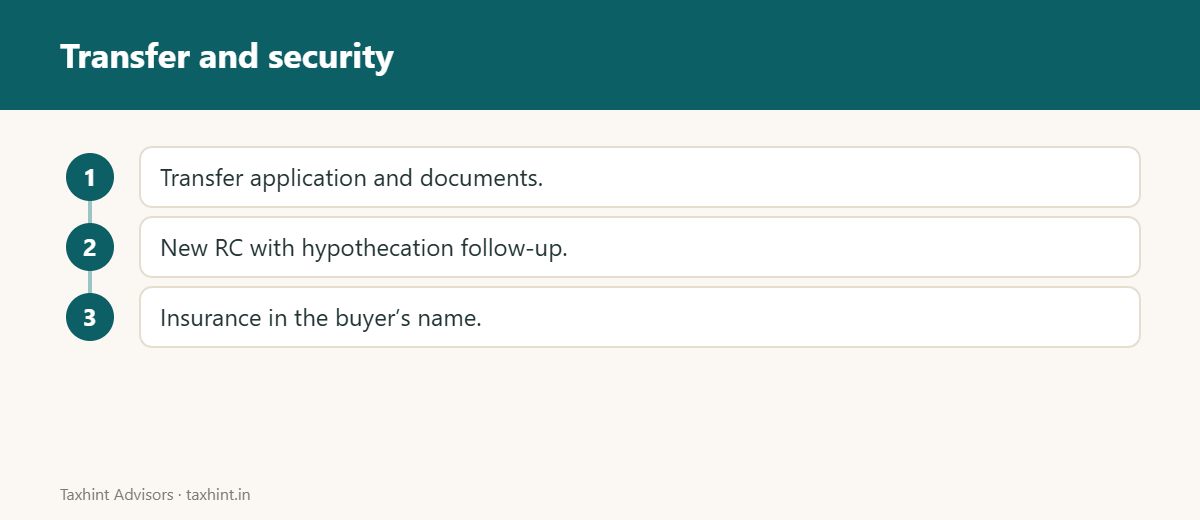
Transfer and security
Complete the paperwork.
- Transfer application and documents.
- New RC with hypothecation follow-up.
- Insurance in the buyer’s name.
See used car valuation. Rules and practice differ by lender and state, so please verify with your CA before you finalise your policy.
| Check | Evidence |
|---|---|
| Ownership | RC copy |
| Loan clearance | Proof |
| Transfer | Receipt and follow-up |
Financing used two wheelers carefully
Used two wheelers are cheaper, so loans are small, but the risk per rupee can be higher. The vehicle may be old, its papers may be unclear and its value harder to judge. A sound process checks the papers, inspects the vehicle and sets the loan amount with a good margin.
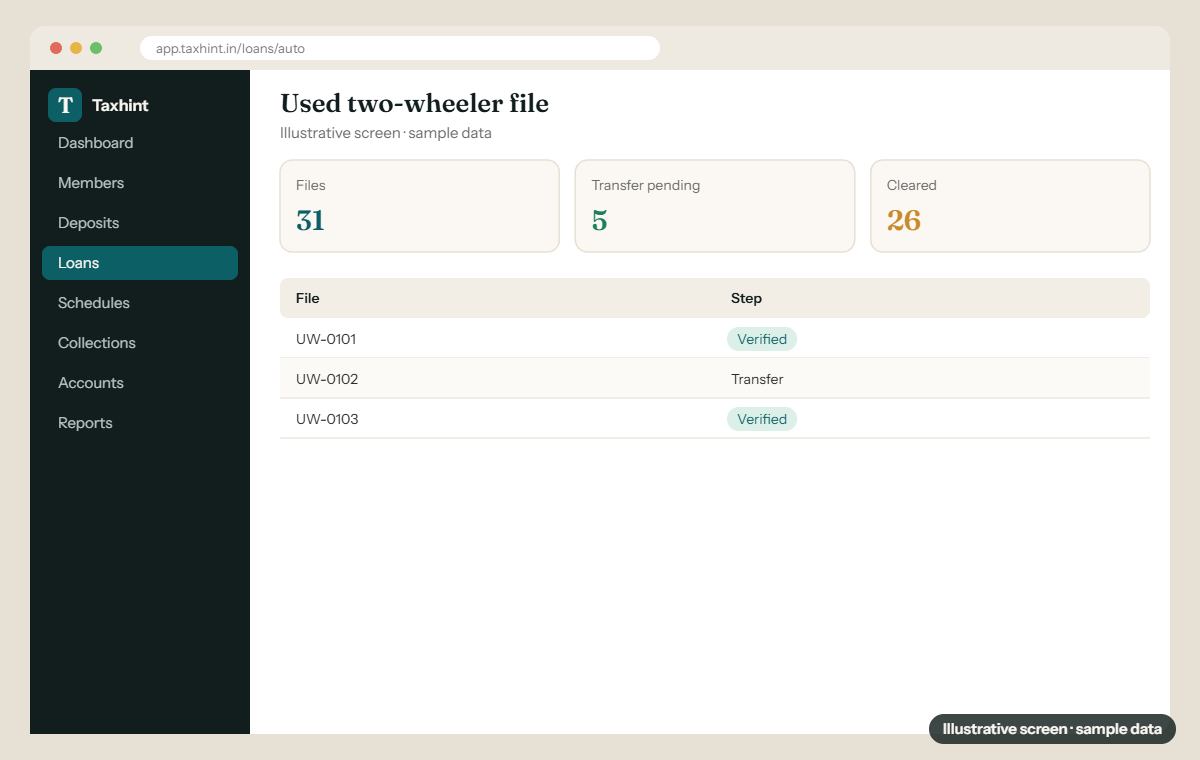
Illustrative example: a customer wants a used scooter. The officer checks the registration paper, confirms that the seller is the registered owner, inspects the vehicle, notes the condition and sets the loan amount as per policy.
Mistakes to avoid
- Lending without checking the registered owner.
- No inspection or photographs.
- Long tenure on an old vehicle.
- Ignoring pending dues or notices on the vehicle.
Steps to apply it
- Check the registration paper and the seller identity.
- Inspect and photograph the vehicle.
- Set value and loan amount as per policy.
- Complete the transfer and hypothecation steps.
- Record everything in the loan file.
Points to confirm
- Transfer and hypothecation process in your state.
- Maximum age and tenure rules in your policy.
- Please verify with your CA, CS or lawyer before you rely on it.
Reviewing outcomes
Every quarter, look at overdue and losses on used vehicle loans by age of vehicle and by dealer. If older vehicles show more problems, reduce the maximum age or tenure for them.
Share the results with staff and dealers, and update your checklist for inspection.
Learning from your own numbers is the best guide for setting limits.
Training the valuation team
Show staff photographs of vehicles in good and poor condition and ask them to value each, then compare. Review this with your team once a quarter and update the checklist, because real cases always teach something the first draft missed.
- Photo based practice
- Comparison of values
- Written valuation guide
Reading the customer
Used vehicle buyers often have irregular income. Ask how they earn, how stable it is and whether a family member can support payments. Note the answers in the file. Review this with your team once a quarter and update your checklist, because real cases teach more than the first draft.
A short conversation at the start tells you more than a form.
- Income pattern noted
- Backup contact recorded
- Tenure matched to vehicle age
FAQs
What is the main risk?
Unclear ownership or a hidden loan on the vehicle.
Who pays for transfer?
As agreed between buyer and seller.
Should I lend before transfer is done?
Set a rule in policy and track pending transfers.
How do I track RC status?
Use a follow-up date on each file.
Want transfer and RC follow-ups tracked? Book a demo of Taxhint auto loan software. Talk to Taxhint on +91 93117 95484 or [email protected], or visit taxhint.in.