November 25, 2026 · Guides
What Is an Unencumbered Term Deposit? Nidhi Rule Explained Simply

Nidhi rules require a Nidhi company to keep a part of its deposits liability in a specified safe form, commonly described as unencumbered term deposits. “Unencumbered” means the deposit is free: not pledged, not under a lien and available to meet member claims.
The required percentage, the permitted places and the exact conditions are set in the Nidhi Rules and change from time to time. Please verify the current rules with your CA or CS before you plan.
Here is the idea and how to track it.
In this guide
- What it means
- Why the rule exists
- What to keep in order
- A simple illustration
- Tracking it in software
- FAQs
What it means
Plain words.
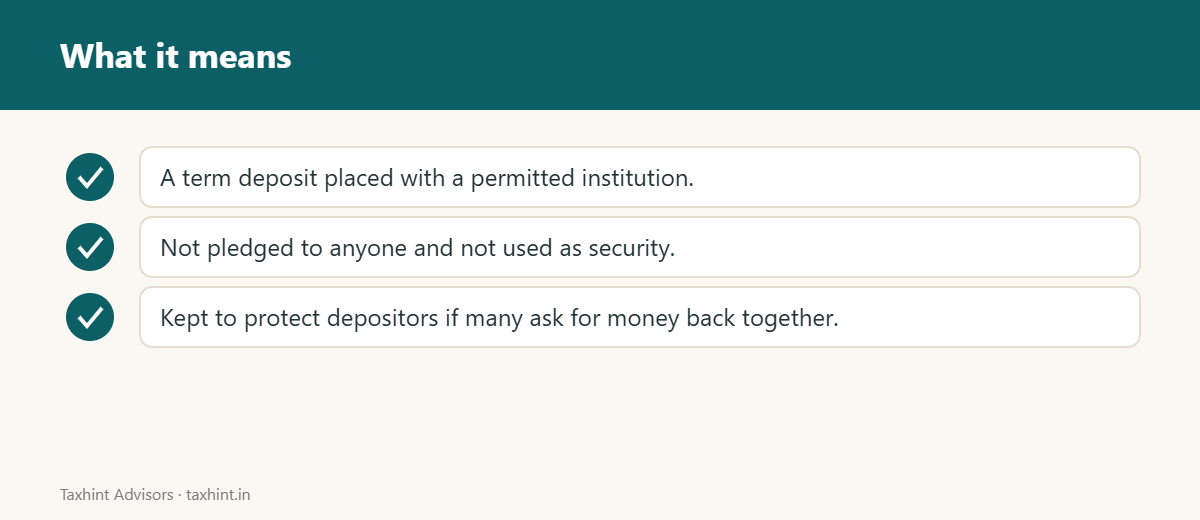
- A term deposit placed with a permitted institution.
- Not pledged to anyone and not used as security.
- Kept to protect depositors if many ask for money back together.
Why the rule exists
Safety for members.
- Nidhis lend to members, so cash may be tied up in loans.
- A free deposit gives a cushion for withdrawals.
- Regulators and auditors check it.
What to keep in order
Evidence.
- Deposit receipts or certificates in the company name.
- Confirmation that the deposit is free of lien.
- Periodic reconciliation with deposits liability.
- Renewal dates tracked so the cover does not lapse.
A simple illustration
For learning only.
- If the rule asks for a fixed percentage of deposits and deposits are 1,00,000, the required amount is that percentage of 1,00,000.
- Always apply the exact percentage and base from the current rules. Please verify.
Tracking it in software
What helps.
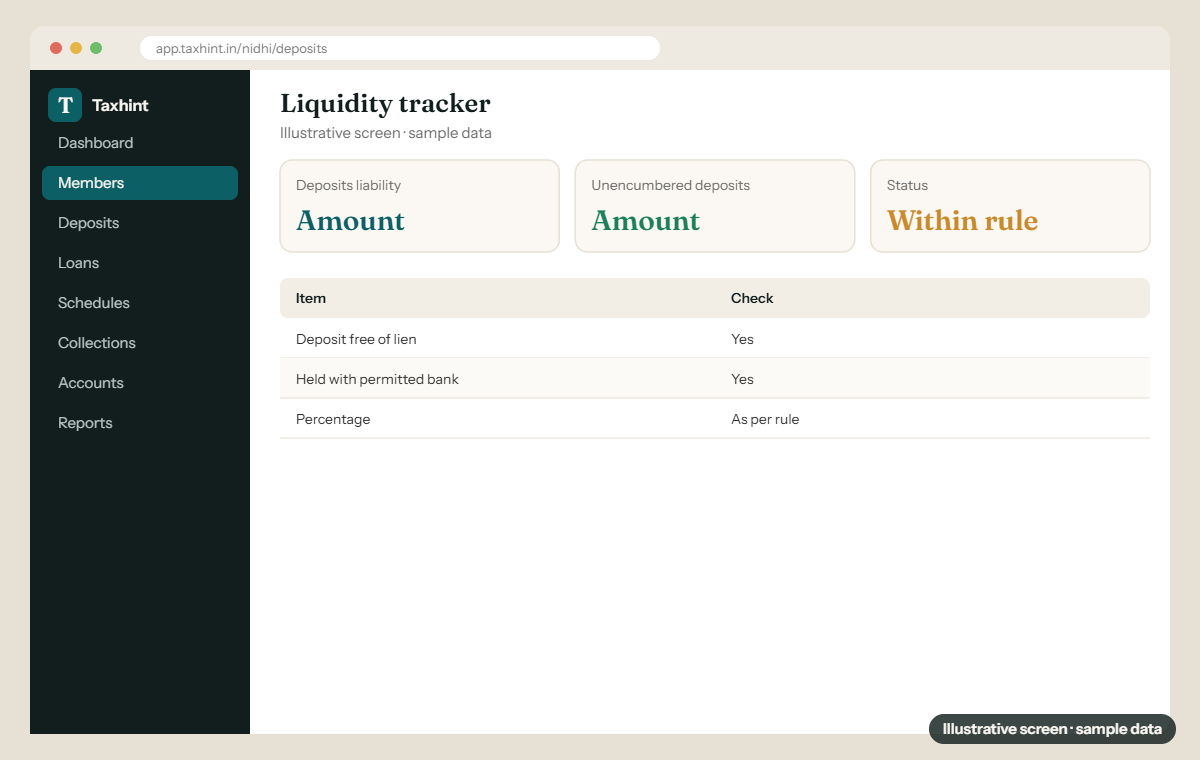
- Register of unencumbered deposits with bank, date and maturity.
- Monthly check against deposits liability.
- Alert before maturity or if the ratio slips.
- Link with deposit limits tracking.
See Nidhi software. Rules differ by entity type and change over time, so please verify with your CA or CS.
| Item | Evidence |
|---|---|
| Deposit receipt | Company name |
| Lien status | Bank confirmation |
| Maturity | Tracked |
A simple example
A Nidhi holds a part of its deposits in a form that is free of charge or lien, as the rules require, so that the funds are available to meet members claims. The exact form, proportion and review dates come from the current rules and must be confirmed with your CA.
Common misunderstandings
- Unencumbered does not mean idle in a cupboard.
- It does not mean the same as cash in hand.
- The requirement can change with amendments.
Why it matters in daily work
This requirement protects members money. Tracking it in software helps you see the position early instead of at year end.
Quick checklist
- Get the current rule text and definition.
- Decide where the funds will be held.
- Track the position monthly.
- Document the review for audit.
Please verify with your CA, CS or lawyer before you rely on it.
Related terms to read next
This requirement sits beside other tests for a Nidhi. These pages cover them.
- Net owned fund
- Nidhi rules amendment explained
- Nidhi loan limits tracking
Practical tip
Review the position monthly and note the amount held, where it is held and the date of the review. Put it in your written procedure so that every new staff member follows it from the first day.
- Amount and place
- Monthly review
- Audit note
FAQs
Is it the same for every Nidhi?
The same rules apply, but amounts depend on each Nidhi’s deposits.
Can the deposit be used as security for a loan?
No, it must stay unencumbered. Please verify.
Where can it be kept?
In places the rules permit. Please verify.
Who checks compliance?
The auditor and the authority, through returns.
Want deposit cover tracked against liabilities? Book a demo of Taxhint Nidhi software. Talk to Taxhint on +91 93117 95484 or [email protected], or visit taxhint.in.