Microfinance PAR Calculator: PAR 1, 30, 60 and 90
A microfinance PAR calculator for your loan book. Enter outstanding amounts by days overdue, or paste loan-wise data, and get portfolio at risk at 1, 30, 60 and 90 days in seconds.
Calculate portfolio at risk
Indicative only. Nothing you enter is stored or sent anywhere.
How the microfinance PAR calculator works
This microfinance PAR calculator divides the outstanding principal of late loans by your gross loan portfolio. PAR 30 takes every loan with an instalment more than 30 days overdue, adds up the full balance still owed on those loans, and divides by the total outstanding of all live loans.
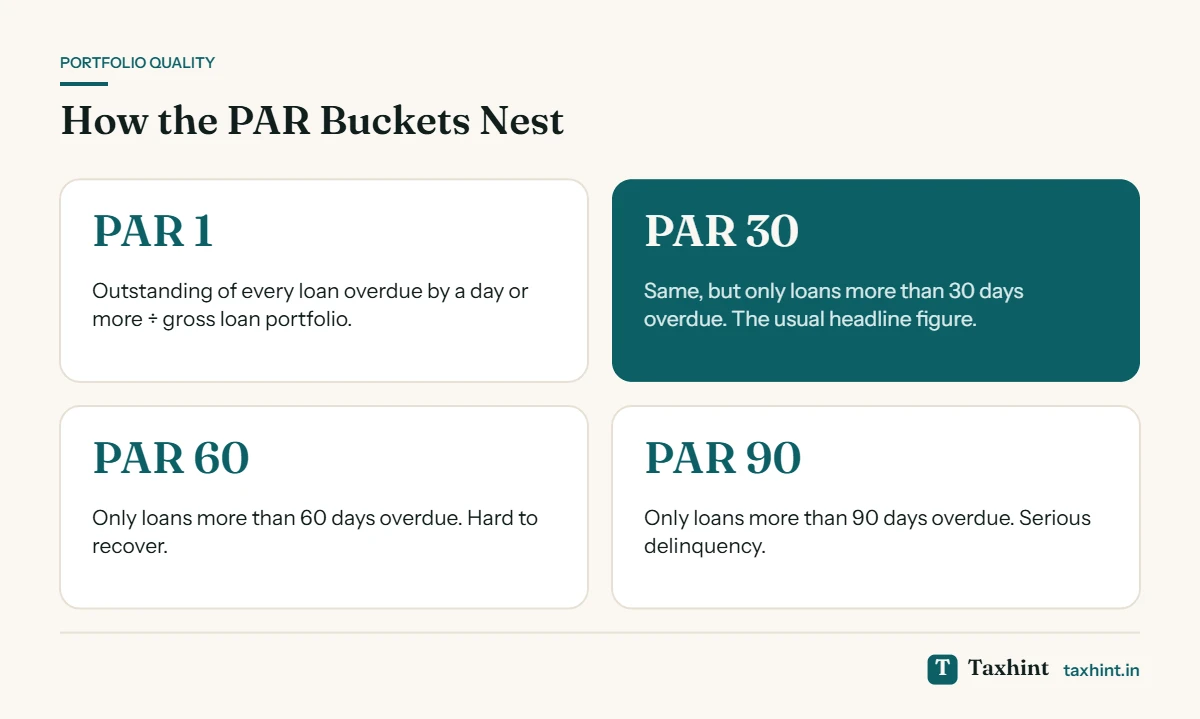
The buckets build on each other. PAR 1 includes everything overdue by a day or more. PAR 30 drops the 1–30 day bucket. PAR 60 keeps only loans past 60 days, and PAR 90 only those past 90. So PAR 1 is always the largest figure and PAR 90 the smallest.
Take a book of ₹50 lakh where loans totalling ₹1.6 lakh are more than 30 days late. PAR 30 is 3.2%. If ₹2 lakh more is late by under 30 days, PAR 1 is 7.2%, and that gap is what your field team should chase this week. Our guide to portfolio at risk in microfinance walks through a full worked example.
Common mistakes when calculating PAR
Counting only the missed instalment. If a ₹30,000 loan has one ₹700 weekly instalment unpaid for 40 days, PAR 30 counts the whole remaining balance, not ₹700. Using arrears alone makes the book look far healthier than it is.
Mixing up dates. Days overdue should run from the date the oldest unpaid instalment fell due, as on one reporting date for the whole book. Different branches using different cut-off days give figures that cannot be added.
Leaving out restructured loans. A rescheduled loan that resets to zero days overdue can hide trouble. Report restructured loans next to PAR so the board sees both.
Calculating it once a quarter. In weekly-repayment lending, PAR moves fast. A weekly figure by centre and loan officer tells you where to act; a quarterly one only tells you what already happened. Our post on collection efficiency and portfolio at risk dashboards shows how lenders track it.
Assumptions and limits
The tool uses outstanding principal only, not interest or penalties. It does not deduct provisions or collateral, which microfinance loans normally do not have anyway. Written-off loans should be excluded from both the late amount and the gross portfolio.
PAR is a management measure. If a regulator, lender or rating agency gives its own definition of non-performing or overdue loans, use that definition for their reports. For pricing and loan rules, see RBI microfinance rules explained.
Frequently asked questions
What is portfolio at risk (PAR) in microfinance?
PAR is the share of your loan book that is at risk because a repayment is late. PAR 30, for example, is the total outstanding principal of all loans with an instalment overdue by more than 30 days, divided by the gross loan portfolio.
Why does PAR count the full outstanding amount and not just the overdue instalment?
Once a borrower misses payments, the whole remaining balance is at risk, not only the missed instalment. Counting only overdue amounts makes a weak book look healthy.
Which PAR figure should a small lender watch?
Most lenders report PAR 30 as the headline figure and watch PAR 1 for early warning. PAR 60 and PAR 90 show how much has become hard to recover.
Is PAR 90 the same as NPA?
Not exactly. PAR is a management measure. NPA is a regulatory classification with its own rules. Where your regulator or lender defines non-performing loans, follow that definition for their reports.
Can I paste loan-wise data?
Yes. Switch to loan-wise mode and paste one loan per line as outstanding amount and days overdue, separated by a comma. Nothing you enter leaves your browser.
Does the calculator include written-off or restructured loans?
No. Enter only loans currently on your book. Written-off loans and restructured loans are usually reported separately, so note them alongside the PAR figures.
Want PAR every week without spreadsheets?
Our microfinance software starting ₹15,000 calculates PAR, collection efficiency and overdue lists by branch, centre and loan officer from live data. Book a free demo.