November 25, 2026 · Guides
Loan Insurance Tie-Ups: Tracking Policies, Renewals and Claims

Many loans have insurance attached: vehicle cover on auto loans, property cover on mortgages, or credit life cover on some loan types. If a policy lapses or a claim is delayed, the lender and borrower both lose.
Rules on selling and disclosing insurance with loans exist, so please verify the current position with your compliance officer.
Here is how to track the policies.
In this guide
Record each policy
Linked to the loan.
- Insurer, policy number and type.
- Start and end dates and insured amount.
- Policy copy stored with the loan.
- Lender’s interest noted where applicable.
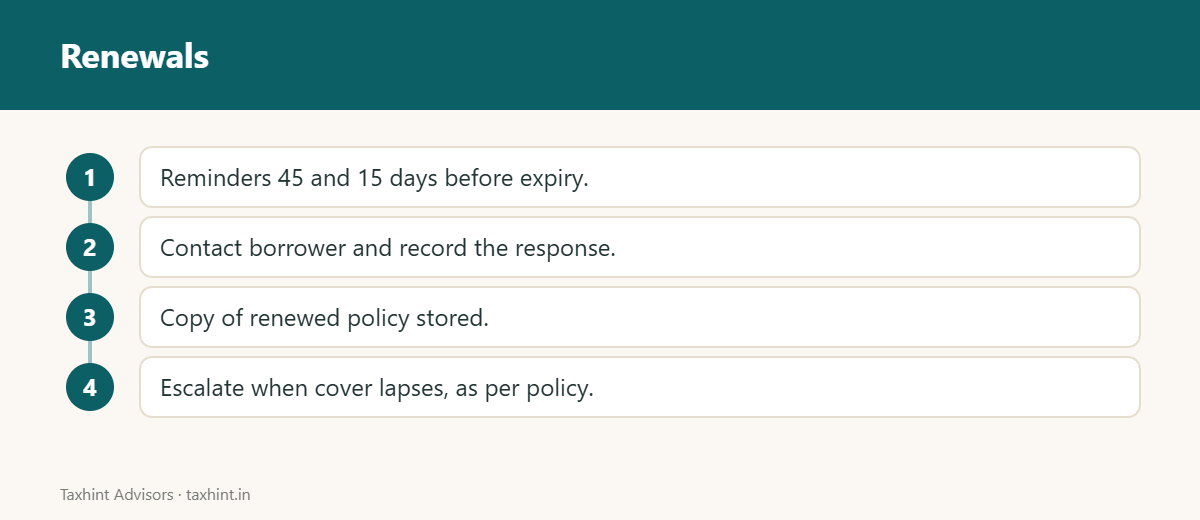
Renewals
Do not let cover lapse.
- Reminders 45 and 15 days before expiry.
- Contact borrower and record the response.
- Copy of renewed policy stored.
- Escalate when cover lapses, as per policy.
Claims
Be ready to help.
- Claim contact list for each insurer.
- Claim status linked to the loan.
- Impact on loan schedule when a claim is paid.
Disclosure
Be transparent.
- Tell borrowers clearly what is optional and what is required.
- Show premium and cover details.
- Keep consent records. See fair practices code.
Rules in this area change, so please verify the current position with your CA, CS or compliance officer. See NBFC software and loan management software.
| Item | Why |
|---|---|
| Expiry date | Avoid lapse |
| Policy copy | Claim proof |
| Consent | Disclosure record |
Tracking insurance linked to loans
Many loans come with insurance on the borrower or the asset. Lenders must track that policies are taken, remain valid and are renewed where needed. Without tracking, a claim may fail when it matters.
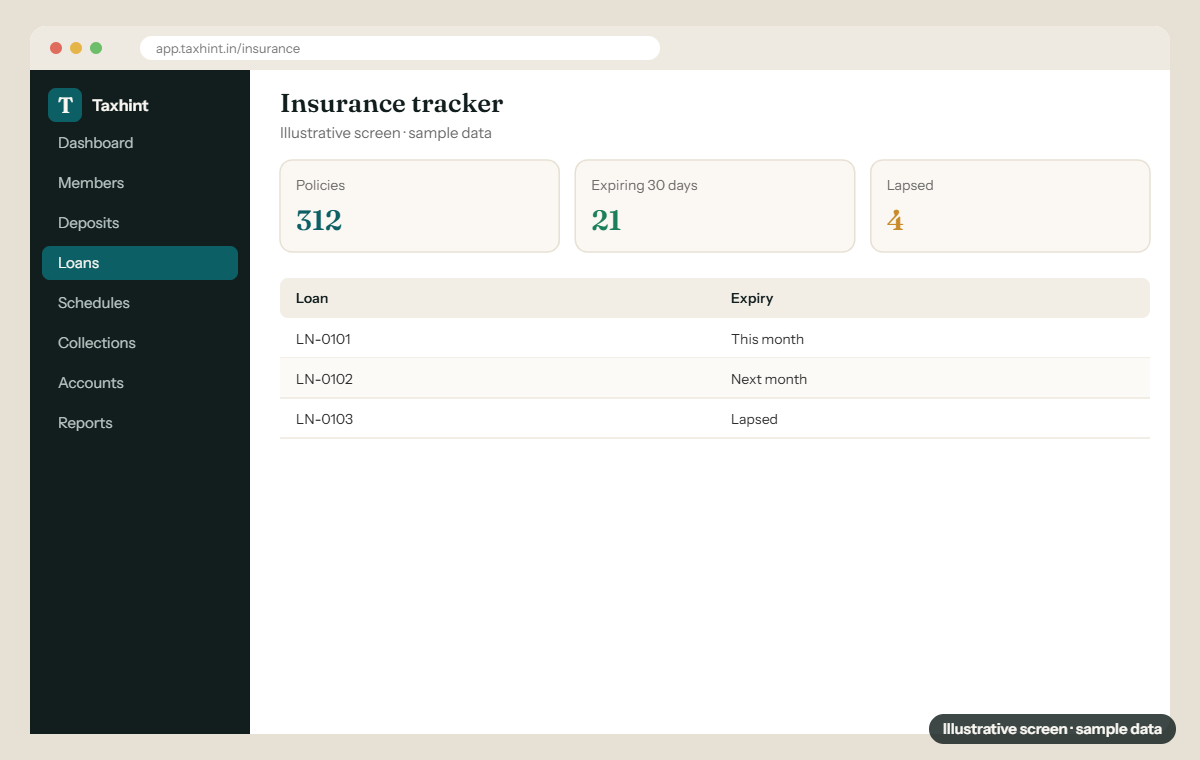
Illustrative example: a vehicle loan records the policy number and expiry date. Thirty days before expiry the system lists the loan for a reminder call.
Mistakes to avoid
- Policy details not recorded.
- No reminder before expiry.
- Claims handled without a record.
- Commission or premium not reconciled.
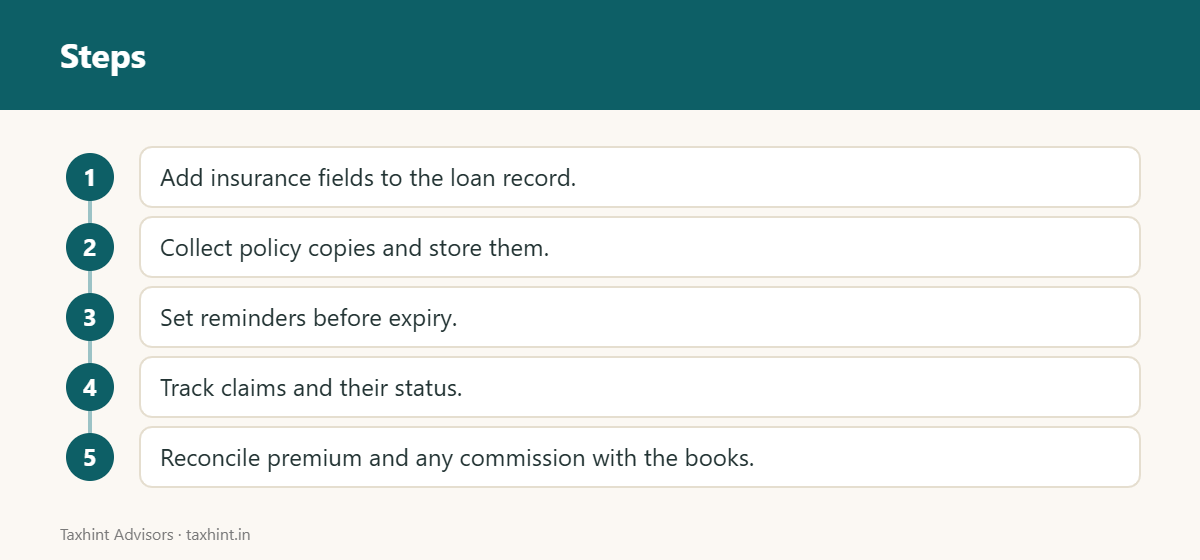
Steps
- Add insurance fields to the loan record.
- Collect policy copies and store them.
- Set reminders before expiry.
- Track claims and their status.
- Reconcile premium and any commission with the books.
Points to confirm
- Rules on insurance selling and disclosures; ask your CA or lawyer.
- Please verify with your CA, CS or lawyer before you rely on it.
Working with insurers
Keep a contact at each insurer and a list of products linked to your loans. Review service levels and claim experience. Put this in writing and revisit it every quarter, because the first version is rarely the best.
Tell customers clearly that insurance choices are theirs where applicable.
- Insurer contacts
- Service review
- Customer choice explained
Customer help
If a customer has a claim, help them with the steps and keep the file updated. Put this in writing and revisit it every quarter, because the first version is rarely the best.
Record the outcome and any impact on the loan.
- Help with claim
- File updated
- Outcome recorded
A renewal routine
Each month, list policies expiring in the next sixty days, call customers and record the outcome. For policies not renewed, decide the next step as per your policy and note it in the loan file. Write the answers down, assign an owner and revisit them each quarter so that the practice keeps improving instead of drifting.
- Expiry list
- Customer calls
- Outcome recorded
FAQs
Why track insurance on loans?
To protect the asset and the loan.
Is insurance mandatory?
Depends on loan type and policy. Please verify.
What if a policy lapses?
Follow policy: remind, escalate and record.
Can software send reminders?
Yes, from the expiry date on each policy.
Want policy expiry reminders on every loan? Book a demo of Taxhint loan software. Talk to Taxhint on +91 93117 95484 or [email protected], or visit taxhint.in.