November 24, 2026 · Guides
Credit Life Insurance in Microfinance: How It Works and How to Run It Well

Credit life insurance clears a borrower’s outstanding loan if she dies during the loan term. For a low-income household it can mean the family does not inherit the debt. For the lender it reduces loss.
But credit life insurance also creates complaints when members do not know they are covered, when claims are slow or when premiums are not explained. This guide shows how to run it fairly.
In this guide
- How it works
- What to tell the borrower
- Claim process
- A worked illustration
- Common problems
- Related reading
- Where this comes from
- Controls to put in place
- What the family needs from you
- FAQs
How it works
The lender, acting as a corporate agent or master policyholder, arranges group cover with an insurer. A premium is collected from the borrower, usually at disbursement, and the sum covered follows the outstanding loan. If the insured borrower dies, the insurer pays the outstanding balance to the lender after a valid claim, and the loan closes. Product details differ by insurer and plan, so read the policy wording and the insurer’s rules before launching.
What to tell the borrower
- That insurance is being offered, what it covers and what it excludes.
- The premium amount, shown separately from interest.
- Whether it is optional, and what she gets if she declines.
- Who the nominee is and how to claim.
- Her key fact statement should show the charge clearly; see key fact statement.
Claim process
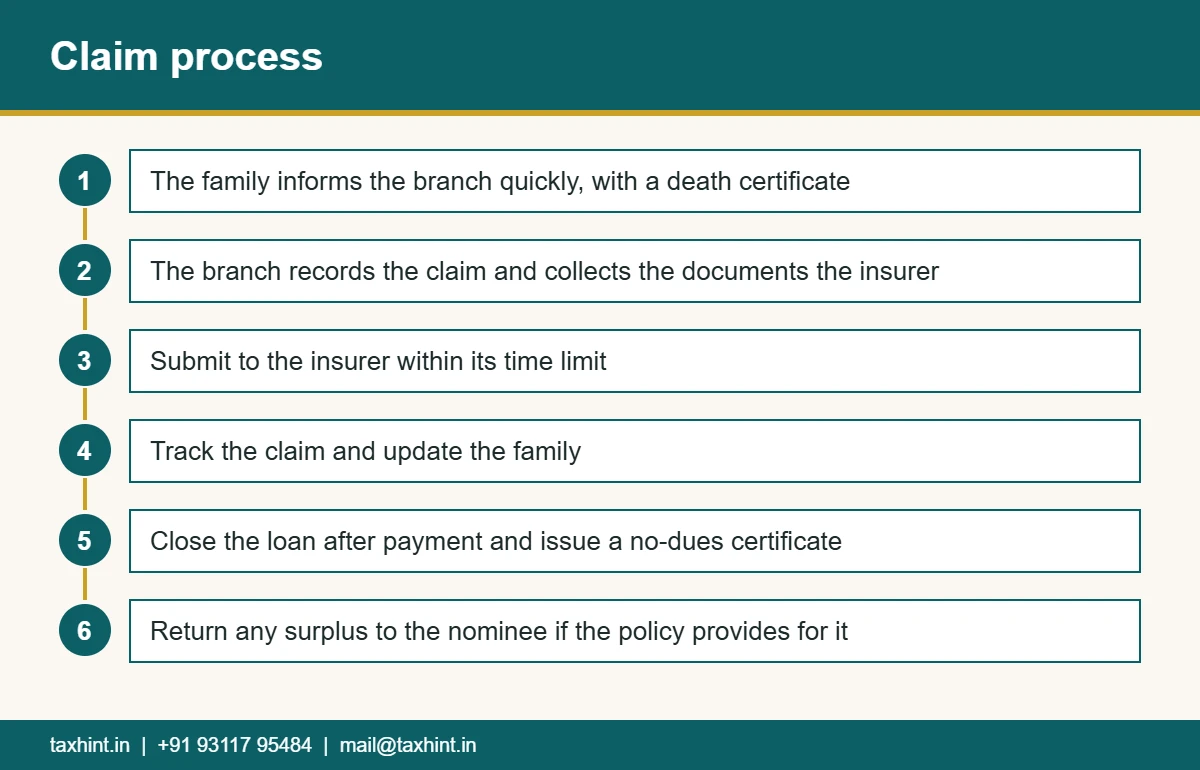
- The family informs the branch quickly, with a death certificate.
- The branch records the claim and collects the documents the insurer lists.
- Submit to the insurer within its time limit.
- Track the claim and update the family.
- Close the loan after payment and issue a no-dues certificate.
- Return any surplus to the nominee if the policy provides for it.
A worked illustration
This is illustrative, not a client case. A borrower with ₹20,000 outstanding passes away. The branch learns within two days, collects the certificate and files the claim in a week. The insurer pays the outstanding amount in a few weeks. The family receives a no-dues certificate and no further instalment demands. During the wait, the lender should stop collection, because the claim covers the balance, and note the stop in the system.
Common problems
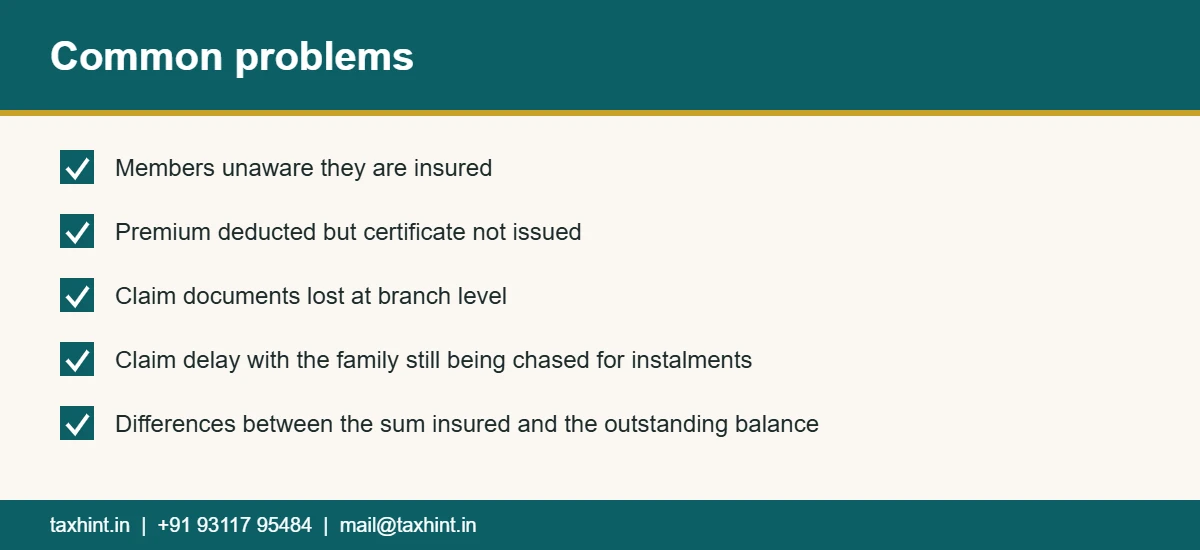
- Members unaware they are insured.
- Premium deducted but certificate not issued.
- Claim documents lost at branch level.
- Claim delay with the family still being chased for instalments.
- Differences between the sum insured and the outstanding balance.
Related reading
See the loan cycle and grievance cell.
Where this comes from
Source: RBI (NBFC – Microfinance Institution) Directions, 2025. RBI updates these Directions from time to time, so confirm the current text before acting.
Controls to put in place
- Reconcile premiums collected with premiums paid to the insurer every month.
- Issue a certificate or SMS confirming cover within a few days of disbursement.
- Keep a claims register with dates and status.
- Review rejected claims for patterns and fix document errors at the source.
- Report claim settlement time to the board.
What the family needs from you
When a borrower dies, the family is grieving. Give one contact person, a simple document list in their language, and clear updates. Do not ask for repeated visits. Tell them in writing that collection is paused while the claim is processed, and that you will confirm closure once the insurer settles.
FAQs
Is credit life insurance compulsory?
Not by law for every loan. Lenders decide the policy and must disclose clearly. Check current RBI and IRDAI rules for any restrictions on bundling.
Who pays the premium?
Usually the borrower, shown as a separate charge. Check your pricing policy.
What if the insurer rejects a claim?
Record the reason, help the family appeal and escalate through the insurer’s grievance route. Do not push the debt onto them without review.
Does it cover disability or health events?
Only if the plan says so. Read the policy wording.
How are premiums shown to the borrower?
As a separate line in the key fact statement and loan agreement, not hidden inside interest.
Running loans on spreadsheets? Book a free demo of our microfinance software, starting ₹15,000, or WhatsApp +91 93117 95484.