November 24, 2026 · Guides
Hiring and Training the Microfinance Field Officer

The microfinance field officer is the face of the lender. Borrowers judge the whole company by this one person. Hiring and training the right field officer decides repayment rates, complaints and reputation.
This guide covers the profile, interview, induction and incentive design.
In this guide
- The right profile
- Interview questions
- Induction plan
- Incentives that protect quality
- A worked illustration
- Conduct rules
- Related reading
- Where this comes from
- Tools and support
- Retention basics
- FAQs
The right profile
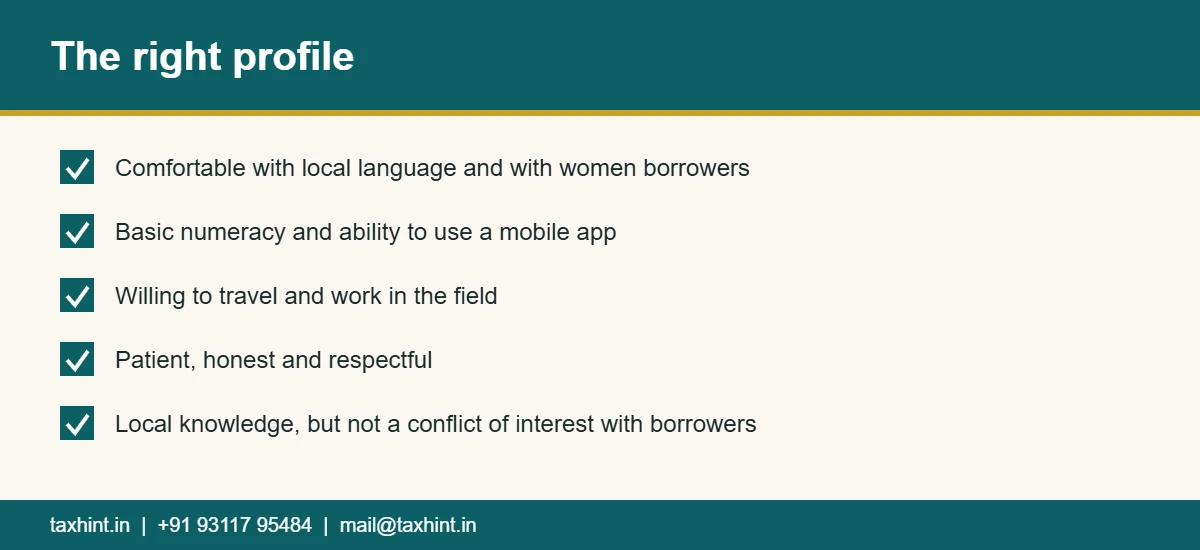
- Comfortable with local language and with women borrowers.
- Basic numeracy and ability to use a mobile app.
- Willing to travel and work in the field.
- Patient, honest and respectful.
- Local knowledge, but not a conflict of interest with borrowers.
Interview questions
- Tell me about a time you handled an angry customer.
- A member cannot pay this week. What do you do?
- How do you record a payment you receive in the field?
- What would you do if a colleague asked you to hide an overdue?
- What do you know about our product and fair practices?
Induction plan
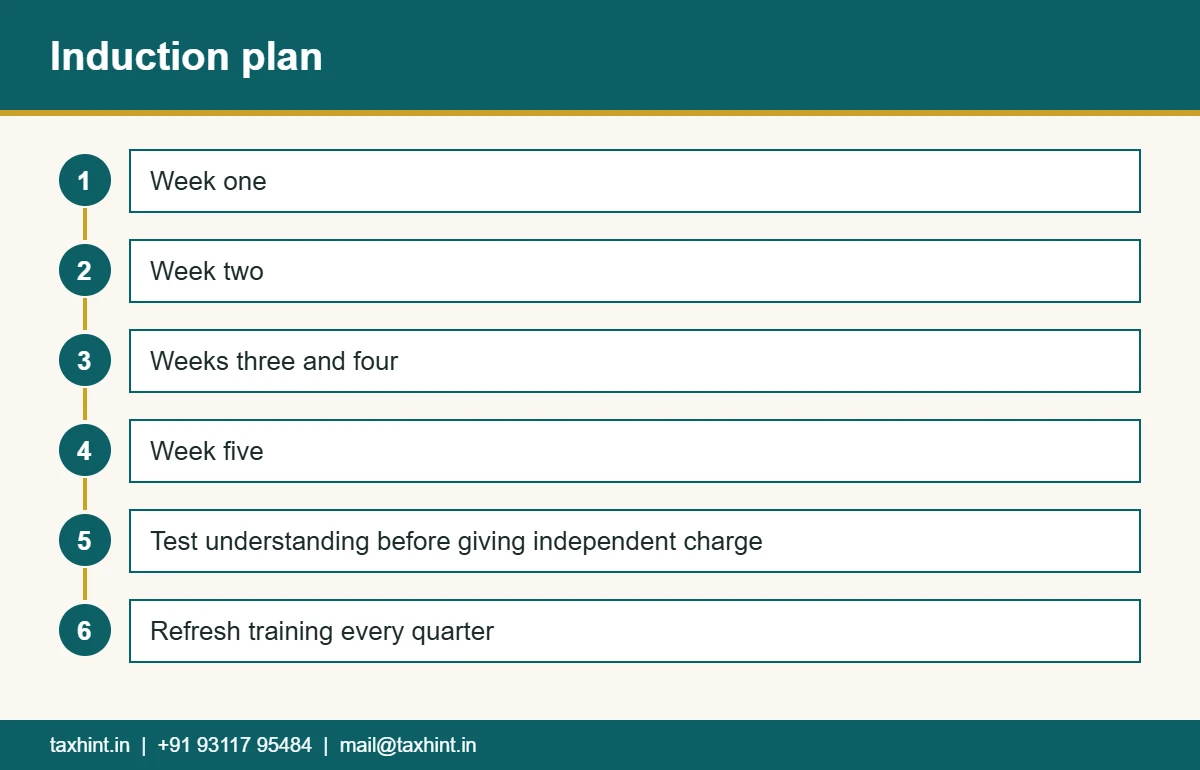
- Week one: company values, product, fair practice code and grievance route.
- Week two: classroom training on appraisal, GRT and collection.
- Weeks three and four: shadow a senior officer in the field.
- Week five: handle a small caseload with close supervision.
- Test understanding before giving independent charge.
- Refresh training every quarter.
Incentives that protect quality
If pay depends only on disbursement volume, officers push loans. Link incentives to portfolio quality: collection efficiency, PAR and complaint-free months. Add a quality gate, so no incentive is paid if a serious conduct breach occurs. Share the formula in writing.
A worked illustration
This is illustrative. An officer has 400 borrowers and the company caps caseload at 450. Her incentive has a volume part and a quality part, with the quality part paid only if PAR 30 for her portfolio stays below a set level and she has no verified conduct complaint. When her portfolio hits the cap, the system stops new loans to her list and the branch hires another officer. The cap protects her service quality and the borrowers.
Conduct rules
- No coercion, abusive language or threats.
- No collection outside permitted hours and places.
- Honest reporting of cash and overdue.
- Confidentiality of borrower data.
- A signed code of conduct and a way to report breaches; see fair practices.
Related reading
See branch expansion and the loan cycle.
Where this comes from
Source: RBI (NBFC – Microfinance Institution) Directions, 2025. RBI updates these Directions from time to time, so confirm the current text before acting.
Tools and support
- A field app with offline mode; see offline sync.
- A printed guide on products and the grievance route.
- A manager who visits the field regularly.
- A phone line for safety and escalation.
Retention basics
Field staff leave when pay is unclear, targets are unrealistic or supervision is harsh. Share targets in writing, review them with data and keep a clear path from officer to senior officer to manager. An exit interview tells you what to fix.
FAQs
How many borrowers should one officer handle?
Set a cap from your product and geography, and review it with data on portfolio quality.
Should officers handle cash?
Prefer digital collection and direct bank deposit where possible. Where cash is handled, enforce same-day deposit.
How long should induction last?
Many lenders use four to six weeks of structured training before independent charge.
How do we keep good officers?
Fair pay, clear growth paths, safety and respectful supervision.
Should we hire women officers?
Many lenders do, especially where borrowers are women. Hire for skill and conduct, and ensure safety arrangements.
Running loans on spreadsheets? Book a free demo of our microfinance software, starting ₹15,000, or WhatsApp +91 93117 95484.