November 24, 2026 · Guides
Borrower Selection and Due Diligence in Microfinance
Borrower selection is the first and strongest defence against bad loans. In microfinance the main risk is not a single large default but many small loans given to households that cannot afford them.
This guide explains eligibility, the income assessment RBI expects, the bureau check and the red flags to watch.
In this guide
- Rules that frame selection
- Selection steps
- A worked illustration
- Red flags
- Bureau check
- Related reading
- Where this comes from
- Documents and records
- Common mistakes
- FAQs
Rules that frame selection
RBI’s microfinance framework defines a microfinance loan as a collateral-free loan to a household with annual income up to ₹3,00,000, and expects a board-approved policy for assessing household income. It also sets a cap on the share of monthly household income used for loan repayments, at 50 percent. Your policy must cover these points. Always read the current Credit Facilities Directions for the exact wording.
Selection steps
- Confirm identity and address with valid documents and KYC; see AML and KYC policy.
- Record household income from all sources and its stability.
- Record existing loans and monthly obligations, using the bureau report where available.
- Check that the new instalment keeps total repayments within the cap.
- Assess the stated purpose and the household’s capacity to run it.
- Decide, with a second person approving.
A worked illustration
This is illustrative, not a client case. A household reports monthly income of ₹16,000. It already pays ₹3,000 a month on two other loans. A new loan with an instalment of ₹2,500 would take obligations to ₹5,500, which is well within the 50 percent cap of ₹8,000. A second household with income of ₹10,000 and existing obligations of ₹4,500 asks for a loan with a ₹1,500 instalment; this would reach ₹6,000, which is above the cap of ₹5,000, so the lender should reduce the amount or decline.
Red flags
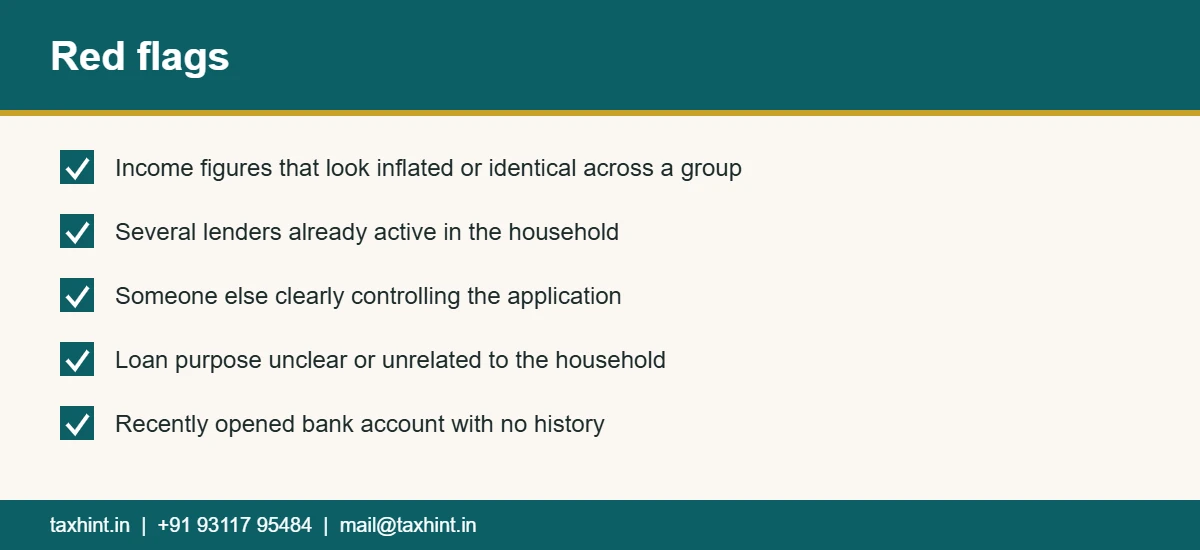
- Income figures that look inflated or identical across a group.
- Several lenders already active in the household.
- Someone else clearly controlling the application.
- Loan purpose unclear or unrelated to the household.
- Recently opened bank account with no history.
Bureau check
Pull the credit bureau report before sanction. Our bureau reporting guide explains how to avoid errors. Do not rely on the borrower’s statement alone about other loans.
Related reading
Read the loan cycle and pricing policy.
Where this comes from
Source: RBI (NBFC – Credit Facilities) Directions, 2025, microfinance chapter. RBI updates these Directions from time to time, so confirm the current text before acting.
Documents and records
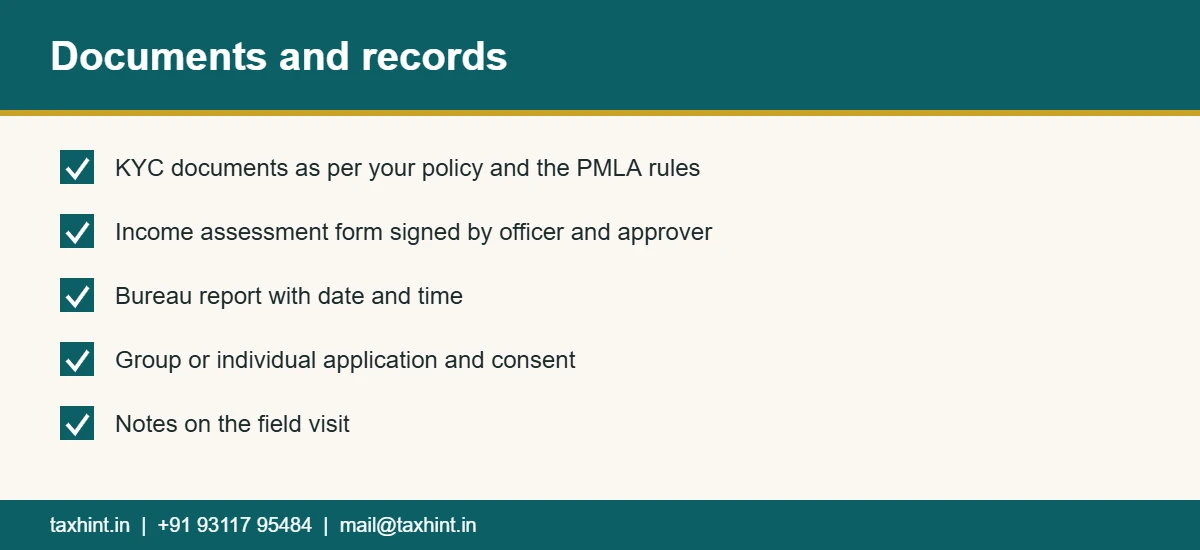
- KYC documents as per your policy and the PMLA rules.
- Income assessment form signed by officer and approver.
- Bureau report with date and time.
- Group or individual application and consent.
- Notes on the field visit.
Common mistakes
- Copying the same income figure for every member.
- Skipping the bureau pull for repeat borrowers.
- Letting the officer who sourced the loan also approve it.
- Not recording why a loan was reduced or declined.
FAQs
Is the 50 percent cap a strict rule?
For regulated lenders it is a limit set in RBI’s microfinance directions. Check the current text for details.
What if household income is hard to prove?
Use a documented assessment method set in your board-approved policy, with verification by a second person.
Can we refuse a borrower?
Yes. Record the reason and explain it respectfully.
How often should income be re-assessed?
At every new loan, and during the loan if there are signs of stress.
Can software enforce these checks?
Yes. Mandatory fields, bureau integration and limit checks stop most errors before sanction.
Running loans on spreadsheets? Book a free demo of our microfinance software, starting ₹15,000, or WhatsApp +91 93117 95484.