November 23, 2026 · Guides
Microfinance Fraud Prevention: Controls Every Small Lender Needs
Microfinance fraud prevention is not about expensive systems. Most losses in small lenders come from a handful of familiar schemes that simple, consistent controls would have caught.
Here are the patterns we see when reviewing microfinance operations, and the checks that work for a lender with a few branches and a lean team.
Good microfinance fraud prevention starts with three habits: money moves through bank accounts, someone independent checks the field, and the numbers are reconciled every day.
In this guide
- Ghost and proxy borrowers
- Cash skimming and fake receipts
- Identity misuse and loan stacking
- Staff controls and culture
- How software helps
- Early warning signs
- What to do when you suspect fraud
- Why prevention pays for a small lender
- FAQs
Ghost and proxy borrowers
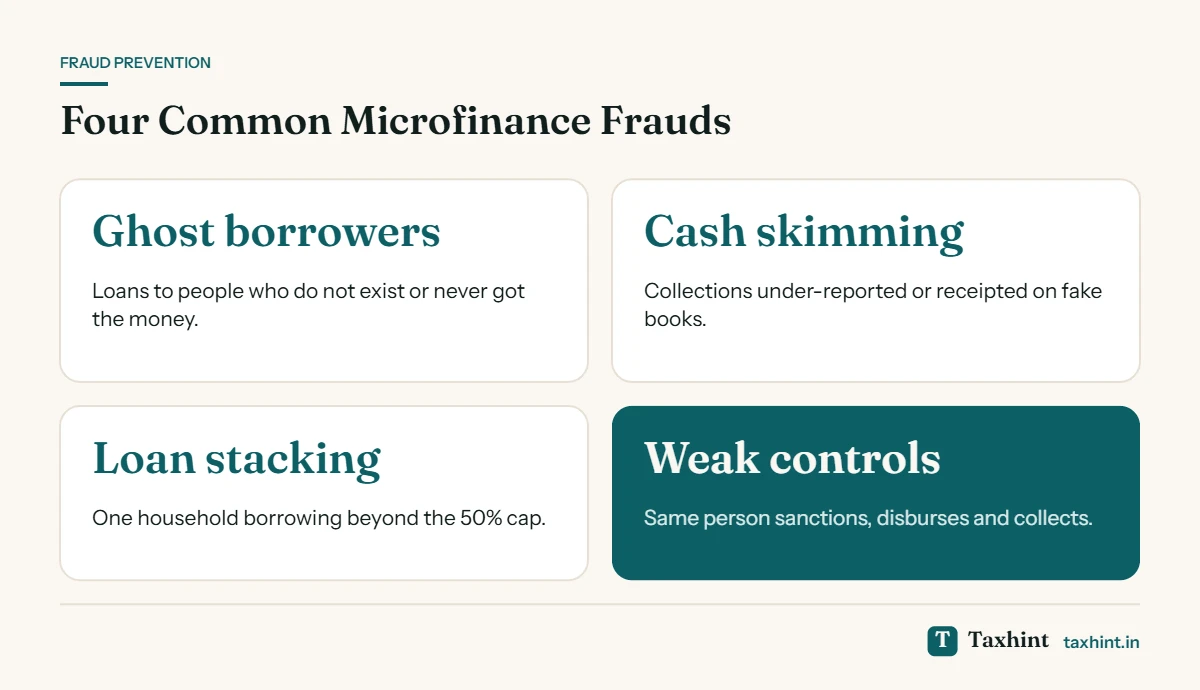
A loan officer creates loans for people who do not exist, or for real people who never received the money, and keeps the cash. Signs include many loans with the same address or phone number, borrowers nobody at the centre recognises, and perfect early repayment followed by sudden default.
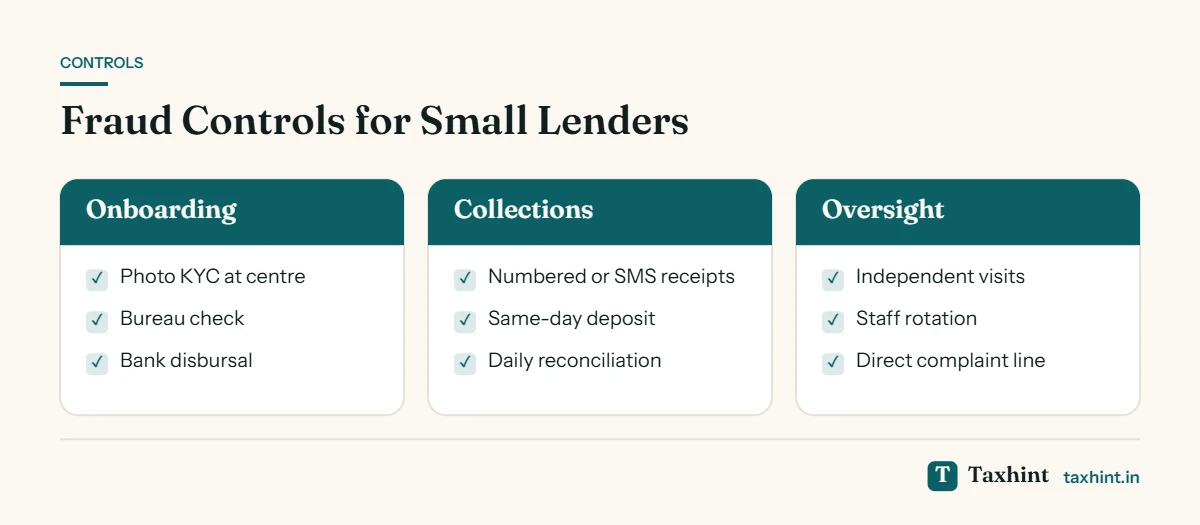
Controls: Aadhaar-based KYC with photo at the centre, disbursal into the borrower’s own bank account, random verification visits by someone other than the loan officer, and a credit bureau check that confirms the identity.
Cash skimming and fake receipts
Collections taken at the centre are under-reported, or receipts are written on unofficial books. The borrower thinks they have paid; the books show overdue.
Controls: numbered receipt books or digital receipts by SMS, same-day deposit, daily reconciliation of collections against the centre register, and a rule that borrowers report missed SMS confirmations. Our centre meeting register format totals each meeting so gaps show quickly.
Identity misuse and loan stacking
One person borrows under several identities, or a family takes loans in several members’ names beyond what the household can repay. This breaks the 50% repayment cap and often ends in default.
Controls: household-level assessment, bureau checks on every adult borrower in the household, and system alerts for repeated addresses, phones or bank accounts.
Staff controls and culture
Rotate loan officers between centres periodically, separate sanction from disbursal, and keep cash handling to as few people as possible. Make it easy and safe for borrowers to complain directly to head office. Most frauds are found through complaints.
How software helps
A loan system with an audit trail, field app collections with GPS and time stamps, duplicate checks on phone and bank details, and live PAR by loan officer turns many frauds from months-long losses into week-one alerts. See our guide to portfolio at risk and our microfinance software.
Early warning signs
- A loan officer whose centres have unusually high or perfect collections, then a sudden drop.
- Many new borrowers with the same phone number, address or bank account.
- Borrowers who cannot name their loan officer or centre leader.
- Gaps between centre register totals and bank deposits.
- Complaints about receipts not received.
Any one of these is worth a visit by someone from outside the branch.
What to do when you suspect fraud
- Secure records: freeze edits in the loan system and collect receipt books.
- Visit a sample of affected borrowers with an independent officer.
- Reconcile collections against deposits for the period.
- Take legal advice before confronting staff, and document everything.
- Report to the board, fix the control that failed and inform lenders as your agreements require.
Why prevention pays for a small lender
For a lender with a few crore of portfolio, a single loan officer running ghost loans for six months can wipe out a year’s surplus. Microfinance fraud prevention costs far less: a few verification visits a month, numbered receipts and a system that flags duplicates.
FAQs
What is the most common fraud in microfinance?
In small lenders we most often see ghost or proxy borrowers and under-reported cash collections. Both are caught by direct bank disbursal, independent verification and daily reconciliation.
How do I stop loan officers pocketing collections?
Use numbered or digital receipts, same-day deposits, daily reconciliation against the register, and SMS confirmation to borrowers.
Can credit bureau checks prevent fraud?
They help confirm identity and spot loan stacking, but they work best alongside household assessment and field verification.
How does software reduce fraud?
Audit trails, duplicate detection, GPS-stamped collections and live PAR by officer surface problems early.
Running loans on spreadsheets? Book a free demo of our microfinance software, starting ₹15,000, or WhatsApp +91 93117 95484.