November 23, 2026 · Guides
Microfinance Loan Product Design: Ticket Size, Tenure, Cycles and Pricing
Good microfinance loan product design starts with the borrower’s cash flow, not with the lender’s target. A product that fits how a household earns gets repaid; one that does not becomes PAR.
Here are the levers to set, in the order we work through them with new lenders.
In this guide
- 1. Purpose and borrower
- 2. Ticket size
- 3. Tenure and repayment frequency
- 4. Loan cycles
- 5. Pricing and fees
- A worked example
- Mistakes in microfinance loan product design
- How we help
- FAQs
1. Purpose and borrower
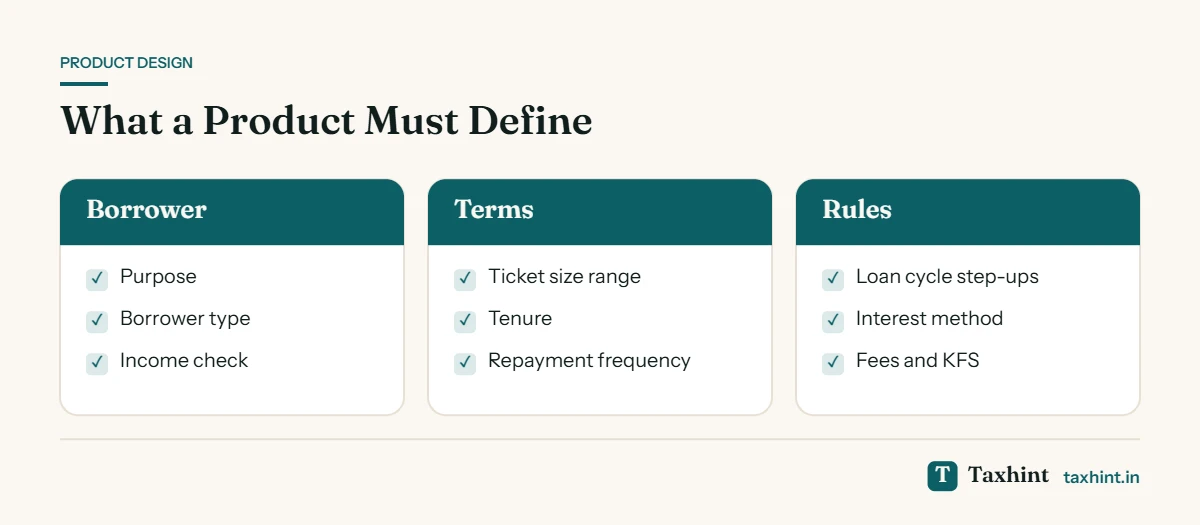
Start with who the product is for and what it pays for: a dairy animal, stock for a small shop, a sewing machine, school fees. Purpose shapes ticket size and tenure. Write it down in plain words.
2. Ticket size
Set a range based on the purpose and on what the household can repay. Under RBI’s rules, all loan repayments of a household, including loans from other lenders, cannot exceed 50% of its monthly income. So ticket size has to be checked against the bureau report and income assessment for each borrower, not just against the product range.
3. Tenure and repayment frequency
Weekly repayment suits daily earners such as vendors; fortnightly or monthly suits salaried or farm households with regular income. Tenure usually runs from a few months to two years. Longer tenure lowers the instalment but raises total interest; the KFS must show both.
4. Loan cycles
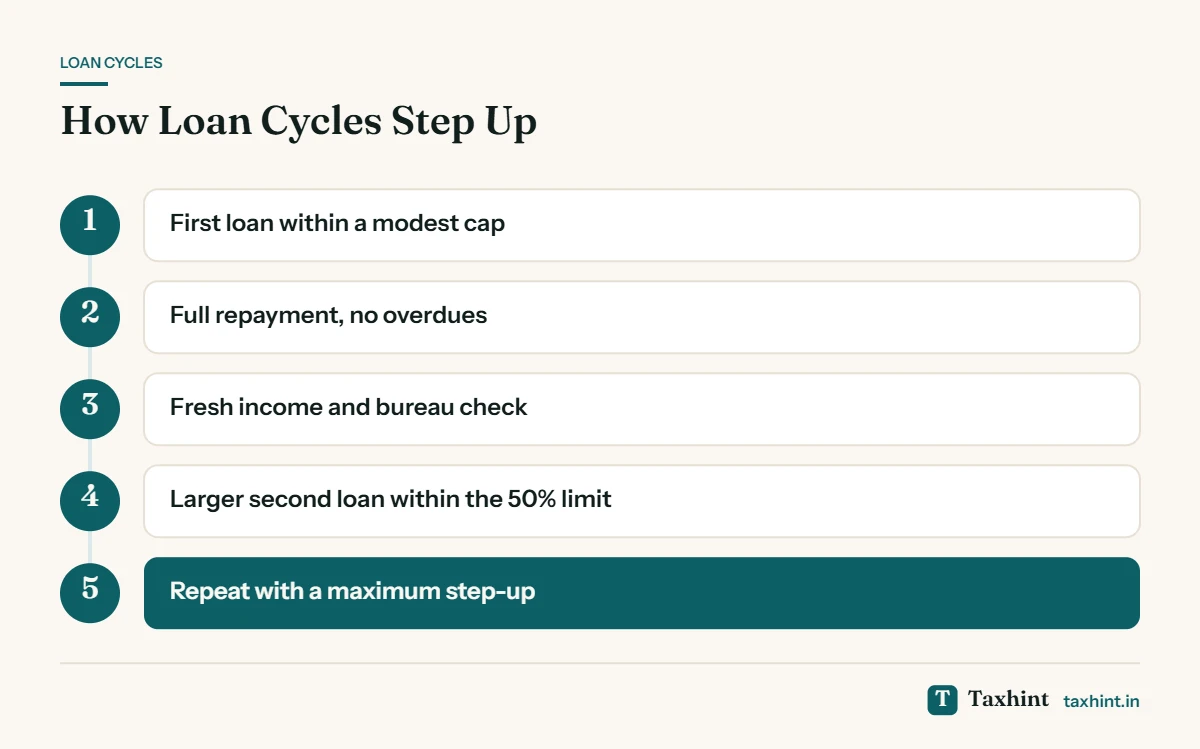
Many lenders step up the ticket size with each successful cycle: a modest first loan, a larger second loan after full repayment, and so on. Set clear rules: minimum repayment record, maximum step-up, and a fresh income and bureau check every cycle.
5. Pricing and fees
RBI does not cap microfinance interest rates, but each lender needs a board-approved pricing policy, rates stated on an annual reducing-balance basis, and a KFS with the APR before signing. There can be no prepayment penalty. Keep fees few and simple; every fee goes into the APR. See microfinance interest rate rules and our KFS guide.
A worked example
A product for small shopkeepers might offer ₹20,000 to ₹40,000 for 12 months, repaid weekly, with a first-cycle cap of ₹25,000 and step-ups only after a full cycle without overdues. Each loan is sanctioned only if the new instalment plus existing ones stays within 50% of assessed income. This is a design pattern, not a recommended rate or amount; your board sets those.
Mistakes in microfinance loan product design
- One product for every borrower and purpose.
- Automatic step-ups with no new assessment.
- Weekly repayments for seasonal farm incomes.
- Fees that appear only after disbursement.
- Products configured in software differently from the written policy.
How we help
We draft product notes, credit and pricing policies, and configure each product in our microfinance software so schedules, KFS and limits follow the board-approved design. Our EMI calculator helps test instalments.
FAQs
What should a microfinance loan product define?
Purpose, borrower type, ticket size range, tenure, repayment frequency, loan cycle rules, interest method, fees and grace period.
Is there an interest rate cap on microfinance loans?
RBI does not set a cap, but lenders need a board-approved pricing policy, a KFS with APR and no prepayment penalty.
How do loan cycles work?
Borrowers who repay a loan in full can get a larger next loan, subject to fresh income and bureau checks and a maximum step-up.
Weekly or monthly repayment: which is better?
It depends on how the borrower earns. Weekly suits daily earners; monthly suits regular salaried or farm incomes.
Running loans on spreadsheets? Book a free demo of our microfinance software, starting ₹15,000, or WhatsApp +91 93117 95484.