November 25, 2026 · Guides
What Is CKYC? Central KYC Records Explained for Lenders
CKYC stands for central KYC. It is a central repository where customer KYC records are stored in a common format. Once a customer’s KYC is uploaded, institutions that are allowed to access it can fetch the record instead of collecting the same documents again.
It aims to reduce repeated KYC and improve data quality. Regulated lenders are expected to capture and upload customer KYC as per the rules in force.
Who must upload, in what format and within what time depends on the current directions, so please verify with your CA or compliance officer.
In this guide
What it holds
Core KYC data.
- Identity and address details.
- Photograph and signature.
- Identity documents in the specified format.
- A unique KYC identifier for the customer.
How lenders use it
Two directions.
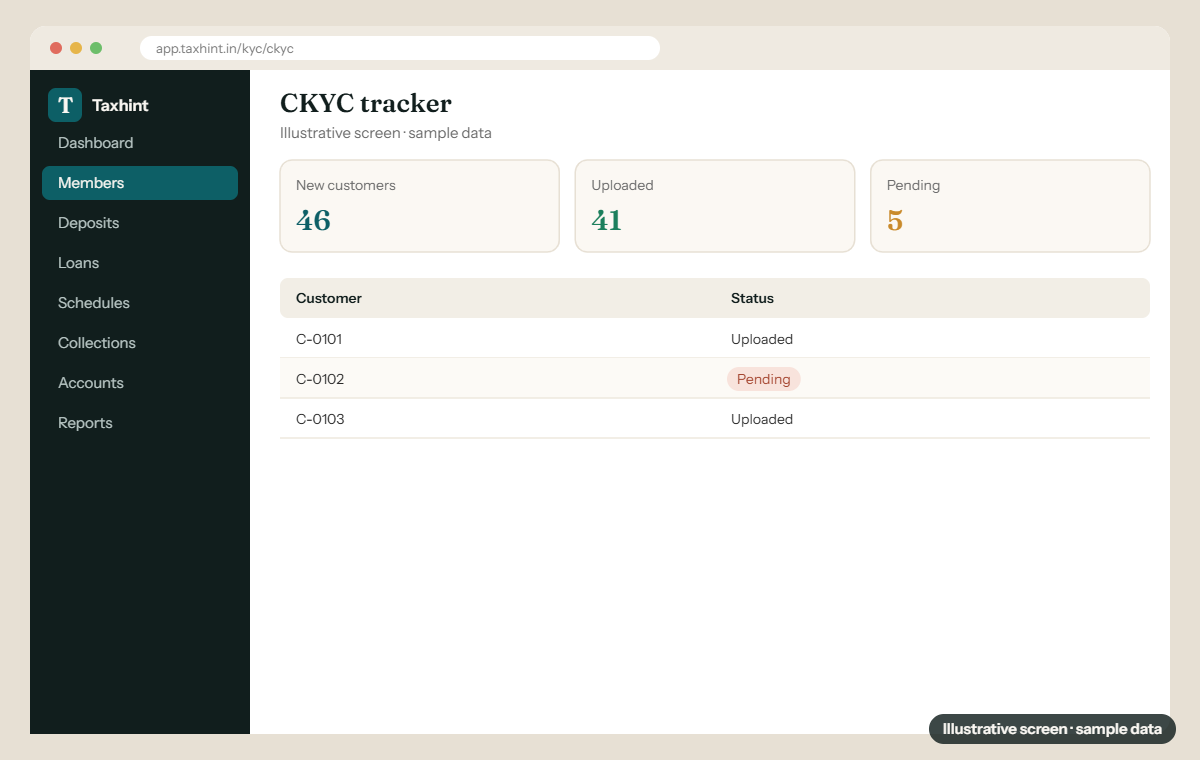
- Upload: send new customer records to the repository.
- Download: fetch an existing record when a customer already has a KYC identifier.
- Update: correct or refresh a record when details change.
Common problems
Where files get stuck.
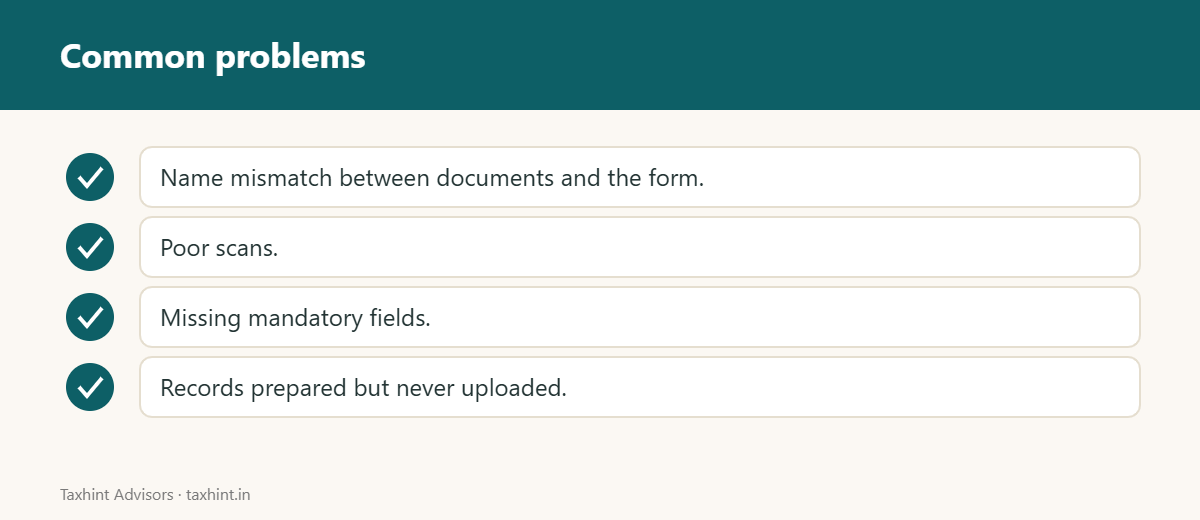
- Name mismatch between documents and the form.
- Poor scans.
- Missing mandatory fields.
- Records prepared but never uploaded.
Keeping in order
Practical routine.
- List customers due for upload each day.
- Track status: prepared, uploaded, rejected, corrected.
- Store the reference number on the customer.
- Review rejections daily. See CKYC upload process.
CKYC in software
What helps.
- KYC fields captured in the required format.
- Upload status per customer.
- Reports of pending and rejected records.
- Link with periodic KYC review. See periodic KYC updation.
See loan management software. Rules differ by lender type and change over time, so please verify with your CA or compliance officer.
| Action | Meaning |
|---|---|
| Upload | Send new record |
| Download | Fetch existing record |
| Update | Correct or refresh |
A simple example
A lender collects identity and address proof from a new customer, verifies them and uploads the record to the central registry. The registry gives a reference number, which the lender saves, so the next lender can fetch the verified record with the customer consent.
Common misunderstandings
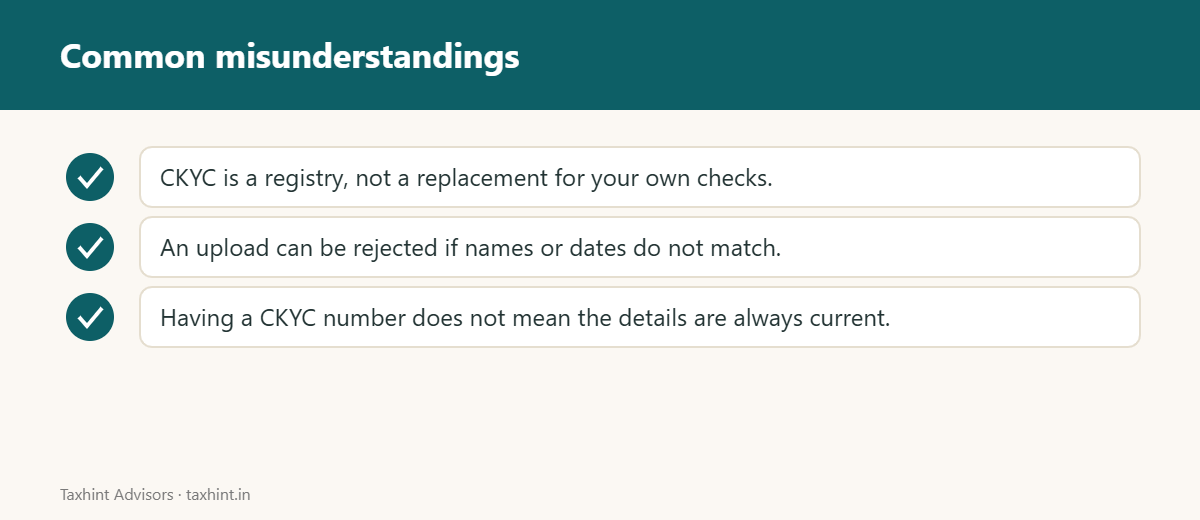
- CKYC is a registry, not a replacement for your own checks.
- An upload can be rejected if names or dates do not match.
- Having a CKYC number does not mean the details are always current.
Why it matters in daily work
CKYC saves customers from repeating the same process and helps lenders verify faster, but only if records are accurate and uploaded on time.
Quick checklist
- Check names across documents before upload.
- Upload within your policy time.
- Save the reference number on the customer record.
- Review rejections weekly.
Please verify with your CA, CS or lawyer before you rely on it.
Related terms to read next
CKYC sits inside the wider KYC process. These pages cover the rest.
- KYC checklist for software
- Periodic KYC updation
- PMLA and record keeping
Questions people ask
Is CKYC mandatory for every lender? It depends on your category. Ask your CA.
Can the customer see their record? Customers can usually request their details through the registry process.
What if the upload fails? Check name and date matches, fix and upload again.
FAQs
Is CKYC mandatory?
For regulated lenders, rules require it. Please verify for your entity.
Is CKYC the same as Aadhaar?
No. It is a separate KYC record repository.
What is a KYC identifier?
A unique number for the customer’s central record.
Who is responsible for accuracy?
The institution uploading the data.
Want KYC and upload status tracked in one place? Book a demo of Taxhint NBFC software. Talk to Taxhint on +91 93117 95484 or [email protected], or visit taxhint.in.