November 24, 2026 · Guides
Trust to Section 8 Company: A Microfinance Lender Guide
A charitable trust can lend in a small way, but growth brings pressure for a company structure. A trust to Section 8 company move usually means forming a new Section 8 company and transferring the lending activity.
This is how to approach it.
In this guide
- 1. Read your trust deed
- 2. Form the company
- 3. Transfer loans and assets
- 4. Keep the tax position clear
- Common stumbling blocks
- Illustrative order of work
- Risks to plan for
- Documents to gather
- FAQs
1. Read your trust deed
The deed decides what the trust may do and who must approve changes. Check whether it allows lending, transferring assets and winding up or merging. Trustees must pass resolutions that follow the deed.
2. Form the company
Incorporate a Section 8 company with objects that match the lending work. Follow the steps in our MOA and AOA guide and registered office rules.
3. Transfer loans and assets
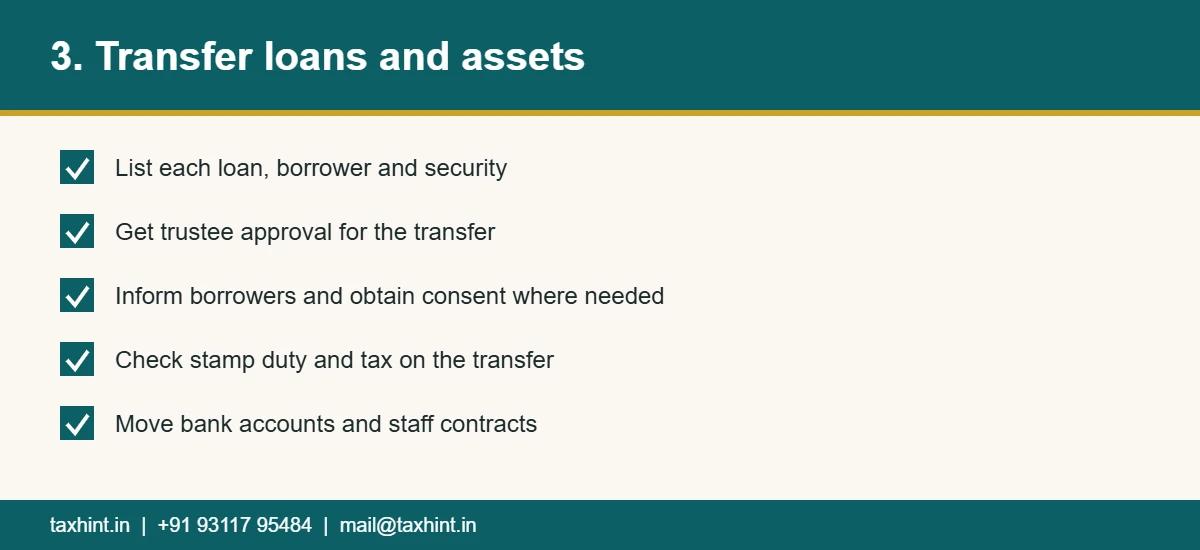
- List each loan, borrower and security.
- Get trustee approval for the transfer.
- Inform borrowers and obtain consent where needed.
- Check stamp duty and tax on the transfer.
- Move bank accounts and staff contracts.
4. Keep the tax position clear
The trust’s tax registration does not move automatically. The new company must apply for its own. Check the effect with a tax professional before you transfer anything. See 12A and 80G for a Section 8 microfinance company.
Common stumbling blocks
- Trustees not aligned on the move.
- Incomplete loan records.
- Borrowers learning of the change late.
- Forgetting the NBFC question when the book grows. See NBFC-MFI conversion.
Illustrative order of work
This is illustrative. Trustees pass a resolution to explore the move. A professional reviews the deed and advises on the route. The company is incorporated and licensed. Trustees approve the transfer of the lending activity, borrowers are informed, loans move on a cut-off date and the company applies for its own tax registration. The trust continues with other charitable work or winds up as its deed permits.
Risks to plan for
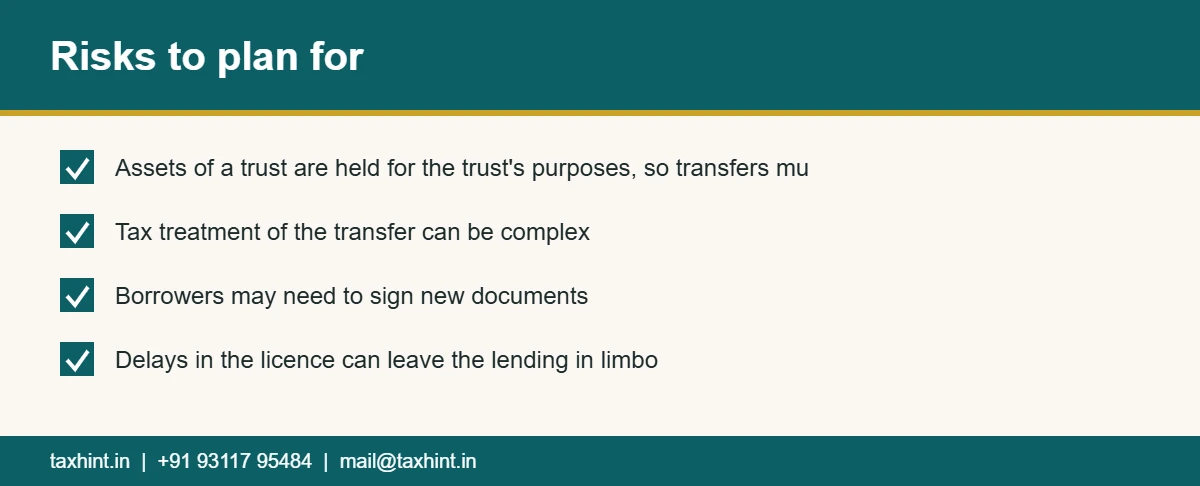
- Assets of a trust are held for the trust’s purposes, so transfers must stay within those purposes.
- Tax treatment of the transfer can be complex.
- Borrowers may need to sign new documents.
- Delays in the licence can leave the lending in limbo.
Documents to gather
- Trust deed and registration certificate.
- Latest audited accounts and tax filings.
- Loan register and borrower files.
- Resolutions of trustees.
- Property and bank account details.
FAQs
Can a trust convert directly into a Section 8 company?
Usually the route is a new company and a transfer, not a direct conversion. Confirm for your case.
Do trustees become directors?
They can, if eligible and willing, but directors must meet company law requirements.
What happens to the trust?
It may continue for other work or be wound up as its deed allows.
Do I need RBI approval?
Depending on size and activity, RBI registration may apply. Take advice early.
Can trust property be transferred to a company?
Only in line with the trust deed and law, usually to another body with similar objects.
How long should we plan?
Plan in stages and avoid a fixed date until the licence and tax steps are clear.
Planning a microfinance company or already running one? Our CAs and CSs handle registration, RBI work and yearly compliance. Get Free Consultation or WhatsApp +91 93117 95484.