November 25, 2026 · Guides
What Is LTV Ratio? Loan to Value Explained for Lenders and Borrowers
LTV stands for loan to value. It compares the loan amount with the value of the asset that secures it. The formula is loan amount divided by asset value, usually shown as a percentage.
If an asset is valued at 1,00,000 and the lender gives 75,000, the LTV is 75 percent. The remaining 25 percent is the borrower’s own margin.
A lower LTV means the lender has more cushion if the asset loses value or has to be sold.
In this guide
The formula
Simple.
- LTV percent = loan amount divided by asset value x 100.
- Example: loan 75,000 on an asset worth 1,00,000 gives 75 percent.
- Margin is the part the borrower funds: 100 percent minus LTV.
Where LTV is used
Many loan types.
- Gold loans: loan against the value of the ornaments. See scheme design.
- Vehicle loans: loan against the vehicle price or valuation. See down payment rules.
- Property loans: loan against property value. See LAP valuation and LTV.
Who sets the limit
Policy and rules.
- Some regulated lenders must keep within limits set by the regulator for certain loans.
- Others set their own policy based on risk.
- Please verify what applies to your lender type.
Why it matters
Risk and recovery.
- Asset values can fall, so a margin protects the lender.
- Higher LTV means higher loss if the borrower defaults.
- Monitoring LTV over time shows when security weakens.
LTV in software
Make it visible.
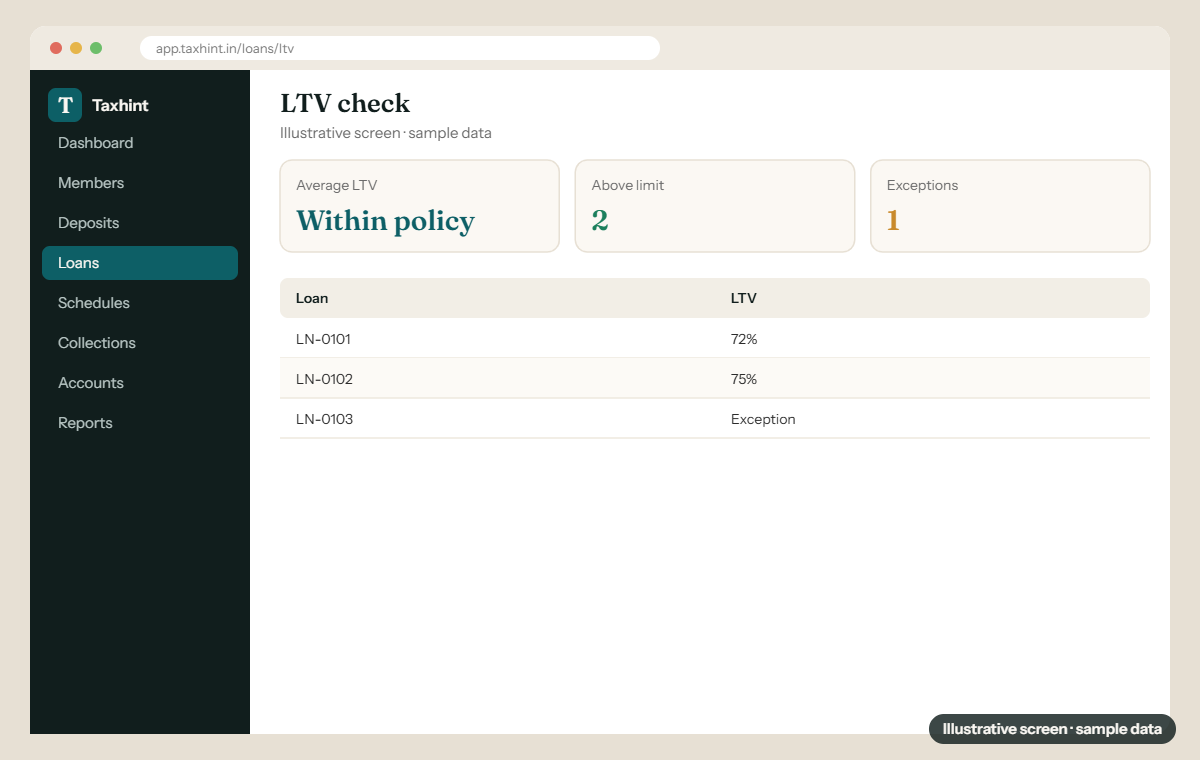
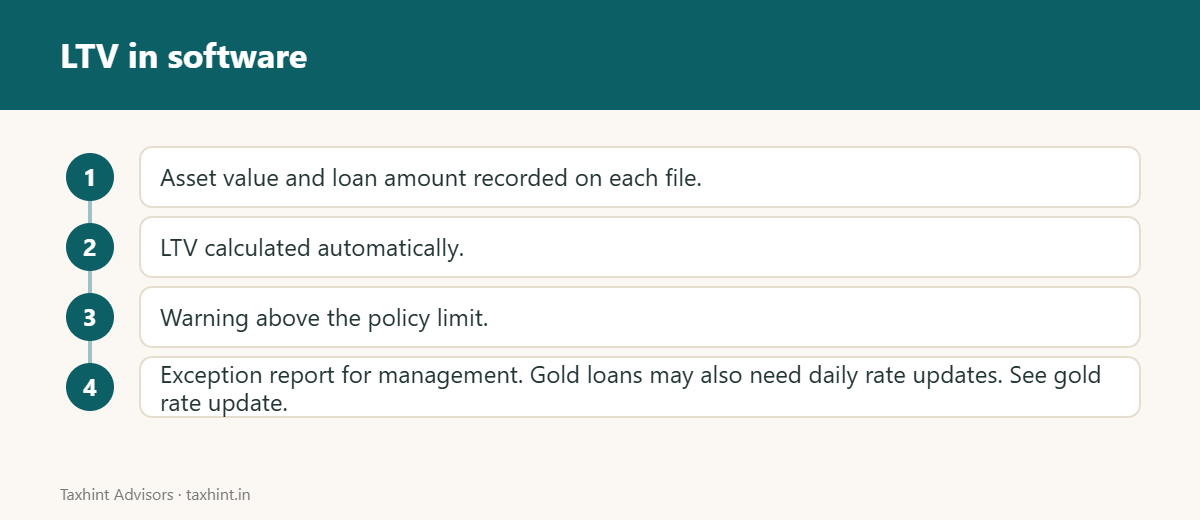
- Asset value and loan amount recorded on each file.
- LTV calculated automatically.
- Warning above the policy limit.
- Exception report for management. Gold loans may also need daily rate updates. See gold rate update.
See loan management software. Rules differ by lender type and change over time, so please verify with your CA or compliance officer.
| Item | Example |
|---|---|
| Asset value | 1,00,000 |
| Loan | 75,000 |
| LTV | 75% |
| Margin | 25% |
A simple example
A gold ornament is valued at 1,00,000 and the lender gives a loan of 70,000. The loan to value ratio is 70 percent. If the gold price falls, the same loan becomes a higher share of the value, which is why lenders watch it daily.
Common misunderstandings
- A high LTV does not always mean a bad loan, but it leaves less cushion.
- LTV is not the same as the interest rate.
- The value used must come from a proper valuation, not from the customer estimate.
Why it matters in daily work
LTV decides how much you lend against an asset and how safe the loan is if the borrower stops paying. It is used in gold, vehicle and property loans, and your policy and the rules that apply to your category set the limits.
Quick checklist
- Write the maximum LTV for each product in policy.
- Use an independent valuation.
- Recalculate when asset prices move.
- Report loans above the limit to the manager.
Please verify with your CA, CS or lawyer before you rely on it.
Related terms to read next
LTV is easier to understand together with the asset and the loan type. Read these to see how it is applied in practice.
- Gold loan scheme design
- Loan against property valuation
- Vehicle loan down payment
Practical tip
Show customers a simple example of how the loan amount relates to the value of their asset, so that they understand why the limit exists. Put it in your written procedure so that every new staff member follows it from the first day.
- Simple example
- Written policy
- Staff script
FAQs
Is lower LTV better?
For the lender, yes. It gives more cushion.
What is a good LTV?
Depends on the asset and your risk policy.
Does LTV change after disbursal?
Yes, as loan balance falls and asset value moves.
Can software compute it?
Yes, automatically on every file.
Want LTV checked on every loan file? Book a demo of Taxhint loan software. Talk to Taxhint on +91 93117 95484 or [email protected], or visit taxhint.in.