November 23, 2026 · Guides
eNACH EMI Collection in Microfinance: Mandates, Bounces and Limits
eNACH EMI collection in microfinance means the borrower signs a digital mandate once, and the bank account is then debited on each due date without anyone visiting. It works well for monthly instalments and salaried or shop-owning borrowers. For weekly, cash-based group lending it helps only in part, and most lenders end up running it alongside centre collections.
This post compares eNACH, NACH and UPI AutoPay, explains how a mandate is set up, what to do when a debit bounces, and where the limits sit. If you are comparing systems, our page on microfinance software shows how mandates, schedules and reconciliation sit in one place.
In this guide
- eNACH, NACH and UPI AutoPay compared
- eNACH EMI collection in microfinance: how a mandate works
- Does eNACH EMI collection suit weekly microfinance loans?
- Bounce handling that does not lose the borrower
- Limits and rules to know
- What your software needs to do
- FAQs
eNACH, NACH and UPI AutoPay compared
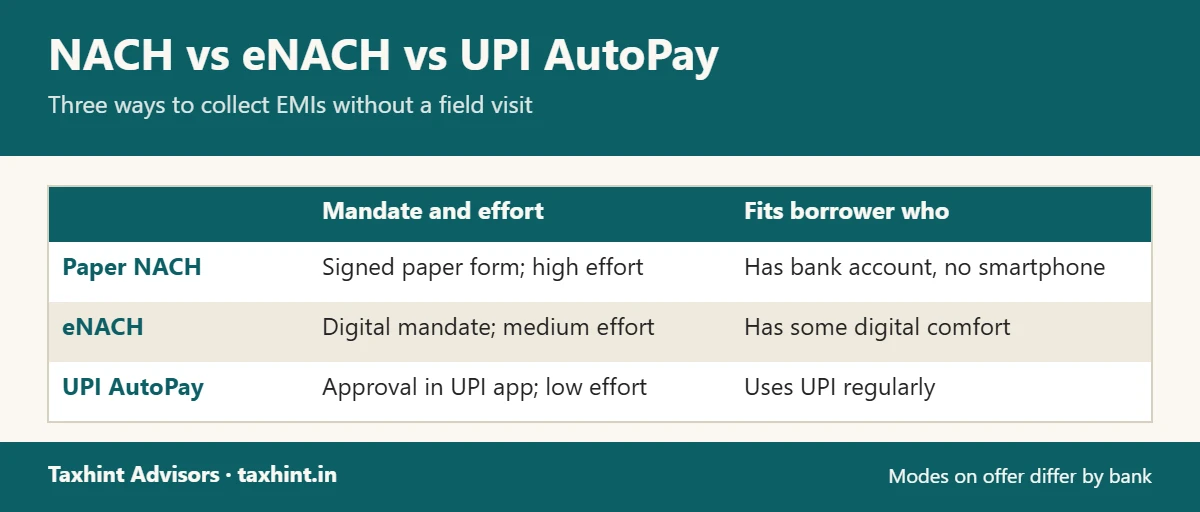
NACH is the National Automated Clearing House, run by NPCI, which lets a lender debit many bank accounts in bulk on agreed dates. The older route used a paper mandate form. eNACH is the same debit arrangement with the mandate captured digitally, so there is no paper to courier and scan. UPI AutoPay is a different rail: the borrower approves a recurring debit inside a UPI app with a UPI PIN.
| Point | Paper NACH | eNACH | UPI AutoPay |
|---|---|---|---|
| Mandate capture | Signed paper form | Digital, through net banking, debit card or Aadhaar-based verification, depending on the bank | Approval in a UPI app with PIN |
| Setup effort for borrower | High, needs bank processing | Medium | Low, if the borrower uses UPI |
| Fits borrower who | Has a bank account and no smartphone | Has a bank account and some digital comfort | Uses UPI regularly |
| Typical use | Monthly EMIs | Monthly EMIs | Smaller, more frequent debits |
The exact modes on offer differ by bank, so check what your sponsor bank or payment partner supports before you plan around one.
eNACH EMI collection in microfinance: how a mandate works
- Consent. The borrower agrees to the mandate, with a maximum debit amount, frequency and validity period. This should match the loan agreement; see microfinance loan agreement documents.
- Authentication. The borrower verifies through the bank’s chosen method. RBI’s e-mandate framework makes additional factor authentication part of registration.
- Activation. The bank confirms the mandate. Until then, no debit can be raised, so do not set the first due date too close to disbursement.
- Presentation. Before each due date, your system sends the debit request to the bank.
- Settlement or return. Money arrives, or the debit comes back with a reason such as insufficient balance.
For card and UPI recurring payments, the issuer must send the customer a pre-debit notification at least 24 hours before the debit, under the RBI e-mandate framework as reflected in NPCI’s circular for RuPay AutoPay. Plan your communication around that gap. Your borrower should hear from you about the debit too, in a language she understands.
Does eNACH EMI collection suit weekly microfinance loans?
Honestly, partly. Much group lending is built around a weekly or fortnightly centre meeting, where cash changes hands and the group’s presence is itself the discipline. Auto-debit removes the meeting, and some lenders find that repayment discipline weakens when it does.
We usually advise a split. Borrowers with steady bank balances and a phone move to auto-debit, especially for monthly products. Cash-based borrowers stay on centre collections, recorded on a microfinance collection app. A third group uses UPI AutoPay or a payment link for the occasional instalment.
Take a small lender in Bihar working with SHG members. Most members keep little in the account between instalments, so a Saturday debit may fail if the wages land on Monday. Aligning the due date with the household’s pay cycle matters more than the technology.
Bounce handling that does not lose the borrower
A returned debit is a signal, not yet a default. Treat the first failure as a conversation.
- Read the return reason. Insufficient funds, closed account and mandate cancelled need different responses.
- Contact the borrower within a day. A call or message in her language, before the next due date.
- Offer a collection route. Cash at the centre, a UPI payment link or a revised debit date within your policy.
- Charge only what the agreement allows. RBI’s directions for microfinance loans say delay charges apply only to the overdue amount. Our microfinance interest rate rules post covers the pricing side.
- Record it. Every bounce should show in the borrower’s account and feed your overdue reports; see portfolio at risk (PAR).
Bounce costs vary by bank and by who bears them. Check your partner bank’s charges and decide in your policy whether the borrower or the company absorbs them, and write it into the paperwork before the loan, not after.
Limits and rules to know
Three things to keep in mind. First, NPCI’s RuPay AutoPay circular, which raised the limit in 2022, says recurring card debits up to ₹15,000 per transaction are processed without additional authentication after the mandate is registered, and above that amount they need it. Registration itself always needs authentication. Second, UPI AutoPay follows a similar threshold, with higher limits for certain categories set by RBI and NPCI. Third, instalments in small-ticket microfinance usually sit far below these amounts, so limits are rarely the real problem. Failed debits and unclear consent are.
These rules change. Before you design your process, read the current NPCI and RBI circulars on npci.org.in and rbi.org.in, or ask your payment partner for the latest limits. For wider rules on lending conduct, see RBI microfinance rules explained.
What your software needs to do
Good eNACH EMI collection in a microfinance company produces a lot of small events: registrations, activations, presentations, successes, returns. If your team handles these in spreadsheets, errors follow. Look for a system that can:
- Store each mandate with its limit, frequency and validity.
- Generate due-date debit files or API calls from the repayment schedule.
- Match returns to the borrower and the instalment automatically.
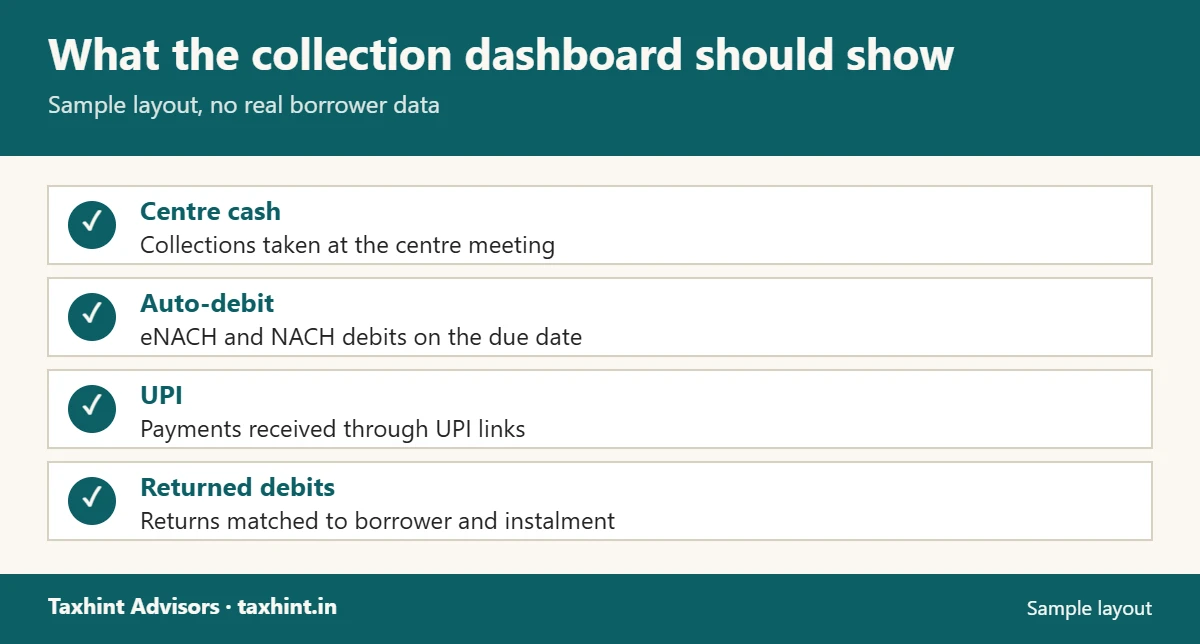
- Show a collection-mode split: centre cash, auto-debit, UPI.
- Send reminders and receipts, as in loan collection receipts, offline and daily cash.
FAQs
What is eNACH?
It is the digital version of an NACH debit mandate. The borrower authorises the lender electronically to debit the bank account on set dates, up to an agreed amount.
What is the difference between eNACH and UPI AutoPay?
eNACH debits through the banking clearing system after a mandate registered with the bank. UPI AutoPay works through a UPI app and is approved with a UPI PIN.
Can eNACH be used for weekly microfinance instalments?
Possible in some setups, but many lenders keep weekly collections at centre meetings and use auto-debit for monthly loans. Check your bank’s supported frequencies.
What happens when an eNACH debit bounces?
The bank returns it with a reason. Contact the borrower, offer another collection route and record the event. Charges depend on your agreement and bank.
Is there a limit on auto-debit?
For recurring card and UPI debits, NPCI’s circular sets ₹15,000 per transaction for debits without additional authentication, with different handling above. Check current limits before you launch.
Do borrowers get notice before a debit?
For card and UPI recurring payments, issuers must send a pre-debit notification at least 24 hours before the debit. Your own reminder on top is good practice.
Does Taxhint software support auto-debit tracking?
Our microfinance software tracks schedules, collections and overdue accounts. Book a free demo to see how mandate tracking fits your workflow.
Next step: Book a free demo of our microfinance software, starting ₹15,000, or WhatsApp us on +91 93117 95484.